


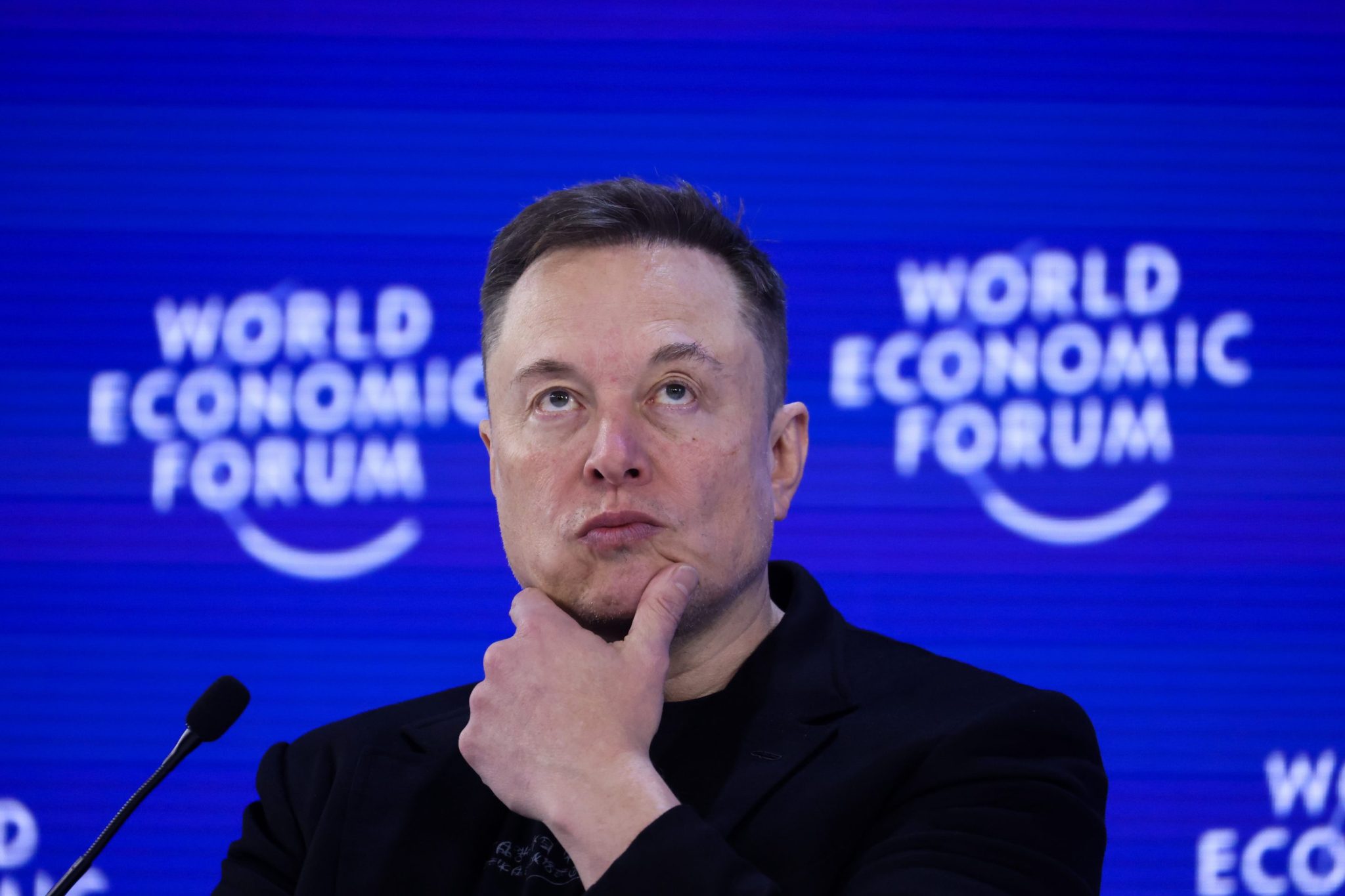
Musk’s Abundance Doctrine: Is Retirement Obsolete in an AI Future?
POLICY WIRE — Washington, D.C. — The quiet hum of countless 401(k) plans and the meticulous calculus of pension schemes—the very bedrock of a society’s promise for its...

POLICY WIRE — Washington, D.C. — The quiet hum of countless 401(k) plans and the meticulous calculus of pension schemes—the very bedrock of a society’s promise for its elderly—faced an abrupt, rather audible disruption last week. Not from a market correction or a geopolitical tremor, but from the pronouncement of an industrial titan, echoing across the digital ether like a futuristic oracle.
Elon Musk, the audacious architect of rockets and electric dreams, recently posited a future where traditional financial prudence becomes, well, quaint. He decreed that saving for retirement won’t matter, not really, because artificial intelligence is poised to unlock an epoch of unimaginable abundance. Everything, he suggests, will be so cheap and plentiful that the very concept of squirreling away resources for a non-working future loses its currency. It’s a vision both tantalizing — and profoundly unsettling.
But for many, especially those grappling with present-day economic precarity, the notion registers somewhere between techno-utopian fantasy and outright absurdity. Consider the median retirement savings for working-age Americans: a rather anemic $65,000, according to a 2023 Fidelity Investments report. This figure, often dwarfed by a single year’s living expenses in many urban centers, is a stark reminder that even with the current system, financial security in old age remains an elusive prize for most.
Still, Musk’s seemingly flippant dismissal of conventional wisdom forces a critical confrontation with our entrenched financial orthodoxies. At its core, he’s challenging the scarcity paradigm that underpins virtually all economic theory. If AI can indeed produce goods and services with minimal human input, rendering vast swathes of current labor redundant while simultaneously generating unprecedented wealth, what then? What’s the value of a dollar, or a decade of labor, if basic needs are universally met?
“Such proclamations, while undeniably provocative, often gloss over the monumental socio-economic structures that would need dismantling and rebuilding—not to mention the monumental political will required to achieve equitable distribution,” shot back Dr. Anya Sharma, a senior economist at the International Monetary Fund, from her Washington office. “We’re talking about a complete redefinition of value, labor, — and societal contribution, not just a technological flip. The transition itself would be a global cataclysm, unless meticulously managed.”
And what of nations like Pakistan, grappling with burgeoning youth populations and an economy still heavily reliant on traditional labor, remittances, and resource allocation? How does “abundance” translate there, particularly when the initial gains of AI are typically concentrated in a few technological hubs? Would it exacerbate existing global inequalities, creating a vast new chasm between the AI-rich — and the AI-poor? Or could it offer an unprecedented leapfrog opportunity, bypassing decades of conventional development?
“While Mr. Musk’s vision captures an eventual technological potential, the transition itself — that’s the rub,” observed Professor Omar Hassan, an AI ethicist at Lahore University of Management Sciences. “Ensuring this abundance doesn’t simply consolidate power in fewer hands, or render vast swathes of the global workforce redundant without a robust social safety net, is the pivotal challenge. We must consider the geopolitical ramifications, too; such a shift could either stabilize or utterly destabilize entire regions.”
Musk’s vision implies a world where the traditional motivations for work — survival and accumulation — vanish. What then propels human endeavor? Creativity? Purpose? Or would it unleash unforeseen societal maladies, from widespread ennui to existential crises on an unprecedented scale? It’s not just an economic query; it’s a profound philosophical one.
What This Means
Musk’s pronouncements, while often dismissed as Silicon Valley hyperbole, demand serious policy contemplation. The implications of an AI-driven abundance are manifold — and deeply political. Economically, it suggests a seismic shift away from capital accumulation as the primary driver of personal security. Policymakers would be forced to grapple with universal basic income (UBI) on a global scale, fundamentally altering social contracts and tax structures. Who owns the AI? Who controls the means of production in an automated world? These aren’t trivial questions; they’re the foundational challenges of the next century. Socially, the purpose of human existence, once tied so closely to labor, would require urgent redefinition. Imagine societies where 80% of the population is ‘unemployed’ in the traditional sense, yet all basic needs are met. This could foster unparalleled leisure — and creativity or widespread alienation and social unrest. Geopolitically, the race for AI dominance would intensify, potentially creating new forms of global stratification where nations that control advanced AI benefit disproportionately, leaving others struggling to adapt. Countries like Pakistan, with large, young populations, face a particularly acute challenge: how to transition a labor-intensive economy into one thriving on AI-generated abundance without creating massive unemployment or further entrenching digital divides. It’s an economic tightrope, one that could lead to unprecedented prosperity or profound instability. Policy frameworks for education, retraining, and international cooperation would become not just important, but utterly indispensable.
So, while the image of a utopian, work-free future where your retirement fund is just a quaint relic might warm the heart, the messy, precarious path to such an epoch is fraught with more policy dilemmas than a global summit on strategic alliances. It’s not just about what AI can do; it’s about what we, as humans, are prepared to do with it — or because of it.