


The Unyielding Calculus of Victory: Palou’s Reign Extends, Rivals Resign to a New Reality
POLICY WIRE — Indianapolis, USA — For the rest of the IndyCar paddock, the news wasn’t a surprise; it was, rather, an existential confirmation. Alex Palou, the Spanish phenom whose on-track...

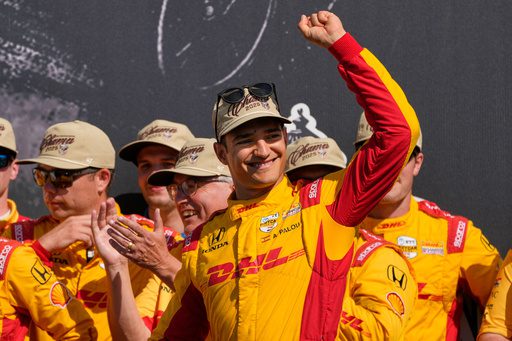
POLICY WIRE — Indianapolis, USA — For the rest of the IndyCar paddock, the news wasn’t a surprise; it was, rather, an existential confirmation. Alex Palou, the Spanish phenom whose on-track performances have steadily bled the competitive oxygen from the series, has cemented his tenure with Chip Ganassi Racing, signing a multi-year extension that binds him to the formidable outfit well beyond his prior 2027 agreement. It’s not just a contract; it’s a declarative statement, underscoring a period of dominance so profound it’s beginning to recalibrate the sport’s very expectations.
The ink dried after a week at Indianapolis Motor Speedway that felt less like a test session and more like a coronation preview. Palou, the defending Indy 500 victor, arrived to find a colossal banner of himself, mid-milk-chug, adorning the speedway entrance. He’d seen rival drivers’ visages there before, those ephemeral champions of yesteryear. Now, it’s his turn, — and it feels decidedly less ephemeral. “I took a picture when I was driving by and sent it to my parents,” he’d quipped, a rare flash of personal sentiment from a driver often characterized by his almost clinical precision.
Behind the headlines of contract renewals, a larger narrative unfurls: Palou isn’t just winning; he’s transforming the notion of what sustained success looks like. He’s netted four IndyCar championships in five years, including an astonishing three consecutive titles. Last season alone, he claimed eight victories, including the venerable Indianapolis 500. He’s not merely the best driver of his era; he’s redrawing the competitive blueprint. And rivals? They’re acutely aware of it.
“It’s incredible, actually amazing,” mused Will Power, a two-time IndyCar champion and Indianapolis 500 winner, reflecting on Palou’s relentless victories. “It’s something I’ve been thinking about the last week or so because once again, he’s gone out and won three out of five races. I mean, Kyle Kirkwood’s average finish is like three-point-something and he’s not leading the championship, which is insane. So it’s something I’m absolutely, like, how is he doing that week in, week out?” Power’s incredulity isn’t just personal frustration; it’s a shared sentiment across the pit lane.
At its core, Palou’s triumph isn’t solely a testament to raw speed. It’s a symphony of flawless execution. As Power elaborated, it’s a combination of qualifying impeccably, executing faultlessly in races, and having pit stops that are, to borrow his phrase, “top notch.” There aren’t mistakes. And he’s fast. That, Power concluded, is what it takes. It’s a formula that, in its current iteration, seems singularly possessed by the No. 10 Ganassi team.
The raw numbers buttress this perception of invincibility. His 22 career victories through 103 starts, for instance, situate him fifth in 121 years of IndyCar history (IndyCar Records). He’s already matched legends like Mario Andretti — and Sébastien Bourdais in championship titles. But it’s his consistency that truly sets him apart: in the post-World War II era, his 61 top-five finishes in 103 starts trail only Andretti’s 64 — a record he’s poised to eclipse with ease. It’s a leadership calculus few have mastered so early in their career.
📄 POLICY WIRE WHITEPAPER PUBLISHED: PAKISTAN'S NATIONAL SECURITY POLICY PRIORITIES
👉 READ BY CLICKING HEREDario Franchitti, a four-time IndyCar champion — and a Ganassi consultant, doesn’t mince words. He believes the series hasn’t witnessed such singular dominance since Alex Zanardi’s spell in the late ’90s. “Winning one championship is one thing, but then the subsequent ones, it gets progressively more difficult,” Franchitti observed, adding a touch of awe to his assessment. “Just watching what he’s done, — and at this early stage in his career, it’s something very special. And the level of domination, that’s the icing on the cake. You feel sorry for the others. I’ve said to him a number of times, ‘I would have hated racing against you.’ He is the complete package.”
Still, this kind of sustained excellence isn’t just a fascinating sports story; it ripples outwards. It elevates the profile of IndyCar, certainly, but it also underscores the intensifying global competition for engineering prowess and driving talent. Nations across the globe, from the motorsport strongholds of Europe to burgeoning markets in the Middle East and South Asia, are increasingly investing in sophisticated racing programs and driver development pipelines. They’re watching figures like Palou, trying to decode the blend of innate skill and team synergy that creates such an unbeatable force. Pakistan, for instance, though not traditionally a racing hotbed, sees its youth – tech-savvy and globally connected – drawn to the high-stakes, data-driven world of motorsport, aspiring to a fraction of Palou’s mastery. They’re part of a broader global talent flow, watching, learning, and dreaming of the next generation of champions.
What This Means
Palou’s extended reign at Ganassi isn’t merely a formality; it’s a significant inflection point for IndyCar. Economically, it solidifies Ganassi’s position as the sport’s preeminent team, potentially attracting even more top-tier sponsorship dollars and further widening the resource gap with rival outfits. For competitors like McLaren and Penske, it means redoubling investments in R&D and talent acquisition, lest they be perpetually relegated to battling for second. Politically within the sport, Palou’s dominance could lead to discussions about competitive balance, though any immediate regulatory intervention seems unlikely given the series’ current healthy state. However, if one team continues to monopolize championships, expect the conversation to shift from admiration to concern over viewer engagement and perceived parity. The sheer inevitability of his triumphs, while thrilling for Ganassi fans, risks alienating others who crave unpredictability. this era of Palou’s undisputed ascendancy serves as a compelling case study in the relentless pursuit of perfection, a benchmark for any high-performance endeavor, whether it’s in sports, business, or national development. His success isn’t just about a driver; it’s about an ecosystem operating at peak efficiency, and that’s a lesson for global industries watching closely.