

Albuquerque’s May Day Echoes Global Labor Strife, From New Mexico to Karachi
POLICY WIRE — Albuquerque, N.M. — The scent of chile roasting, not protest, typically defines New Mexico’s most populous city. But on Friday, Civic Plaza—usually a backdrop for farmers’...

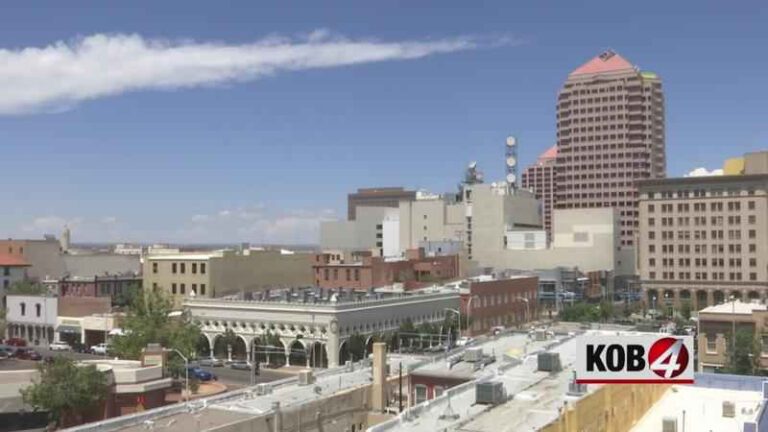
POLICY WIRE — Albuquerque, N.M. — The scent of chile roasting, not protest, typically defines New Mexico’s most populous city. But on Friday, Civic Plaza—usually a backdrop for farmers’ markets or lunchtime meanderings—will transform into a crucible of collective will, a local manifestation of a global struggle that, in its essence, remains stubbornly unresolved. It’s International Workers’ Day, you see, a calendrical nod to labor’s historic battles, yet for many, it’s far more than mere observance; it’s a living, breathing testament to persistent inequities.
Behind the headlines of local gatherings, a profound narrative unfurls: the quiet, tenacious fight for a living wage, for safer conditions, for a voice. This isn’t simply about a handful of local unions and community groups—some two dozen, give or take—converging for an afternoon’s worth of speeches and peripatetic marches. No, this annual ritual, replicated in countless urban centers across the globe, underscores a fundamental tension in capitalist societies: the enduring struggle between capital and labor, a contest often framed by politicians but felt acutely by families.
Still, the very act of assembly—a youth gathering at 3 p.m., the main rally kicking off at 4, a march commencing at 5, followed by music and celebration—is itself a statement. It’s a declaration that the gains of previous generations weren’t bestowed; they were fought for, often bitterly. And, for many, the fight isn’t over. “We’re not just asking for a fair shake; we’re demanding a real stake in the prosperity we help create,” shot back Maria Rodriguez, President of the Albuquerque Service Workers Alliance, her voice firm, unwavering. “It’s about dignity, isn’t it? It’s about not having to choose between medicine — and rent. We built this city, brick by brick, — and it’s time that contribution was fully recognized.”
And so, while Albuquerque’s workers gather to affirm their rights, the resonance of this day echoes across continents—even to Karachi, Pakistan, where textile workers often toil under conditions that would shock their American counterparts, facing similar battles for fair wages and safer environments, frequently against formidable economic headwinds and political volatility. The notion of a universally observed Workers’ Day, enshrined in over 80 countries, becomes particularly poignant when one considers the vast disparities in labor protections and enforcement globally. For instance, in Pakistan, despite constitutional guarantees for labor rights, implementation often falters, a challenge sometimes exacerbated by broader geopolitical currents or a nation’s precarious economic situation. It’s a sobering thought: the symbolic solidarity of May 1st juxtaposed against the grim realities of exploitation that persist.
But back in the Land of Enchantment, the organizers are focusing on the local. “Civic Plaza has always been a crucible for public discourse, a place where the heartbeat of our community becomes audible,” offered Councilor Robert Sanchez, a pragmatist whose office often fields calls from constituents grappling with economic anxieties. “We support the right to assemble, provided it remains peaceful — and respects public order. Our city thrives when its residents have the opportunity to voice their concerns, and we’re committed to fostering that dialogue.” He’d know; his district’s seen its share of lively, sometimes vexing, demonstrations.
At its core, this Albuquerque event, like countless others globally, serves as a visceral reminder of labor’s ongoing struggle to secure its share in an economy often tilting precariously towards capital. The Economic Policy Institute reported in 2023 that real average hourly earnings for production and nonsupervisory workers in the U.S. grew by a paltry 0.3% over the past year, underscoring the uphill battle many working families face even amidst fluctuating economic indicators. It’s a statistic that strips away the abstract economic models — and lays bare the daily grind for millions.
📄 POLICY WIRE WHITEPAPER PUBLISHED: PAKISTAN'S NATIONAL SECURITY POLICY PRIORITIES
👉 READ BY CLICKING HEREThis isn’t merely a quaint historical observance; it’s a living, breathing assertion of collective power, a reminder that progress isn’t linear or guaranteed. So, as the music begins and the marchers step off, they’ll be carrying not just banners and signs, but the accumulated hopes and frustrations of generations—a continuum of struggle that stretches from the industrial revolution’s dark satanic mills to the digital age’s gig economy, a global tapestry woven with threads of aspiration and resistance.
What This Means
The International Workers’ Day rally in Albuquerque, though local in scope, functions as a political barometer, reflecting broader economic anxieties and the enduring relevance of organized labor. In a period marked by persistent inflation, wage stagnation for many, and widening income disparities, such demonstrations aren’t just symbolic; they’re vital expressions of dissent and demands for systemic change. Politically, the turnout and energy of these events can provide a pulse check for elected officials, signaling areas of public discontent that could influence future policy decisions—from minimum wage legislation to union protections. Economically, a galvanized labor movement can exert pressure on employers and corporations, potentially leading to improved compensation packages, better benefits, and enhanced working conditions, though the path is rarely smooth or swift. The sustained observance of May Day, even in the U.S. where Labor Day often eclipses it, signifies a persistent ideological current that challenges neoliberal orthodoxies and advocates for a more equitable distribution of wealth and power. It also demonstrates how local actions remain intrinsically tied to global labor solidarity, highlighting shared challenges across vastly different economic landscapes, from New Mexico’s service sector to the garment factories of South Asia.