


Beyond Bricks and Mortar: How Habitat for Humanity’s Developer Pivot Exposes a National Crisis
POLICY WIRE — ATLANTA, Georgia — It’s not just hammers swinging and foundations poured anymore; in a telling symptom of America’s metastasizing housing crisis, even Habitat for Humanity has been...

POLICY WIRE — ATLANTA, Georgia — It’s not just hammers swinging and foundations poured anymore; in a telling symptom of America’s metastasizing housing crisis, even Habitat for Humanity has been compelled to reinvent itself. The organization, long synonymous with volunteer-driven home construction, is now strategically acquiring land, navigating rezoning battles, and developing entire communities — a role typically reserved for profit-driven entities. Such a pivot, stark — and consequential, underscores a deepening national predicament.
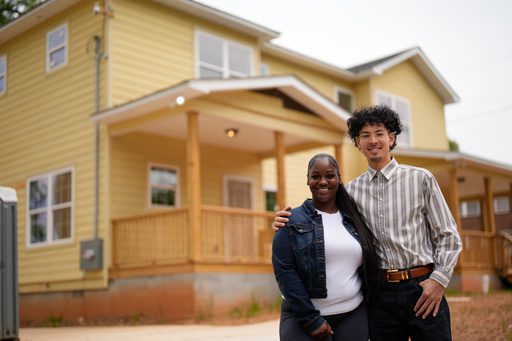
Behind the headlines of enthusiastic future homeowners like Ozzy Herrera, 27, who envisions terra-cotta walls and a bar cart in his soon-to-be Atlanta residence, lies a more complex narrative. Herrera, like countless others, juggles two jobs at Hartsfield-Jackson International Airport. And he never imagined homeownership within reach until Habitat’s intervention. So, in Sylvan Hills, a once-industrial patch of Atlanta, his dream, alongside 23 other families, is manifesting through the 40th annual Carter Work Project. That initiative, a perennial testament to former President Jimmy Carter and his late wife Rosalynn’s tireless advocacy, returns to the city for the first time since 1988, its enduring presence a quiet reproach to successive policy failures.
Still, this isn’t your grandmother’s Habitat build. The Langston Park community, burgeoning on eight acres purchased in 2015 and painstakingly rezoned, represents a significant departure. For the first time, Atlanta Habitat for Humanity is constructing multi-family townhomes, an admission that single-family detached homes simply can’t meet the sheer demand in dense urban cores. They’re building approximately 24 units now, with plans for 40 more.
At its core, this strategic shift isn’t about choice; it’s about necessity. The gap between what working families can afford — and the exorbitant cost of housing has widened to a chasm. The gap between what a family can afford and what it costs to create that unit of housing is the widest it has been in modern history,
lamented Jonathan Reckford, CEO of Habitat for Humanity International. Developers, many of whom never fully recovered from the COVID-19 pandemic’s economic depredations, aren’t filling the void. So, Habitat steps in, wielding its nonprofit mandate as a unique instrument for urban renewal.
Rosalyn Merrick, President — and CEO of Atlanta Habitat for Humanity, underscored the pragmatic evolution. We do believe it’s important to get the best use out of every precious piece of land that we’re able to acquire and come by so that we can serve more families,
she asserted. It’s a land-use calculus increasingly critical in a nation where affordable parcels are as rare as humility in a politician. Each home in Langston Park costs around $200,000 to construct, but homeowners, like Phileena Daniel — who spent two years navigating rat- and roach-infested rentals with her 7-year-old son — pay an income-based, interest-free mortgage. It’s a pathway to stability, yes, but also a stark reminder of the labyrinth many navigate just for decent shelter.
The malaise isn’t confined to Atlanta. Across the United States, high home prices coupled with 30-year mortgage interest rates cresting above 7% have effectively locked out moderate-income households from homeownership in all but a handful of the 98 most expensive metropolitan areas, according to research from University of Pennsylvania professors Vincent Reina and Benjamin J. Keys. It’s an economic vise, squeezing aspirations dry.
📄 POLICY WIRE WHITEPAPER PUBLISHED: PAKISTAN'S NATIONAL SECURITY POLICY PRIORITIES
👉 READ BY CLICKING HEREAnd where, one might ask, is the federal government in this increasingly dire scenario? Congress has indeed tossed around various affordable housing bills, but reconciling differences and delivering meaningful legislation remains a political Gordian knot. President Trump, for his part, signed executive orders to reduce regulatory burdens. His proposed 2027 budget, however, famously sought steep cuts to the Department of Housing and Urban Development, alongside the elimination of numerous community development programs — policies that, whatever their flaws, currently provide crucial lifelines to cities striving to build affordable housing. It’s a push-and-pull, often more symbolic than substantive. Meanwhile, on the ground, organizations like Habitat continue their work, not just in America, but globally, extending their reach to nations like Bangladesh and Indonesia, where similar housing deficits afflict vulnerable populations.
Ozzy Herrera, bless his optimistic spirit, couldn’t care less about the geopolitical machinations. He just wants a stable place where his parents can come if his mother’s breast cancer recurs. A low, fixed monthly payment will finally allow him to save for his coffee shop — a dream deferred by Atlanta’s soaring rents. Now, I can finally take some risks,
he opined, his voice imbued with a quiet defiance. That’s the promise, isn’t it? The chance for a risk, for a future, for something beyond mere survival. And it’s a promise Habitat, against long odds, strives to deliver. This phenomenon, where non-profits must step into gaps left by markets and governments, reveals America’s spatial paradox and the global housing crisis in sharp relief.
What This Means
Habitat for Humanity’s embrace of a developer role isn’t merely an operational update; it’s a bellwether. Economically, it signifies a profound market failure — the private sector, driven by profit margins, has largely abandoned the segment requiring truly affordable housing. When a non-profit, reliant on donations and volunteer labor, becomes a primary driver of land acquisition and large-scale development, it signals that the fundamental economics of housing are broken. Politically, this pivot highlights a vacuum. Decades of underinvestment in public housing, deregulation, and a failure to address zoning restrictions have created a perfect storm. The bipartisan rhetoric surrounding affordable housing rarely translates into cohesive, adequately funded federal strategies. This leaves organizations like Habitat to shoulder a burden that ought to be shared by robust public policy and a more socially conscious private sector. The implications are clear: without systemic intervention, the housing crisis will continue to deepen, pushing even essential workers further from the possibility of stable homeownership, transforming a fundamental human need into an increasingly unattainable luxury.