


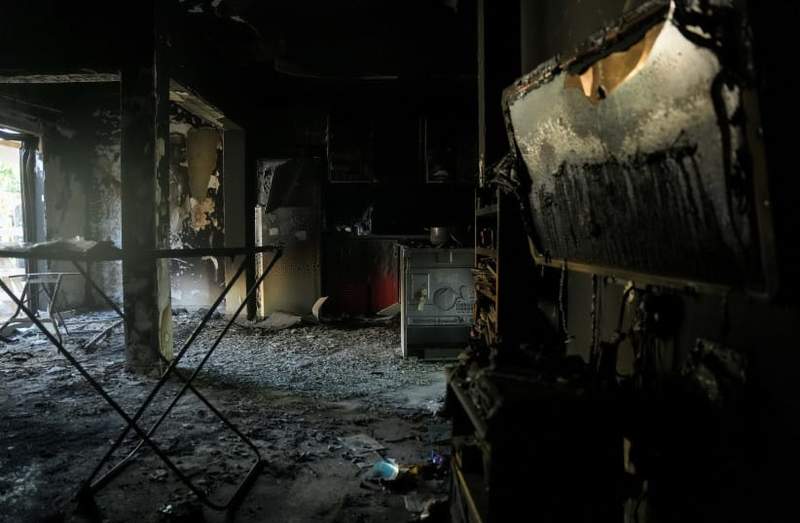
Echoes of Holit: IDF Probe Lays Bare Crumbling Security Doctrine, Unsettling Regional Certainties
POLICY WIRE — Tel Aviv, Israel — The very scaffolding of Israeli security assumptions, painstakingly erected over decades, didn’t just bend on October 7th; it spectacularly buckled....

POLICY WIRE — Tel Aviv, Israel — The very scaffolding of Israeli security assumptions, painstakingly erected over decades, didn’t just bend on October 7th; it spectacularly buckled. What followed, a relentless, granular inquiry by the Israel Defense Forces into the infiltration of Kibbutz Holit, isn’t merely a forensic exercise. It’s a stark, unvarnished indictment of procedural failures, intelligence missteps, and a palpable erosion of the psychological certainty that had long underpinned life along the Gaza envelope.
It’s the quiet details that often prickle most — the absence of vital communication, the agonizing delay in response, the sheer audacity with which Hamas operatives, by all accounts, overwhelmed defenses that were, ostensibly, impregnable. The IDF’s internal probe, though still under wraps in its exhaustive entirety, reportedly sketches a landscape of misjudgment and unpreparedness at Holit, where terrorists wrought unimaginable devastation. They weren’t just attacking a kibbutz; they were dismantling an entire security paradigm, piece by painstaking, brutal piece.
And so, the nation grapples with the revelations. For years, the security establishment nurtured a belief — perhaps a delusion — that technological superiority and border fortifications could contain the simmering animosity just beyond the fence. Holit’s tragedy, among others, decisively shattered that illusion. “We won’t rest until every last perpetrator is brought to justice, and our security doctrine is fundamentally reshaped to prevent such a catastrophe ever again,” asserted Israeli Defense Minister Yoav Gallant, speaking from Tel Aviv, his voice betraying a steely resolve that barely masked the profound disquiet permeating the government.
The implications, naturally, stretch far beyond Israel’s immediate borders. This wasn’t just a localized security breach; it was a regional tremor, resonating deeply across the Muslim world, from Ankara to Islamabad. “The sheer scale of human suffering documented in these reports underscores a wider regional instability — a perpetual cycle of violence that demands more than just military responses, it calls for a radical rethinking of diplomatic engagement,” observed Dr. Fatima Zahra, a senior analyst at the Islamabad-based Institute for Policy Studies. She didn’t mince words, contending that the international community’s piecemeal approach has only fertilized the ground for such horrific outbursts.
Still, the immediate aftermath paints a grim picture. According to the UN Office for the Coordination of Humanitarian Affairs (OCHA), over 1.7 million people in Gaza — roughly 75% of its population — have been displaced since October 7. That’s a human catastrophe unfolding in tandem with the strategic re-evaluations, an often-overlooked consequence of such profound security lapses.
Behind the headlines — and the official pronouncements, a profound questioning of policy is underway. It’s not just about what went wrong that day, but what fundamental assumptions about deterrence and defense proved fatally flawed. The very psychological contract between the state and its citizens — particularly those living on the frontier — has been irrevocably altered. How does a nation rebuild trust when its most basic promise, that of security, was so catastrophically broken?
📄 POLICY WIRE WHITEPAPER PUBLISHED: PAKISTAN'S NATIONAL SECURITY POLICY PRIORITIES
👉 READ BY CLICKING HEREThis isn’t merely a story of military tactics; it’s a searing look at policy elasticity — or its absence — under extreme duress. The Holit probe, despite its technical nature, inadvertently offers a powerful lens into the human cost of intelligence failures and the urgent, often brutal, lessons learned from them. It forces a reassessment of everything, from tactical deployments to the long-term viability of peace efforts, casting a long shadow over the entire region — a shadow that even reaches distant discussions about Pakistan’s cricket economy and national psyche, reflecting shared anxieties about stability and governance.
What This Means
At its core, the IDF’s exhaustive review of the Kibbutz Holit infiltration signals an unavoidable, albeit painful, pivot in Israeli defense policy. Economically, this translates to potentially colossal increases in military spending, diverting resources from other critical sectors like education or infrastructure. We’re likely to see a substantial investment in advanced surveillance, enhanced physical barriers, and a complete overhaul of rapid-response protocols. The political ramifications are equally profound: increased public scrutiny of military leadership, demands for accountability that could reshape the governing coalition, and a hardening of political discourse concerning Gaza.
Geopolitically, the probe’s findings will undoubtedly embolden some regional actors while fueling anxieties among others. Arab states that had been cautiously moving towards normalization with Israel might now re-evaluate their positions, weighing the perceived security vulnerabilities against the benefits of cooperation. The incident fundamentally resets the regional security calculus, pushing the prospect of any comprehensive peace agreement further into the distant, uncertain future. It’s a somber reminder that even in an era of technological advancement, the human element — both in planning and in execution — remains the most unpredictable, and often, the most devastating, variable.