


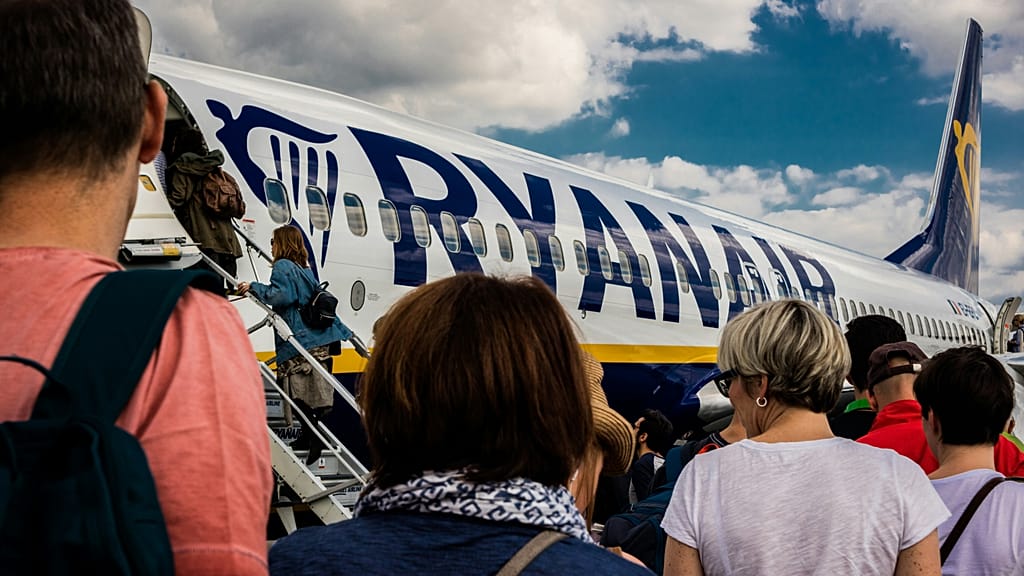
Berlin’s Tarnished Gateway: Ryanair’s Retreat Signals Deeper Troubles for Europe’s Aspiration
POLICY WIRE — Berlin, Germany — It wasn’t the gleaming glass facades or the long-awaited hum of jets that truly defined Berlin Brandenburg Airport (BER) this week. Instead, it was the blunt,...

POLICY WIRE — Berlin, Germany — It wasn’t the gleaming glass facades or the long-awaited hum of jets that truly defined Berlin Brandenburg Airport (BER) this week. Instead, it was the blunt, almost performative pronouncement from a notoriously unvarnished airline CEO, casting a long shadow over Germany’s capital. Ryanair, Europe’s quintessential budget carrier, has commenced the slow uncoupling from its Berlin base, attributing the downturn squarely to an anemic demand and airport management it has derided as endemically ‘failing.’
At its core, this isn’t just about another airline reducing its footprint; it’s a piercing indictment of an infrastructure project that epitomized German efficiency – or, rather, its startling absence. BER, finally operational in 2020 after a decade of delays and ballooning costs, was meant to be the vibrant gateway to a unified Europe. Now, just three years later, it’s grappling with a very public vote of no confidence from an operator whose business model hinges on ruthless pragmatism.
The Irish carrier, known for its take-no-prisoners approach, plans to significantly reduce its aircraft based at BER, shuttering routes and effectively ceding ground in a market it once considered pivotal. While Ryanair’s official line cites a ‘precipitous decline in passenger volume,’ the subtext, as always, is financial. Higher airport charges, Germany’s contentious air travel tax, and what it perceives as BER’s operational inefficiencies have evidently tipped the scales. It’s a stark exit. But it also reveals a broader malaise festering beneath the surface of post-pandemic European air travel.
“We’ve tried, haven’t we? But frankly, one can only bang one’s head against an obstinate wall for so long,” shot back Michael O’Leary, Ryanair’s pugnacious Group CEO, in a recent, characteristically acerbic statement. “Berlin deserves an airport that functions, — and right now, BER isn’t it. Our shareholders demand efficiency, and Berlin’s simply not delivering the passenger volumes or the reasonable costs that our model — and our customers — require.” O’Leary’s words cut deep, not merely for the airport authority but for the city’s economic stewards.
Still, the German capital isn’t without its defenders. Berlin’s State Secretary for Economics, Stephan Schwarz, mused, “This decision is, of course, regrettable. Ryanair is a significant carrier, connecting our city to numerous destinations. But Berlin remains a global city, a magnet for innovation — and culture. We’re actively engaged in dialogues with other carriers, optimizing our operational frameworks, and ensuring BER continues its upward trajectory. We’re confident in our future, despite short-term fluctuations that affect the entire aviation sector.” It’s a sentiment meant to reassure, yet it rings with a certain defensiveness.
The exodus leaves a void, not only for European tourists but for a diverse demographic of travelers, including the significant diaspora from South Asia and the Muslim world who often rely on low-cost carriers for affordable connections into and across Europe. For individuals traveling from Pakistan, for instance, a direct flight to a major hub like Frankfurt or London might be supplemented by a budget airline hop to Berlin for family visits or business. As low-cost options dwindle, these journeys become more expensive, more convoluted — often adding hours, even days, to travel times. This isn’t just an inconvenience; it’s an economic barrier, affecting everything from remittances to small-scale trade between communities.
📄 POLICY WIRE WHITEPAPER PUBLISHED: PAKISTAN'S NATIONAL SECURITY POLICY PRIORITIES
👉 READ BY CLICKING HEREBehind the headlines, Berlin Brandenburg Airport (BER) reported approximately 23 million passengers in 2023, according to official airport data, a significant rebound from pandemic lows, but still noticeably below the combined 35 million passengers handled by its predecessor airports (Tegel and Schönefeld) in 2019. That gap — that stubborn, persistent gap — speaks volumes about the slow recovery and the structural challenges that BER, and indeed much of Europe’s aviation sector, continues to face.
And it’s a sobering thought that this situation in a developed European economy might offer a cautionary tale for emerging markets. Nations across South Asia, including Pakistan, are consistently investing in ambitious infrastructure projects, from new airports to expansive road networks. The lessons from BER’s protracted birth and ongoing struggles regarding project management, cost control, and strategic planning, offer an invaluable, if painful, blueprint for avoiding similar pitfalls. Poor planning or inefficient execution can turn grand visions into enduring liabilities.
What This Means
Ryanair’s strategic disengagement from Berlin carries multi-layered implications. Economically, it represents a direct hit to Berlin’s tourism sector and its burgeoning startup scene, which thrives on easy, affordable access. Fewer routes mean fewer visitors, diminished business travel, — and a potential chilling effect on foreign investment. Politically, it’s a bruising public relations defeat for Berlin’s city and state governments, who have long championed BER as a symbol of renewed German dynamism. The airport, already a lightning rod for criticism over its troubled past, now faces renewed scrutiny over its operational viability and management efficacy. Don’t forget, these are the optics shaping international perception.
this move underscores a broader reckoning within the European aviation industry. As environmental taxes climb and operational costs remain elevated, low-cost carriers are increasingly selective about where they allocate capacity. The era of relentless expansion into every available nook and cranny might be giving way to a more ruthless, demand-driven rationalization. For travelers from regions often reliant on such cold calculus for affordable access, such as those in the Muslim world, this shift could translate into permanently higher fares and fewer direct travel options. It’s a subtle but significant realignment of European connectivity, highlighting how localized failures can send ripples across continents, affecting everything from family reunions to nascent trade routes.