

Beijing’s Audacious Newcomer: AUDI’s E7X Redefines Brand Battlegrounds
POLICY WIRE — Beijing, China — In an auto market saturated with acronyms and aspirational alphanumeric designations, few debuts generate the particular brand of cognitive dissonance...

POLICY WIRE — Beijing, China — In an auto market saturated with acronyms and aspirational alphanumeric designations, few debuts generate the particular brand of cognitive dissonance witnessed with the unveiling of the E7X model. It’s an AUDI, insists its maker — emphatically not to be confused with the venerable German marque — a distinction that’s becoming increasingly blurred, perhaps by design, in the minds of some nascent consumers. This isn’t merely about a new electric vehicle hitting China’s voracious roads; it’s a provocative exercise in industrial nomenclature, a subtle (or not-so-subtle) challenge to global intellectual property norms, and a bold assertion of Beijing’s domestic manufacturing might.
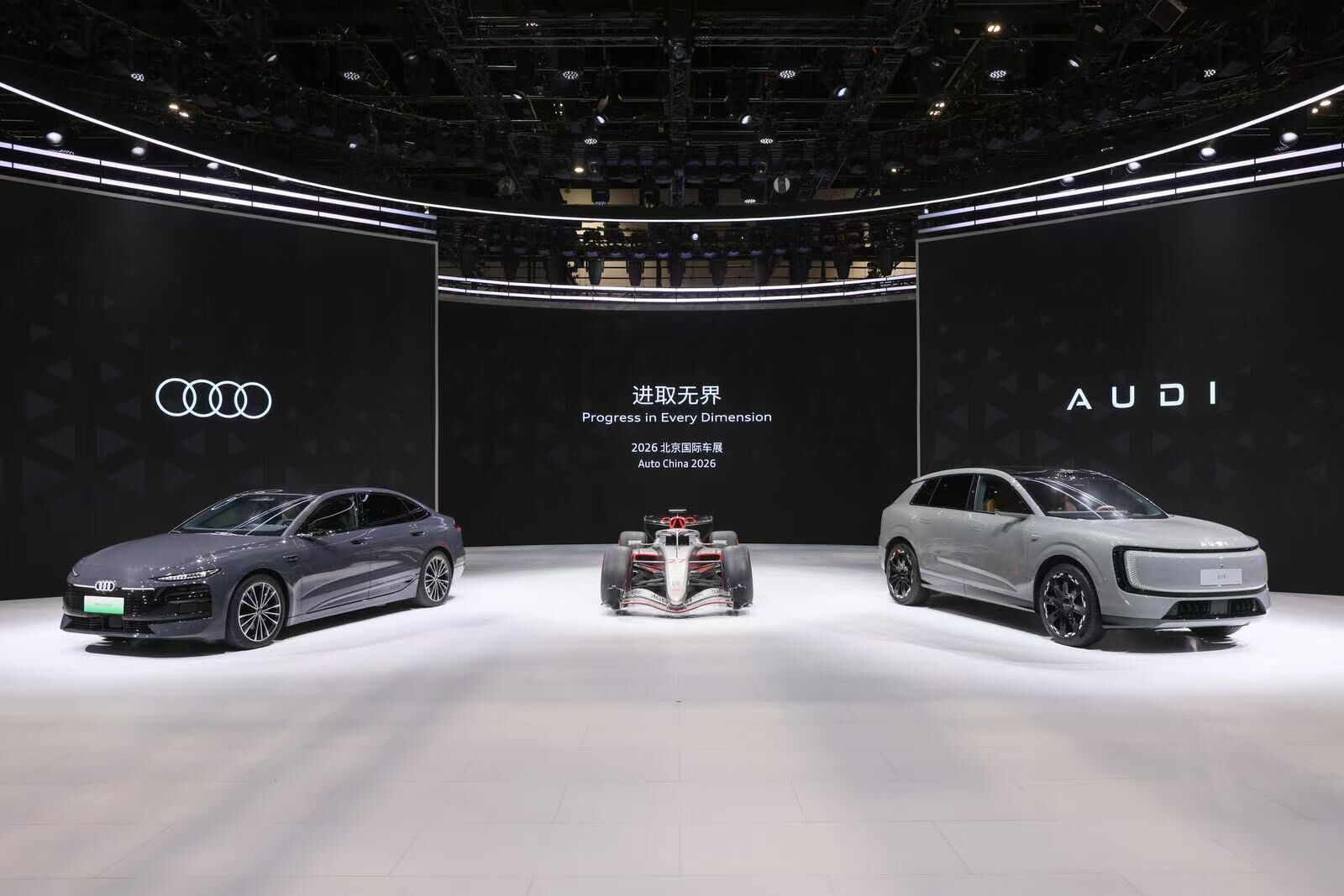
The E7X, a sleek electric SUV (what else would it be?), materialized on a brightly lit stage in Beijing, its silhouette a familiar blend of contemporary automotive aesthetics. It’s got all the trappings of a modern EV: long range claims, rapid charging capabilities, and an interior festooned with screens — essentially a digital cocoon. But its name, a three-letter homophone of a European titan, is the real story here. It’s a strategic maneuver, one might argue, designed to leverage established perceptions of quality and prestige while simultaneously carving out a uniquely Chinese identity in a brutally competitive landscape. And honestly, it’s working; the buzz is undeniable.
For policymakers, this isn’t just about flashy chrome — and kilowatt-hours; it’s about national industrial strategy. China’s government has championed electric vehicle development with an almost martial fervor, pouring subsidies into R&D and manufacturing, creating a hotbed of innovation — and sometimes, emulation. The domestic market is vast, absorbing more EVs than any other nation, and Beijing wants its homegrown champions to lead, not merely participate. The E7X, in its audacious branding, is a microcosm of this ambition.
But what does this signal to the global automotive fraternity? It’s a gauntlet thrown, certainly. Mr. Chen Wei, a spokesperson for China’s Ministry of Industry and Information Technology, didn’t mince words — or at least, he didn’t appear to. “Our ingenuity isn’t confined by Western nomenclature; it’s about delivering future mobility solutions to our people and the world,” he shot back when pressed on the branding during a press briefing. “The market will judge true innovation, not just origin stories.” That’s a stark signal, isn’t it?
Still, the reverberations aren’t entirely harmonious. From Brussels, a European Commission official, requesting anonymity due to the delicate nature of ongoing trade talks, expressed a measured concern. “While we welcome competition and technological advancement, the nuances of intellectual property and brand recognition are foundational to fair play in the global economy,” the official observed, adding, “We’re vigilant about protecting the hard-earned reputations of our industries.” It’s a diplomatic tightrope walk, acknowledging the giant strides of Chinese manufacturing while subtly underscoring the rules of engagement. They’re watching, closely.
The E7X’s debut, therefore, isn’t just a car launch; it’s a geopolitical parable playing out in sheet metal and lithium-ion. China accounted for over 60% of global electric vehicle sales in 2023, according to the International Energy Agency, a statistic that underscores its unparalleled market dominance and manufacturing capacity. This isn’t a fledgling industry anymore; it’s a juggernaut. So, when a brand like AUDI (the Chinese one) emerges, it’s not just a curious anomaly; it’s a confident challenge.
And for regions like South Asia — and the broader Muslim world, what does this signify? Pakistan, for instance, with its burgeoning middle class and pressing need for more affordable, efficient transportation, represents a prime growth territory for Chinese automotive exports. The influx of Chinese brands — often at price points impossible for established European or Japanese competitors to match — is already reshaping market dynamics. Don’t forget, these aren’t just cars; they’re vectors of economic influence. If AUDI (the Chinese one) can establish itself at home, it’s not a stretch to imagine its sleek, affordably-priced EVs soon gracing the congested streets of Karachi or Cairo, challenging the established order there too. This is an unsentimental calculus at work, where price, practicality, and perceived value often trump legacy.
The question isn’t whether the E7X will sell — it undoubtedly will within China’s massive market — but what its very existence, and its name, portends for the future of global brand identity. Is this strategic positioning or simply a provocative wink? It’s probably both, a testament to China’s ever-more assertive posture on the world stage, not just economically, but culturally and technologically. It’s a brave new world, — and it speaks in many languages — sometimes, uncannily familiar ones.
What This Means
At its core, the AUDI E7X launch underscores China’s sophisticated, multi-pronged approach to global industrial leadership. Economically, it signifies Beijing’s determination to dominate the nascent — and consequential — electric vehicle sector, not just through sheer volume but also by shaping brand narratives, however contentious. For Western manufacturers, it’s a stark reminder that their long-held market advantages, including brand recognition and intellectual property, are under unprecedented pressure. They’ll need to innovate faster — and smarter, or face direct challenges from agile, well-resourced Chinese competitors.
Politically, the episode feeds into ongoing debates about trade fairness, IP protection, and the broader U.S.-China, and EU-China, strategic rivalries. It signals a future where market share battles aren’t just fought on price or quality, but also on the more nebulous battleground of perceived authenticity and brand equity. Developing nations, particularly across South Asia and the Muslim world, stand to benefit from increased competition and lower prices for EVs, yet they’ll also navigate the complex geopolitical currents attached to these products. This isn’t just about buying a car; it’s about choosing an industrial allegiance, whether overtly or subtly. It’s a calculated gamble, — and everyone’s watching the payoff.