

The Whispering Booth: Italy’s Referee Chief Embroiled in VAR Interference Scandal
POLICY WIRE — Milan, Italy — It’s a phantom presence, a disembodied voice from a control booth, now potentially the epicentre of Italian football’s latest integrity crisis. For all the technological...

POLICY WIRE — Milan, Italy — It’s a phantom presence, a disembodied voice from a control booth, now potentially the epicentre of Italian football’s latest integrity crisis. For all the technological advancements designed to purify the beautiful game, a video has emerged, not of a contentious foul or an offside call, but of a man seemingly inserting himself into the very fabric of decision-making, undermining the sterile impartiality VAR was meant to guarantee. And so, Serie A’s referee chief, Gianluca Rocchi, finds himself ensnared in a suspected sports fraud investigation, his legacy — and perhaps the credibility of a league that’s only just begun to shake off past demons — hanging precariously in the balance.
Investigators, those forensic accountants of fair play, are meticulously dissecting footage they believe paints a damning picture. At its core is a specific incident from March 1, 2025, during a match between Parma — and Udinese. The scene: a VAR monitor, displaying a potential handball within Parma’s penalty area. VAR official Daniele Paterna, by all accounts, was initially disinclined to award a spot-kick. He believed the player’s arm hadn’t created an ‘unnatural’ expansion of the body — a nuanced interpretation in itself. But then, an interruption. Paterna, mid-review, abruptly pivots, a question escaping his lips: “Is that a penalty?”
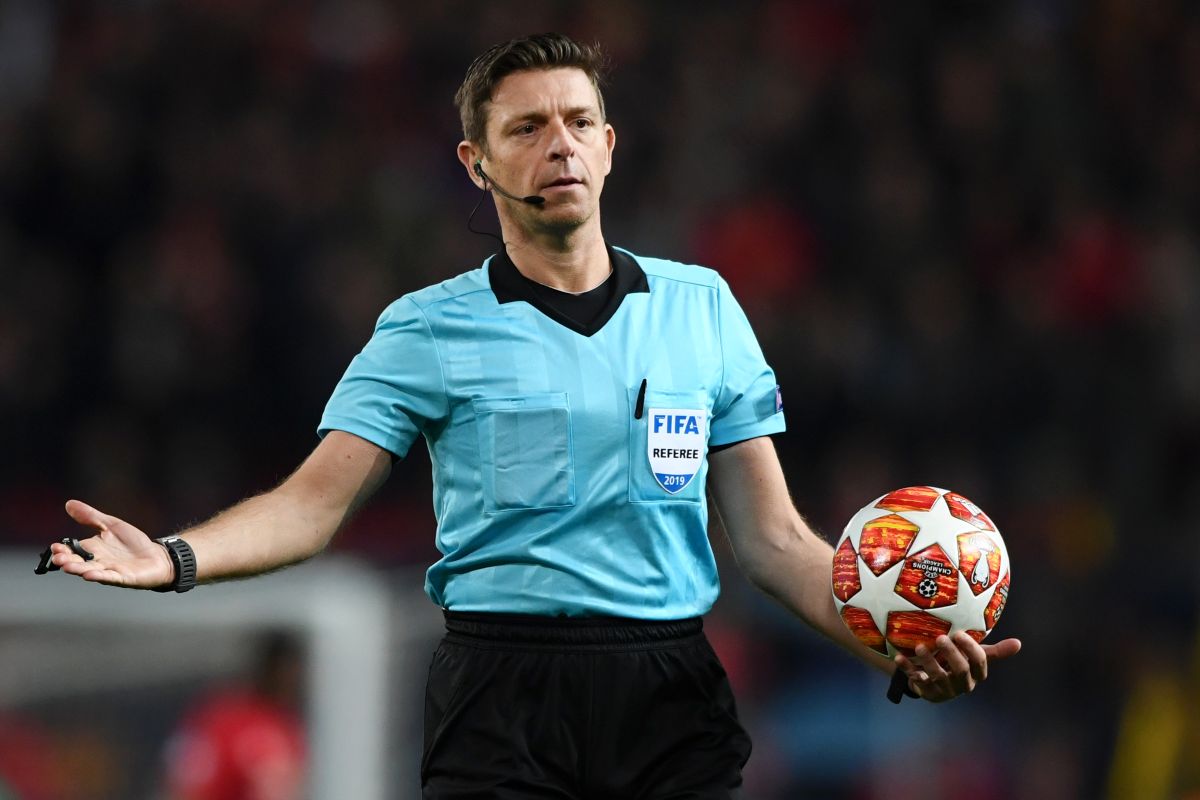
Behind the headlines, this seemingly innocuous query carries seismic implications. Sources close to the Milan Prosecutor’s office contend Paterna wasn’t speaking to an invisible friend. Instead, they allege, his gaze — and his question — was directed at Rocchi himself, who had, astonishingly, materialized at the VAR officials’ door. The accusation? Rocchi, the 52-year-old designator of referees, was allegedly pushing for a pitchside review, a direct breach of VAR protocols. You see, the regulations are crystal clear: only the three designated VAR officials and the on-field referee possess the mandate to influence such calls. External intervention, even from the chief architect of refereeing (especially from the chief architect!), is strictly forbidden, a line in the sand delineating oversight from outright interference.
Rocchi isn’t just facing scrutiny over this one pivotal moment. He’s also accused of a broader pattern of favoritism, specifically in the referee selections for Inter during the 2024-25 campaign. It’s a classic Italian football narrative: the spectre of bias, a whisper of allegiances, tainting the perceived neutrality of the men in black. “I’ve voluntarily stepped aside because I’m absolutely convinced of my rectitude,” Rocchi declared, a man resolute in the face of burgeoning skepticism. “I’m certain I’ll emerge from this ordeal not just exonerated, but stronger than before, my reputation unblemished.” He’s slated to face questioning at the Milan Prosecutor’s office on April 30; a date many consider consequential for the sport’s future.
Still, the murmurs of scandal reverberate far beyond the confines of Milanese courtrooms or Italian stadia. For millions of fervent fans stretching from Karachi’s bustling streets to Dhaka’s crowded cafes – regions where Serie A, once dominant, still holds a considerable sway – such allegations cast a pall over the weekly ritual of football, questioning the very impartiality they’ve come to expect from Europe’s top leagues. The integrity of European football, an economic behemoth, relies heavily on this global faith.
The Italian Football Federation (FIGC) finds itself once again navigating treacherous waters. “The integrity of our sport, of every single match, stands as our paramount principle,” asserted Gabriele Gravina, president of the FIGC, in a statement released earlier today. “We owe it to the fans, to the clubs, and to the global community who watch Serie A with such passion, to ensure that trust remains inviolate. We’re cooperating fully with the authorities.” It’s a statement heavy with implied weight, acknowledging the fragility of public confidence.
This isn’t merely an administrative hiccup. It’s a systemic challenge, particularly for a league like Serie A, which has, for decades, grappled with allegations of corruption and match-fixing – from the infamous Totonero scandal of the 1980s to the seismic Calciopoli crisis of 2006. Each new accusation chips away at the edifice of trust, threatening to erode both domestic passion and international appeal. And let’s not forget the financial stakes: Serie A generated an estimated €2.7 billion in revenue during the 2022-23 season, a figure reliant on its perceived legitimacy and global viewership, much of it from overseas markets.
What This Means
The implications of the Rocchi investigation stretch far beyond a single VAR decision. Politically, it reopens old wounds for Italian football, inviting renewed scrutiny from sporting authorities like UEFA and FIFA, potentially triggering sanctions or, at the very least, a PR nightmare. The FIGC, under Gravina, has been working assiduously to rebuild its tarnished image, emphasizing transparency and fair play; this incident is a direct broadside to those efforts. It’s a potent reminder that despite all the talk of reform, the shadow of impropriety often looms large over the sport’s power structures.
Economically, the fallout could be significant. A perceived lack of integrity directly impacts commercial sponsorships, broadcasting rights, — and fan engagement. Why would a major corporation invest millions in a league whose results are (potentially) tainted? the global market — including burgeoning football viewership in the Middle East and South Asia — is increasingly discerning. If fans believe outcomes are manipulated, even subtly, they’ll inevitably drift towards leagues perceived as cleaner, healthier environments for competition. This incident, however localized it may seem, reverberates through the intricate, lucrative global ecosystem of football, challenging the very premise of football’s frenetic economy and the meticulous calculations behind transfers like Roma’s pursuit of Algerian talent.
Ultimately, this entire saga tests the fundamental promise of VAR: that technology serves to enhance fairness, not become another conduit for influence. If the officials meant to ensure impartiality are themselves implicated in its subversion, then the integrity of Serie A — and indeed, the wider sport — remains a precarious construct, always just one whispering booth away from outright crisis. And that, truly, is the penalty no league can afford.