
Everest’s Icy Gatekeeper: A Glacial Snarl Puts Summit Ambitions — And Nepal’s Economy — On Perilous Hold
POLICY WIRE — Kathmandu, Nepal — The Khumbu Icefall, an ever-shifting behemoth of frozen chaos, has always been Everest’s capricious gatekeeper. But this season, it’s not merely shifting;...

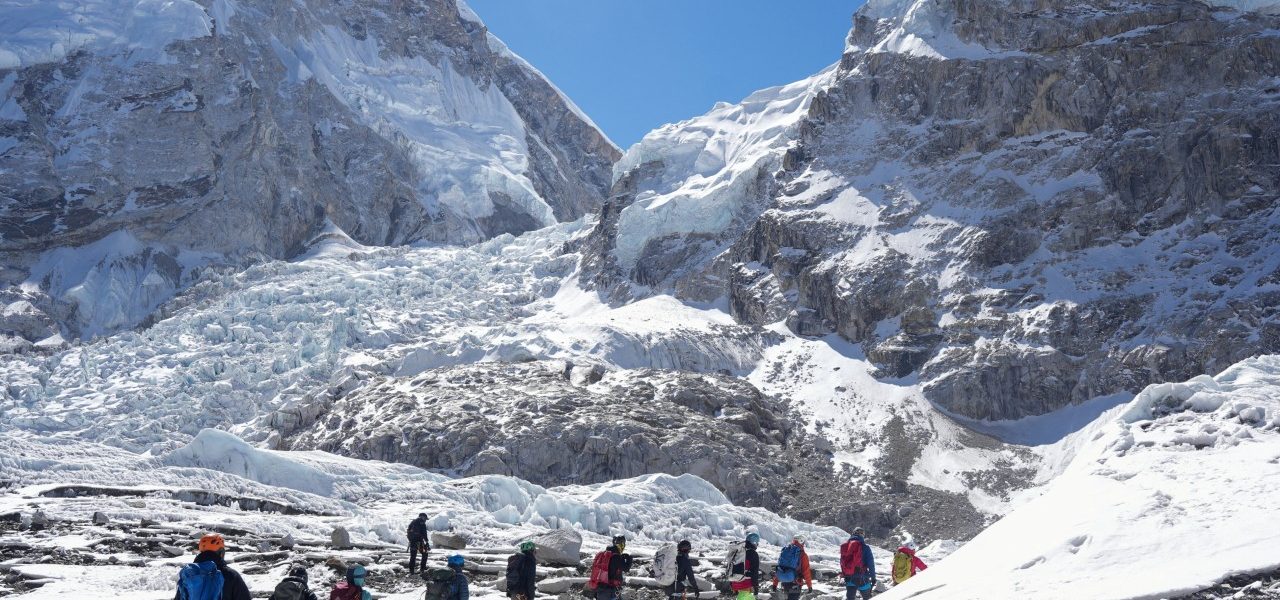
POLICY WIRE — Kathmandu, Nepal — The Khumbu Icefall, an ever-shifting behemoth of frozen chaos, has always been Everest’s capricious gatekeeper. But this season, it’s not merely shifting; it’s outright barring passage. An immense, recalcitrant chunk of glacial ice — a serac — now stands as a formidable, near-insurmountable barrier, not just to the aspirations of hundreds of high-altitude adventurers but, crucially, to the economic lifelines of an entire Himalayan nation.
It’s a peculiar quandary, isn’t it? Humanity, with its boundless hubris and cutting-edge gear, routinely scales the planet’s highest peaks, yet finds itself utterly stymied by a natural impediment that’s scarcely moved in two weeks. This isn’t a matter of skill or fortitude, but rather a chilling reminder of nature’s enduring indifference — and its increasing volatility. The spring climbing season, an annual spectacle of human endurance and commercial enterprise, finds itself in an unexpected holding pattern, its finely tuned logistics unraveling with each passing day.
At its core, the problem lies above the notorious Khumbu, an expanse of cracking ice and bottomless crevasses that even seasoned mountaineers regard with a mixture of awe and dread. The Nepalese ‘icefall doctors,’ those unsung Sherpa heroes who annually re-route and secure the path through this frozen labyrinth, have been unable to finish their perilous work. They’re waiting. And the world watches, from high-stakes expedition companies to aspiring climbers from distant lands, many of whom have invested fortunes — financial and emotional — in this singular pursuit.
So, what’s a few weeks’ delay on a mountain that’s stood for millennia? Plenty, when you consider the economics. Nepal’s economy, already delicate, leans heavily on the revenue generated by Everest permits and the associated tourism infrastructure. In 2023, the Department of Tourism alone issued 478 permits for Everest, each costing a staggering $11,000 — a revenue stream totaling over $5.2 million for the government coffers before a single boot touches the ice. That doesn’t even count the local jobs, the gear sales, the teahouses, the porter services, and the myriad ripple effects that sustain countless families.
"This isn’t merely an inconvenience for foreign climbers; it’s a significant disruption to our national economy and reputation," opined Mr. Ramesh Dhakal, Spokesperson for Nepal’s Department of Tourism, his voice carrying the weight of official concern. "We’ve always prided ourselves on facilitating safe — and efficient ascents. This unforeseen obstacle, however, forces a reevaluation of schedules and, yes, some difficult conversations about potential refunds or rescheduling, which nobody wants." He’s right; no one wants that.
But the ‘icefall doctors’ — the very people on the front lines of this frozen battle — recount a more primal challenge. "We’ve seen big seracs before, but this one’s different," conveyed Mr. Mingma Tenji Sherpa, a veteran ‘Icefall Doctor’ whose family has guided on Everest for generations. "It’s unstable, massive. We can’t just fix ropes around it; it needs to be bypassed or made safe, and that’s a job for nature, or for a very long wait. Our priority is life, not just speed." His pragmatism underscores the immense danger. And it’s a danger that doesn’t discriminate.
📄 POLICY WIRE WHITEPAPER PUBLISHED: PAKISTAN'S NATIONAL SECURITY POLICY PRIORITIES
👉 READ BY CLICKING HEREBehind the headlines of record-breaking attempts and dramatic rescues, there’s a quiet but growing demographic of climbers from across the Muslim world — from Pakistan, Indonesia, and various Gulf states — for whom scaling Everest represents not just personal achievement but a powerful statement of national pride and growing global ambition. For them, these delays carry particular cultural and logistical weight, often involving complex travel arrangements and significant investment from communities eager to see their flag unfurled at the Roof of the World.
Still, the clock ticks. The brief weather window for summit attempts is notoriously narrow, typically late May. Every day lost to this icy blockade compresses that window further, escalating both risk — and frustration. It’s a high-stakes poker game against time and the elements, with Nepal’s economic chips — and countless human dreams — on the table.
What This Means
The protracted blockage on Everest is more than a seasonal hiccup; it’s a stark policy flashpoint for Nepal. Economically, prolonged delays could slash permit revenues, destabilize local economies reliant on tourism, and erode international confidence in Nepal’s ability to manage its most prized natural asset. For a nation where tourism contributes a substantial, albeit fluctuating, percentage to its GDP (pre-pandemic figures indicated around 7-8%), such disruptions aren’t marginal. Policy-makers in Kathmandu must now contend with the dual challenge of ensuring climber safety — which directly impacts the nation’s reputation — while simultaneously salvaging a critical revenue stream. Do they push for riskier, faster solutions, or do they prioritize prudence, potentially sacrificing immediate income?
Beyond the direct financial implications, there’s the subtle yet profound geopolitical ripple. The imagery of an ‘unconquerable’ Everest, even temporarily, could dampen the aspirational narratives that fuel adventure tourism globally. It forces a reassessment of the human-nature dynamic in an era of undeniable climate change — even if this specific serac isn’t directly attributed to global warming, the instability of glacial environments is. The world is watching how Nepal navigates this precarious situation, setting precedents for the management of other global natural wonders. The situation underscores the urgent need for resilient policy frameworks that account for increasingly unpredictable natural phenomena, rather than assuming business as usual. It’s not just about getting climbers to the top; it’s about navigating a future where nature often calls the shots, leaving human policy to adapt.