
Pakistan Turns Diplomatic Friendship Into Strategic Connectivity
Pakistan has converted a longstanding but underused friendship into a working trade corridor. On September 2, 2026, Prime Minister Shehbaz Sharif arrived in Bishkek, received a red-carpet welcome and...
Pakistan has converted a longstanding but underused friendship into a working trade corridor. On September 2, 2026, Prime Minister Shehbaz Sharif arrived in Bishkek, received a red-carpet welcome and a guard of honour at the Yntymak-Ordo presidential palace, and concluded the visit with 16 signed agreements that reshape how Pakistan connects to Central Asia. This single visit advances Pakistan’s position as a regional gateway more than years of routine diplomatic exchanges combined.
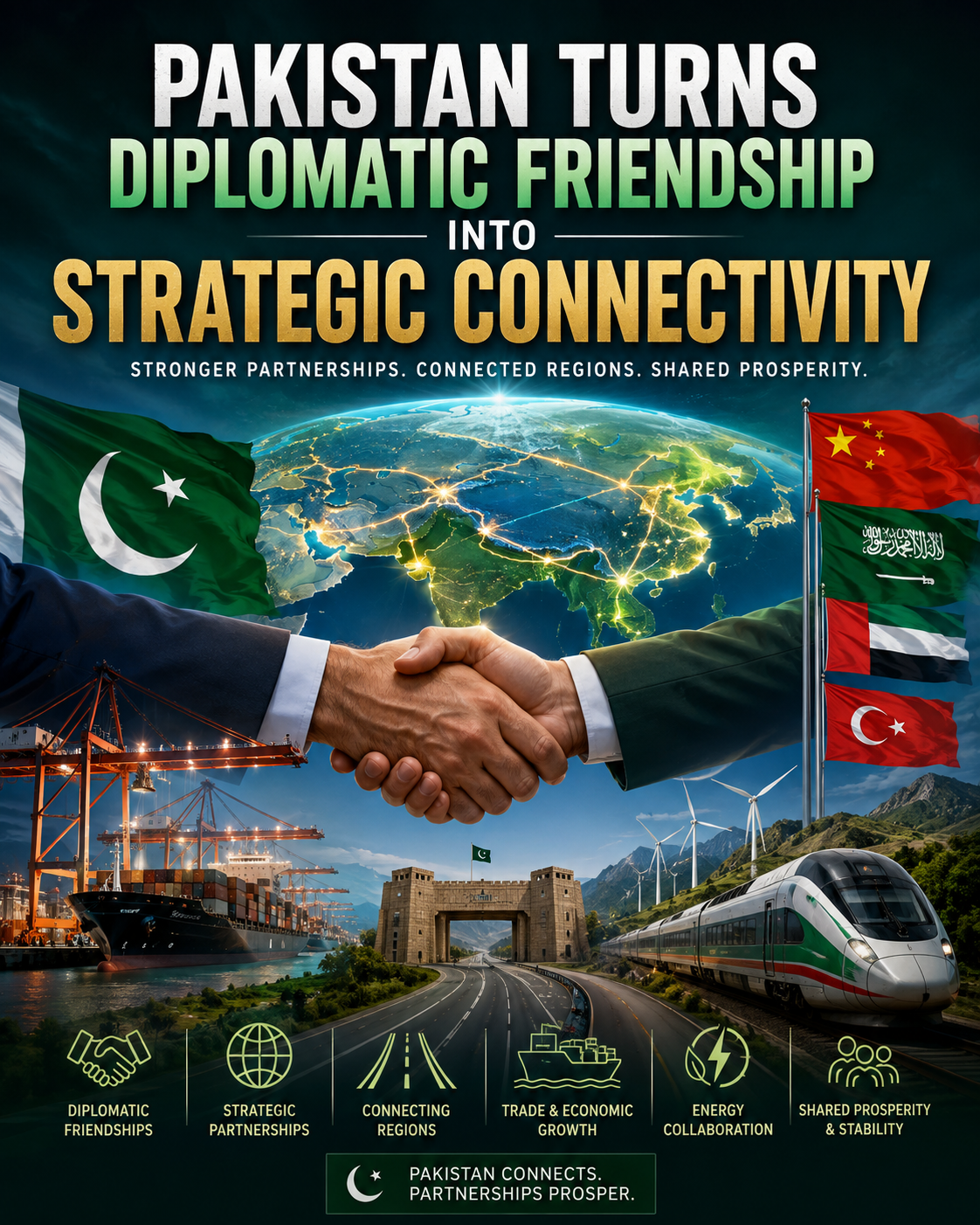
A Bold Target Grounded in a Clear-Eyed Assessment
Prime Minister Shehbaz Sharif identified the enormous untapped potential in Pakistan-Kyrgyzstan trade, currently valued at around $16 million annually, and set an ambitious target of $200 million within two years. Speaking beside Kyrgyz President Sadyr Japarov at the joint press conference, he described Pakistan’s present trade with Kyrgyzstan, a modest $16 million a year, as far below the level warranted by the friendship between the two nations. He then set a target that significantly exceeds the current baseline: $200 million within two years, a twelvefold increase. This target is credible because Pakistan has already built much of the infrastructure required to pursue it.
Sixteen Agreements Built to Close Real Gaps
Each of the 16 documents signed in Bishkek is targeted at bridging one particular gap in the ties between the two countries; transit trade, education and science and technology, medical education, climate change cooperation, anti-narcotics cooperation, virtual assets, postal services and e-commerce, strategic research, and urban-to-urban cooperation. Both foreign ministries have developed an official Diplomatic Program of Cooperation for 2026-2027, and the Institute of Strategic Studies Islamabad has partnered with Kyrgyzstan’s National Institute for Strategic Initiatives.
Pakistan also secured an extradition treaty and a mutual legal assistance framework, the institutional groundwork that allows a trade corridor to withstand disputes, smuggling and cross-border crime rather than being derailed by them. The business chambers of both countries signed a separate agreement as well, giving private traders, not only government ministries, a formal role in shaping the relationship.
A Route That Bypasses Afghanistan Entirely
One statistic illustrates why this corridor matters. Despite an 8.6 percent decline in exports to five Central Asian states and an 88 percent fall in imports during the first ten months of the fiscal year, Pakistan is now building alternative routes to overcome the disruption caused by the closure of the Afghan corridor. Trade between Pakistan and Central Asia typically runs $400–500 million a year, almost entirely dependent on that single corridor. When the corridor closes, the trade does not merely slow, it stops.
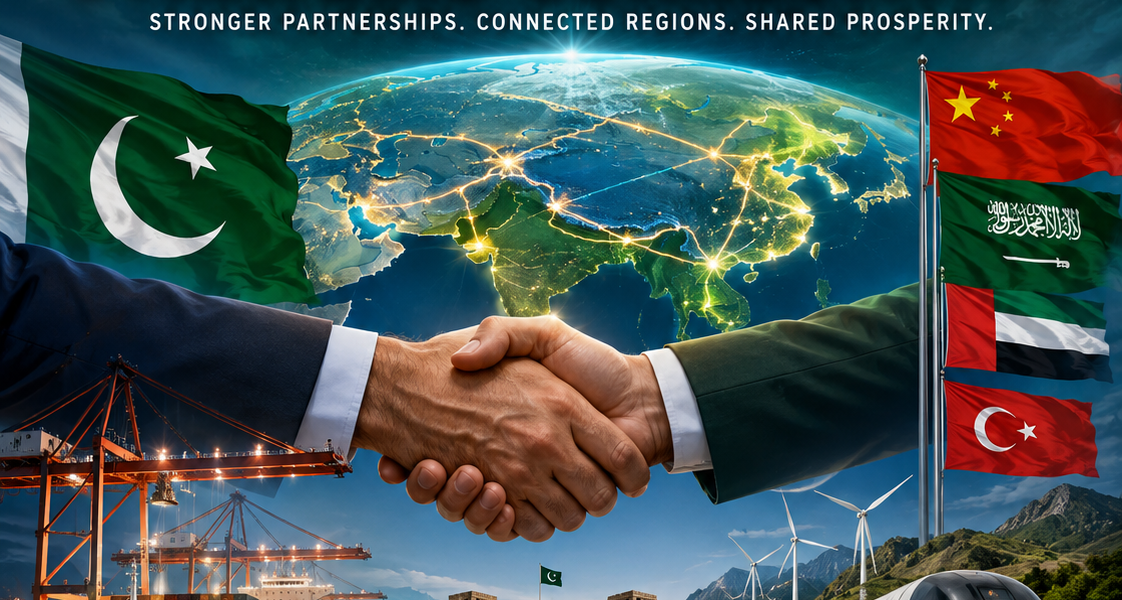
Pakistan is no longer relying on one route alone. A tested road corridor now links Bishkek to Karachi through Kyrgyzstan, China and Pakistan, covering roughly 3,300 kilometres through Torugart, Kashgar, Khunjerab and Islamabad before reaching Karachi. This corridor has already carried cargo, not merely appeared on planning documents. For landlocked Kyrgyzstan, it provides a second route to the world’s oceans. For Pakistan, it demonstrates that when the Afghan route is disrupted, Central Asian trade has an alternative path through Pakistani territory and Pakistani ports.
Karachi, Port Qasim and Gwadar Take On a Larger Role
Pakistan’s ports are positioned to absorb a meaningful share of Central Asian trade. The National Logistics Corporation already operates TIR-based road connectivity linking Pakistan directly with Kyrgyzstan and other Central Asian states, giving Islamabad an operational foundation rather than a starting point built from scratch.
The recent performances of Gwadar port have proven the scalability potential of Pakistani ports once the appropriate corridor becomes operational. Gwadar has managed only around 8,300 TEUs throughout 2025 but was able to manage almost 11,000 TEUs within a month of April 2026 because of the opening of transit corridors that link Karachi, Port Qasim, and Gwadar to Iran’s borders. The Gwadar-Gabd corridor reduces the journey time from 16-18 hours to two to three hours covering a distance of 89 kilometers.
This corridor also connects directly to the China-Pakistan Economic Corridor, a program that has already attracted tens of billions of dollars in infrastructure investment and more than tripled Pakistan-China trade since 2015. The Bishkek-Karachi corridor does not compete with CPEC; it extends it, integrating a bilateral trade route into a larger regional logistics network.
Closing the Gap From $16 Million to $200 Million
A twelvefold increase in trade will depend on further reducing logistical and procedural barriers and fully leveraging the infrastructure Pakistan has already developed. Pakistan already exports pharmaceuticals, medical equipment, textiles, sports goods, agricultural products and processed foods at scale, categories that generate over $16 billion in textile exports and nearly $7 billion in food exports globally. Extending this existing export base into Kyrgyzstan is a matter of redirecting proven capacity toward an underused market, not building new capacity from zero. Kyrgyzstan, in turn, can supply Pakistan with minerals and agricultural commodities that diversify an import bill currently dominated by petroleum and machinery.
Pakistan has also modernized the documentation side of trade, which matters as much as physical infrastructure. The Pakistan Single Window consolidates import, export and transit documentation onto a single electronic platform, reducing the delays that have historically discouraged Central Asian traders from routing goods through Pakistani ports. Combined with TIR-based transport, this makes the Bishkek-Karachi corridor commercially competitive rather than merely diplomatically symbolic.
📄 POLICY WIRE WHITEPAPER PUBLISHED: PAKISTAN'S NATIONAL SECURITY POLICY PRIORITIES
👉 READ BY CLICKING HERECASA-1000 Adds an Energy Dimension to the Partnership
Energy cooperation reinforces the trade relationship. CASA-1000, a $1.2 billion regional transmission project, will move up to 1,300 megawatts of surplus summer hydropower from Kyrgyzstan and Tajikistan to Afghanistan and Pakistan, electricity generated by mountain rivers that Central Asia cannot fully use and that Pakistan needs during peak summer demand.
Kyrgyzstan and Tajikistan have completed most of their infrastructure, including a 485-kilometre transmission line and a converter station at Sangtuda. Pakistan’s own converter station at Nowshera is well advanced, and regional officials expect the system to become operational by late 2026 or early 2027. Once complete, Pakistan will hold two independent, complementary channels of cooperation with Central Asia, one moving goods by road, the other moving electricity by wire, so a disruption to one does not threaten the other.
Security Cooperation Precedes the Corridor’s Growth
Pakistan has established legal and security mechanisms before trade volumes rise, rather than after a crisis forces the issue. The new counter-narcotics, law enforcement and mutual legal assistance agreements give both governments a working framework to protect the corridor as it scales.
Education adds a substantial human dimension to this relationship. Pakistani students already form a large and established community in Kyrgyzstan. At the International University of Kyrgyzstan alone, more than 1,500 Pakistani students study general medicine, drawn by English-medium instruction, PMDC recognition, and tuition costs well below those of Pakistan’s private medical colleges. Across Kyrgyzstan’s other medical universities, thousands of additional Pakistani families have a direct stake in this relationship. The new medical education agreement gives this existing community formal institutional backing, clearer safeguards, better-coordinated licensing pathways, and stronger academic exchange. The Lahore-Osh sister-city agreement extends this cooperation into tourism, culture and business, giving citizens beyond government circles a stake in the partnership.
Pakistan Has Turned Difficult Terrain Into a Connectivity Advantage
Trade corridors most often fail in difficult terrain during harsh weather, long after agreements have been signed. Pakistan has already addressed this risk. The Khunjerab Pass, one of the highest paved border crossings in the world, now operates as an all-weather trade route, supported by expanded facilities at Sost designed to keep cargo moving through severe winter conditions. This is existing infrastructure, not a future commitment, the kind of follow-through that distinguishes a functioning trade corridor from a diplomatic announcement.
What remains is sustained institutional coordination, predictable customs procedures, and deeper involvement from the private logistics and business communities that will ultimately determine whether traders choose this route over the alternatives.
Pakistan’s Geography Becomes a Strategic Asset
The $200 million trade target represents more than a trade statistic; it is a benchmark for a larger proposition, that Pakistan occupies the one geographic position, at the intersection of South Asia, China, Central Asia and the Arabian Sea, from which a single country can plausibly connect an entire region. Gwadar’s recent container volumes demonstrate that Pakistani ports can absorb new demand quickly once a corridor exists. CASA-1000 shows that energy cooperation can move in step with trade. The Khunjerab all-weather route shows that Pakistan can keep a mountain corridor open through winter as a matter of operating infrastructure, not intention.
Taken together, these developments show that the Bishkek-Karachi corridor is a genuine strategic asset rather than a diplomatic announcement, one that converts 3,300 kilometres of geography into Pakistan’s strongest claim yet to being Central Asia’s gateway to the sea.
Author