


Wildfire’s Relentless Grip: New Mexico Fights Blaze While Eyeing the Sky
Wildfire’s Relentless Grip: New Mexico Fights Blaze While Eyeing the Sky POLICY WIRE — Glenwood, N.M. — It’s a bitter sort of irony, isn’t it? To battle an inferno with water you hope...

Wildfire’s Relentless Grip: New Mexico Fights Blaze While Eyeing the Sky
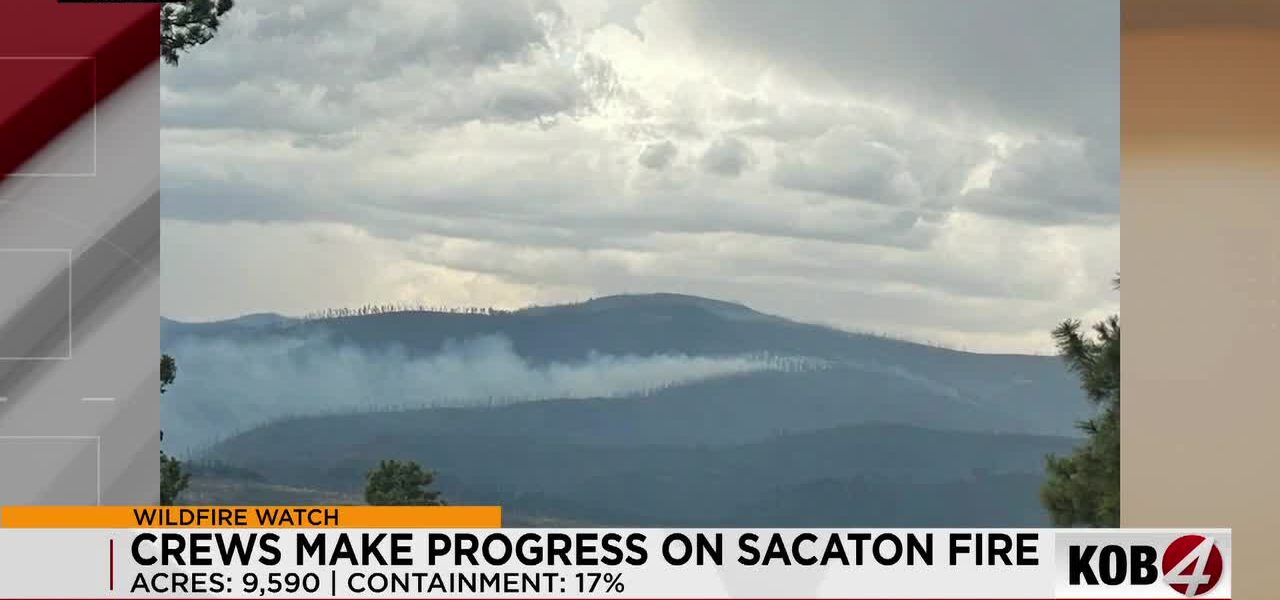
POLICY WIRE — Glenwood, N.M. — It’s a bitter sort of irony, isn’t it? To battle an inferno with water you hope falls from the heavens, even as you blast more from man-made conduits. That’s the reality playing out in New Mexico’s rugged Gila National Forest, where firefighters are locked in a relentless contest against the Sacaton Fire, an unwelcome visitor that hasn’t exactly packed up its bags and left.
The scale of this thing — it’s just vast. A lightning-sparked beast, it started June 21 about 15 miles east of Glenwood. And according to the latest official updates, this monster has already scorched a staggering 9,590 acres. Imagine that footprint, spreading its dark tendrils across the landscape. The crews, bless their stoic hearts, have managed a mere 17% containment, leaving most of this vast expanse to the whims of wind and fuel. [QUOTE_PLACEHOLDER]
Down in Willow Creek, folks have been under a GO! evacuation order, an immediate call to abandon everything — and run. It’s a gut-wrenching decision no one wants to make. The fight itself? It’s a mixture of ancient prayer — and cutting-edge tech, of course. Rain offered some help on Wednesday, a fleeting, precious commodity, letting crews get a breather and some tactical advantage. Helicopter water drops were part of the aerial assault too, dumping their payloads near Willow Creek and along the fire’s northwest and northeast edges, trying to box it in.
But when nature’s bounty falls short—and it often does in these parched lands—human ingenuity steps up. Firefighters put into play nearly 100 sprinkler kits and thousands of feet of hose in the Willow Creek area for structure protection. That’s a serious operation, a defensive line against an unpredictable enemy. They’ve also been busy with hazard tree removal along Bearwallow Road, clearing away the kindling that feeds these destructive surges.
This isn’t some quaint country brush fire; it’s a national problem playing out on local soil. Currently, 166 personnel are assigned to the fire, a formidable force, but one still dwarfed by the sheer, unyielding power of the blaze itself. What’s next? Officials say crews on Thursday will keep assessing fire behavior and stay ready for defensive firing operations near Willow Creek if conditions warrant. That’s a professional way of saying: be prepared to fight fire with fire. Resources are also positioning to prepare Bearwallow Lookout and contingency lines, readying backup plans when the main assault falters.
Life, or what’s left of it near the perimeter, continues under a blanket of restrictions — and warnings. A Temporary Flight Restriction remains in place over the Sacaton Fire. And why not? It’s a war zone in the air. On the ground, Bursum Road — and NM 159 are closed east of Mogollon to Willow Creek, shutting down crucial arteries. The Gila National Forest has even urged people to check its alerts webpage for the latest closure information – because things change, fast.
Catron County’s Sheriff’s Office has pulled out the Ready, Set, Go! system, the formal framework for emergency preparedness. The news confirms Willow Creek remains in GO! status. What does that mean for the folks living there? Well, it means: Residents in GO! should leave immediately. No debate, no delay. The skies, naturally, are thick with it: Smoke is visible from nearby communities. Folks are warned that air quality will change with fire activity, weather and wind, and residents should limit long outdoor activity when smoke is present. Because sometimes, just breathing can be a hazard.
Then there’s the ongoing reality for everyone else. The Gila National Forest remains under Stage 1 Fire Restrictions. This isn’t a suggestion; it’s law. Campfires are limited to designated recreation sites — and campgrounds with constructed metal fire rings. And forget about burning anything open; open burning is banned in unincorporated Catron County and Catron County Fire District 30. And frankly, who can blame them?
What This Means
The relentless battle against wildfires in places like New Mexico isn’t just a local issue—it’s a microcosm of a much larger, increasingly complex global predicament. What we see here, the frantic deployment of resources, the dependence on unpredictable weather patterns, the economic devastation of lost homes and livelihoods, echoes across the globe. From the drought-stricken landscapes of Southern Europe to the colossal blazes that periodically engulf parts of Australia, or the flash floods and heatwaves ravaging Pakistan and other South Asian nations—the fundamental challenges are the same.
Governments, often with stretched budgets and competing priorities, grapple with a future where climate change isn’t a distant threat, but a present reality. The investments needed for resilient infrastructure, sophisticated early warning systems, and well-equipped emergency services are massive. For countries like Pakistan, already battling myriad economic pressures and a burgeoning population, managing the fallout of climate events can cripple development efforts and exacerbate social inequalities. The resources funneled into reactive measures, like those 166 personnel on the Sacaton Fire, mean less for proactive prevention, education, and long-term adaptation. It’s a never-ending cycle, really. Policy makers worldwide must come to terms with the fact that these localized disasters—be they in New Mexico or, say, the increasingly volatile northern regions of South Asia—are symptomatic of a planetary crisis requiring integrated, bold solutions. Otherwise, we’ll keep relying on a lucky break from the rain, — and that’s not much of a long-term plan.
But the political will? That’s where things often get thorny. Short electoral cycles, the immediate need to cut a ribbon, or pass a bill, overshadow the multi-decade planning needed to truly mitigate these growing risks. You’ve got an immediate crisis like this fire—and rightly so, that takes precedence. But who’s thinking about next year’s fire, or the one after? And how do we persuade people that these seemingly disparate events are all connected? It’s the inconvenient truth about global environmental challenges and the grinding, day-to-day work of fire suppression: sometimes, the battle isn’t just against the flames, it’s against human shortsightedness, too.