


Arabian Sea Incident: US Navy Crash & Geopolitical Stakes
A US Navy helicopter crash in the Arabian Sea, with one lost crewman, reveals deeper geopolitical tensions. Explore how this incident impacts global power shifts & regional security.

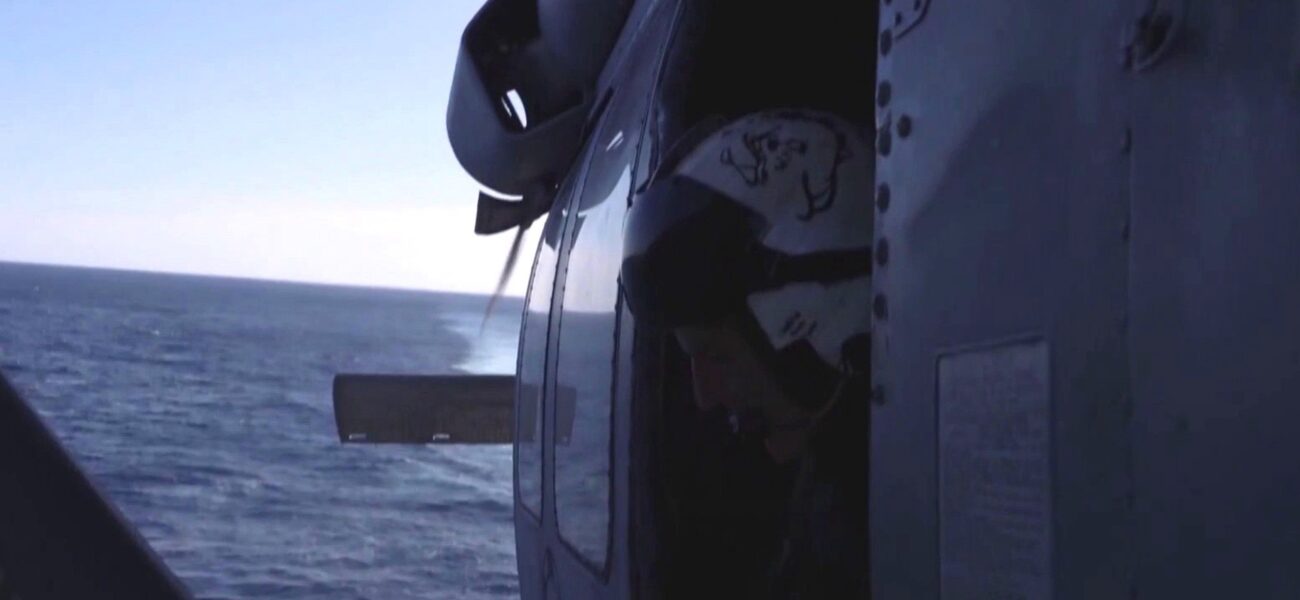
POLICY WIRE — Washington D.C. — Not every crash makes a global tremor, but some disappearances, however localized, rip open older wounds. The Pentagon confirms another routine operational mishap in the sprawling, geopolitically charged waters of the Arabian Sea, involving a US Navy helicopter. One crew member is gone—presumed lost at sea—and while the official statements ring with regret and the grim commitment of a search and rescue operation, what’s left unsaid echoes far louder than any official lament. We’re talking about real estate, after all, — and this particular stretch of ocean isn’t just blue. It’s a stage.
The incident, classified as a non-fatal (aside from the missing personnel, of course) aviation crash, saw a helicopter go down somewhere off the coast. Two other sailors were rescued, apparently with non-life-threatening injuries. A press release, tight-lipped as ever, outlined the sequence of events with almost clinical precision. They said [QUOTE_PLACEHOLDER], providing little fodder for those looking beyond the immediate tragedy. But one missing American service member in that part of the world—it’s never just about the weather, is it?
And so, we watch the Gulf. That’s what a few less pairs of boots, or in this case, a downed chopper, really means in the broader scheme. It means whispers of readiness, of technological fallibility, and of the sheer, grinding fatigue of maintaining a vast military presence in perpetually volatile regions. This isn’t just some backyard pond; this is a strategic waterway that accounts for roughly one-third of the world’s seaborne oil trade, according to the U.S. Energy Information Administration’s 2021 data. You don’t just ‘lose’ a piece of equipment there without someone, somewhere, taking notice.
The naval exercises in the region—a constant, if sometimes hushed, drumbeat—are aimed at deterring all kinds of shadowy players, and occasionally, less shadowy but still hostile state actors. When something goes wrong, you can bet military brass review every bit of it with a fine-tooth comb. It’s not just a search for one lost soul—that’s human instinct—it’s a forensic investigation into operational security and potential vulnerabilities. Was it mechanical failure? Pilot error? Or something far more nefarious hinted at by the subtle jostling of fleets from rival powers? We don’t have the details. But then again, does anyone outside the command structure ever get the full, unvarnished truth about these things? Probably not.
Pakistan, perched strategically on the eastern flank of the Arabian Sea, watches these developments with keen, often wary, eyes. Their own naval capabilities, though not on par with Washington’s, are significant regionally. Islamabad understands the dynamics of maritime power projection better than most; it’s had to for decades, juggling relationships with Saudi Arabia, Iran, and an increasingly assertive China. Any perceived weakness or misstep by a major power in their backyard creates a ripple effect. It’s why they’re so sensitive about their coastal security, for instance, and why they’re always looking at the regional balance—how much influence is too much for any one nation to wield? They haven’t offered an official statement, but you can be sure their intelligence apparatus is dissecting every radio crackle. But even if they wanted to, what could they really say? It’s all too complex.
📄 POLICY WIRE WHITEPAPER PUBLISHED: PAKISTAN'S NATIONAL SECURITY POLICY PRIORITIES
👉 READ BY CLICKING HEREThe U.S. Navy maintains its operations regardless. The search efforts continue with vessels — and aircraft working overtime. We hear the familiar official assurances that [QUOTE_PLACEHOLDER]. It’s the standard refrain, intended to calm nerves — and project an image of control. Yet, you don’t need a crystal ball to see that these small, seemingly isolated incidents stack up, chipping away at perceived invincibility, or at the very least, raising eyebrows among those who track global power shifts. The game of thrones in the international maritime theater never really stops, it just morphs into different skirmishes. This time, it’s a lost helicopter. Next time, who knows? This ocean isn’t just a highway, you see. It’s also a mirror reflecting everyone’s fears and ambitions.
What This Means
A single lost crew member, and a downed chopper, might seem like an isolated accident to the casual observer, but for policy wonks and strategists, it’s a flashpoint of anxiety in an already overheated region. Economically, even minor disruptions or perceived instability in the Arabian Sea can cause oil price jitters; any nation with a deep stake in maritime trade is paying close attention. This incident, while likely accidental, underscores the ever-present risks of operating advanced military hardware in contested waters and raises quiet questions about preparedness and capabilities. Politically, the immediate response and subsequent inquiry will be watched closely by regional players—like Saudi Arabia and Iran—each eager to gauge Washington’s posture. If it signals any perceived vulnerability, it could embolden adversaries or reshape alliances. Pakistan, a critical non-NATO ally, might view such an incident as a bellwether for regional security trends, potentially recalibrating its own defense priorities and its careful diplomatic balancing act between competing global interests. For Washington, it’s not just about one lost sailor; it’s about the maintenance of credibility and the careful calibration of force projection in a region that’s already teetering on a precipice. The smallest slip can set off a chain reaction; that’s why these routine, unfortunate incidents are scrutinized far more closely than most people would ever guess. It’s a chess game, alright, but the pieces—and the stakes—are frighteningly real. One must wonder if this event will influence ongoing conversations around naval security initiatives, possibly even impacting the discussions at high-level security forums regarding global maritime patrols (a topic recently explored in an article about Tehran’s Somber Gambit).