


Yankees Shortstop Silences Whispers: Volpe Fights Media Firestorm Over Position Ploy
POLICY WIRE — Bronx, New York — Sometimes, the quiet hum of a professional sports clubhouse—that carefully maintained bubble of focus—gets violently punctured. Not by a slump, or a locker-room...

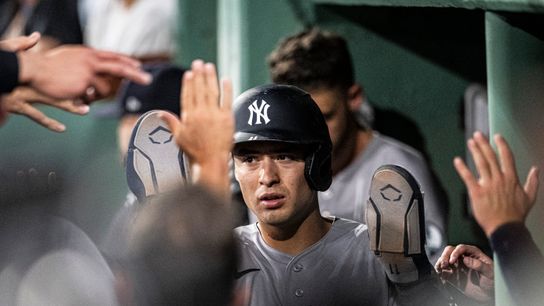
POLICY WIRE — Bronx, New York — Sometimes, the quiet hum of a professional sports clubhouse—that carefully maintained bubble of focus—gets violently punctured. Not by a slump, or a locker-room dust-up, but by the relentless, often unverified, din of the digital rumor mill. This week, it was Anthony Volpe, the New York Yankees’ star shortstop, who found himself staring down the barrel of an unsubstantiated claim that briefly threatened to redefine his reputation from promising prodigy to unyielding prima donna. And he wasn’t having it.
It began, as these things often do, with an established media figure, Michael Kay, floating an anecdote: Volpe, allegedly, told the Yankees’ brass “no, I’m a shortstop” when asked to try his hand at second base in the minors. A casual jab, a bit of sports radio fodder—but one that, in today’s hyper-connected landscape, spiraled. Suddenly, Volpe, fresh off a Gold Glove award, faced questions about his commitment, his versatility, and that all-important team-first ethos. The incident served as a potent, if frustrating, reminder: truth travels fast, but falsehoods often travel faster, fueled by clicks and speculation.
Volpe, caught off guard — and visibly agitated, didn’t mince words. He wasn’t just denying a rumor; he was defending his very character. “It definitely caught me off guard. It’s confusing, just because it’s not true. It couldn’t be further from the truth,” he shot back, before the Yankees’ tilt against the Rays, his voice edged with a blend of frustration and disbelief. “From my end, from my perspective, that’s been very clearly communicated to [Aaron Boone] — and the team. I think it’s just kind of B.S., honestly.”
His teammates, he asserted, know him better. They’ve shared dugouts and grueling road trips, witnessing firsthand his willingness “to literally do anything to help the team win.” Because, let’s be honest, that’s the gospel preached in every clubhouse—and woe betide the player perceived to violate it. But here he was, Gold Glover in hand (his 2023 Defensive Runs Saved, per Fangraphs, stood at a respectable 15, indicating his genuine impact on the infield), suddenly put in a defensive crouch off the field. A cruel irony, that.
Even Kay, the source of the initial report, quickly issued a public retraction on social media, admitting his information was flawed. “Sounded unlike him, so I checked further today — and there’s absolutely no truth to it whatsoever. He never refused to work at second,” Kay posted on X, a stark testament to the instant, brutal accountability demanded by modern media. The damage, however fleeting, was done. The ripple effect, briefly at least, stretched beyond the confines of the Bronx, a reminder of how easily a minor league whisper can become a global blare.
Yankees Manager Aaron Boone, always quick to support his players, downplayed the entire kerfuffle, though he didn’t explicitly address the specifics of Kay’s report. “Anthony’s commitment to this club isn’t just about his position; it’s about his entire being. He’s exactly the kind of player you want, one who’d run through a wall for the Yankees, or shift across the infield if asked. Period,” Boone reportedly told beat reporters. His calm assurance was meant to be the final word. But rumors, you know, they’re like hydras, chopping one head off often means another two grow back.
And Volpe, even with the retraction, hammered his stance home: “I still have no problem (playing second). I want to be here, — and I want to help the team win the World Series. That’s literally all I want.” It’s a line designed to reassure, to paint him as the ultimate team player, a foil to the ego-driven athlete narrative. It works, because that’s usually the unvarnished truth with him.
What This Means
This episode, though seemingly trivial in the grand scheme of things, throws a harsh light on the relentless scrutiny faced by public figures, especially athletes operating under the unforgiving lens of professional sports. Economically, even fleeting, negative public perception can chip away at a player’s ‘brand value’ or future contract negotiations, illustrating how crucial reputation management has become for sports franchises and individual stars alike. The rapid spread — and subsequent retraction of the rumor demonstrate the chaotic efficiency of today’s news cycles. What begins as a whisper on a New York radio show can echo globally in minutes, shaping perceptions among fans and commentators worldwide—a phenomenon not dissimilar to how unsubstantiated claims in the politically charged media landscapes of South Asia, say in Lahore or Karachi, can rapidly impact public figures. Athletic fortunes, it seems, hinge as much on perception as performance.
From a team dynamics perspective, false rumors can sow subtle seeds of doubt or force unnecessary clarification, diverting focus from on-field performance. For a storied franchise like the Yankees, managing player narratives is a perpetual balancing act, trying to protect athletes while maintaining a veneer of transparency for their voracious fanbase. General Manager Brian Cashman, typically stoic, might view such incidents as systemic noise. “In an era where every offhand comment or social media whisper gets magnified tenfold, managing reputations—and truth—is an ongoing challenge. What matters is the guy shows up — and performs. Anything else is noise,” Cashman reportedly remarked, reflecting the pragmatic, bottom-line focus of a front office. It’s a brutal logic that prioritizes outcome over rumor, even as the digital world scrambles to catch up with verifiable facts.