

Waffle House Whodunit: Trump Stokes Punditry Over First Couple’s Late-Night Run
POLICY WIRE — Washington, D.C. — It’s a scene as American as—well, a Waffle House. The mundane setting, usually reserved for road-trippers and early risers, recently found itself thrust into the...

POLICY WIRE — Washington, D.C. — It’s a scene as American as—well, a Waffle House. The mundane setting, usually reserved for road-trippers and early risers, recently found itself thrust into the harsh glare of the political spotlight. No, it wasn’t a presidential decree from a corner booth; it was merely a stop. A brief, ordinary pause in the ceaseless churn of Washington, yet enough to prompt a former president, known for his incisive observations, to weigh in with a hefty dose of public consternation. One might even say a theatrical sigh.
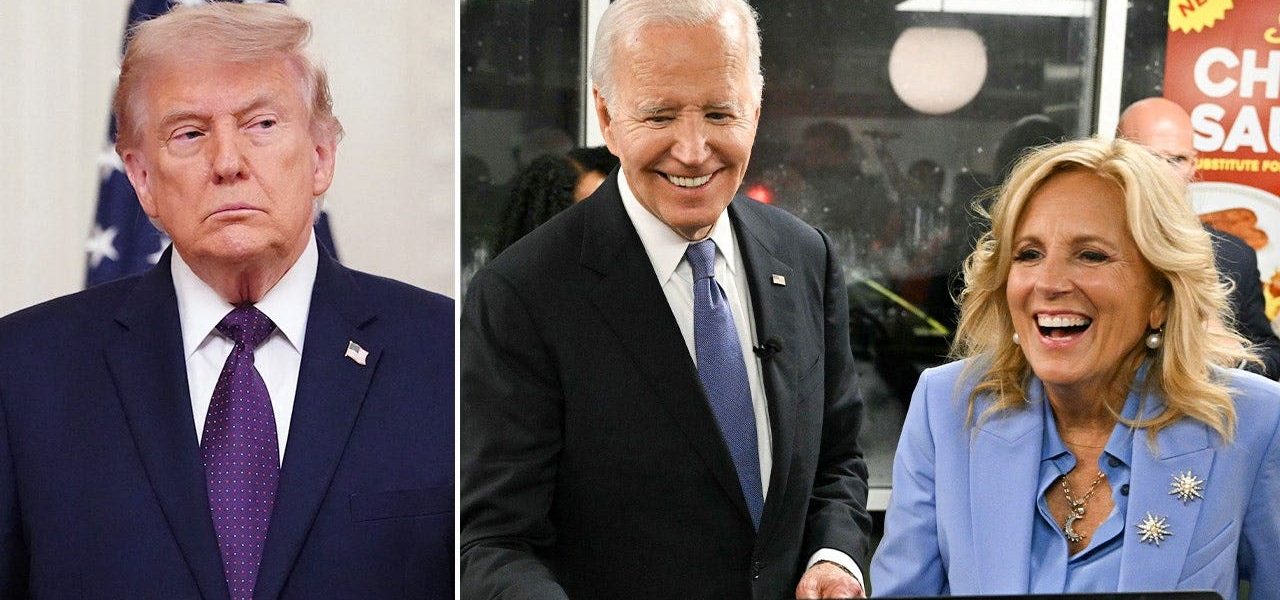
President Trump, never one to let a moment of perceived inconsistency pass him by, reportedly voiced his profound bewilderment—a classic move. His questions hovered in the ether, specifically targeting the optics of a post-reported health scare Waffle House excursion. One can practically hear the collective eyebrow-raise, can’t one? He articulated concerns, musing aloud [QUOTE_PLACEHOLDER]. The context? Reports had surfaced that Dr. Jill Biden had, at one point, faced fears of a stroke, a serious medical concern for anyone, let alone the nation’s First Lady.
And so, the narrative twists. Rather than retreating into quiet convalescence or, say, a white-glove dining establishment (because presidents aren’t usually spotted slinging hash, are they?), the First Couple apparently made a pit stop at the beloved chain. For many, it’s just breakfast, maybe a late-night craving, an exercise in relatability for the populace. But when you’re the Bidens, everything’s a calculated gesture. Or, conversely, everything is just… a meal. Trump’s skepticism—about the rationale for such a casual outing given the gravity of the earlier health reports—highlights the relentless, often uncharitable, scrutiny perpetually affixed to those holding, or having held, the highest office. It’s an exercise in political theater as much as it’s a news event.
But let’s be real, the decision to go to a Waffle House isn’t just about breakfast. It’s about projecting an image, whether intentionally or not. For the Bidens, perhaps it was an attempt at down-home normalcy, a relatable moment. Who knows? Maybe they genuinely just wanted some scrambled eggs — and hash browns smothered, covered, and chunked. Yet, the political class — especially opposition figures — sees everything through a lens of strategic advantage or vulnerability. It’s a game without end, played on the biggest stage. Every sip of coffee, every bite of waffle, becomes an entry in a ledger of public perception.
It’s no surprise. Public figures are always, always under the microscope, their health and well-being a matter of both national security and tabloid fascination. Across the globe, especially in nations like Pakistan, the health of leaders is often shrouded in secrecy, meticulously managed by state media to project an image of invincibility. Any sign of infirmity is typically buried, spun, or simply ignored. Consider the infrequent, carefully curated appearances of ailing political titans in Karachi or Islamabad; you won’t catch them at a roadside chai stall post-hospitalization, unless it’s a meticulously planned propaganda stunt. There’s an expectation there of an almost mythical endurance, a stoic resistance to mortal ailments. We, in the West, pretend to demand transparency, but then, we pick apart every morsel of it. It’s a peculiar double standard we hold, isn’t it?
The average American, by the way, has their own thoughts on public trust. According to a 2023 Gallup poll, just 26 percent of Americans reported having a great deal or quite a lot of confidence in newspapers. This figure from Gallup isn’t specific to political optics or Waffle Houses, sure. But it certainly suggests a populace already predisposed to questioning narratives, whether they come from the White House press briefers or a former president’s social media. We’re all cynics now, or so it seems. Perhaps that’s why even the most innocuous choices — like where to grab a late-night bite — become fertile ground for a political squabble. It feels like every aspect of life in the public eye becomes performative.
📄 POLICY WIRE WHITEPAPER PUBLISHED: PAKISTAN'S NATIONAL SECURITY POLICY PRIORITIES
👉 READ BY CLICKING HEREAnd so, we arrive at this peculiar moment: a reported health scare, a humble breakfast chain, and the ever-present specter of an opposition leader ready to poke holes in the facade. It’s not about the waffles. It’s never just about the waffles. It’s about perception, vulnerability, and the perpetual campaign that governs every waking moment of Washington’s most prominent residents.
What This Means
This whole kerfuffle, spun from a minor anecdote, isn’t some idle celebrity gossip; it’s deeply instructive regarding the current political climate. President Trump’s immediate questioning—even if secondhand—shows the aggressive, bare-knuckle tactics that now dominate the presidential landscape. Every move is fair game, every perceived weakness, no matter how personal, becomes ammunition. It signals a complete absence of the informal ceasefire or polite distance that once characterized the relationship between a sitting administration and its most prominent critics.
Economically, this sort of high-stakes scrutiny has a ripple effect. It diverts media attention from substantive policy discussions (think inflation figures, or the cost of healthcare) to the more titillating world of personality politics. For a business like Waffle House, it’s perhaps a fleeting, unexpected boost in brand recognition — an accidental cameo. But for the average citizen, it muddies the waters, making it harder to discern actual governance from performative political wrestling. It also reinforces the notion that American political figures operate in an intensely hostile, emotionally charged environment, making the simple act of choosing a diner a political declaration. What else can you call it?