


Austerity’s New Uniform: Europe’s Joint Gambit to Steady a Fractured Lebanon
POLICY WIRE — Beirut, Lebanon — The Mediterranean breeze still carries the scent of despair, and the crumbling facades of downtown Beirut are silent monuments to a nation on its knees. It isn’t...

POLICY WIRE — Beirut, Lebanon — The Mediterranean breeze still carries the scent of despair, and the crumbling facades of downtown Beirut are silent monuments to a nation on its knees. It isn’t the distant rumble of regional proxy wars—nor even the ghost of its own devastating civil conflict—that’s brought Lebanon to this latest precipice; it’s the slow, agonizing asphyxiation of economic dysfunction. And, just as the last shards of its once-vibrant middle class scatter to the winds, two of Europe’s heaviest hitters are stepping up with a rather familiar prescription for its ailing state.
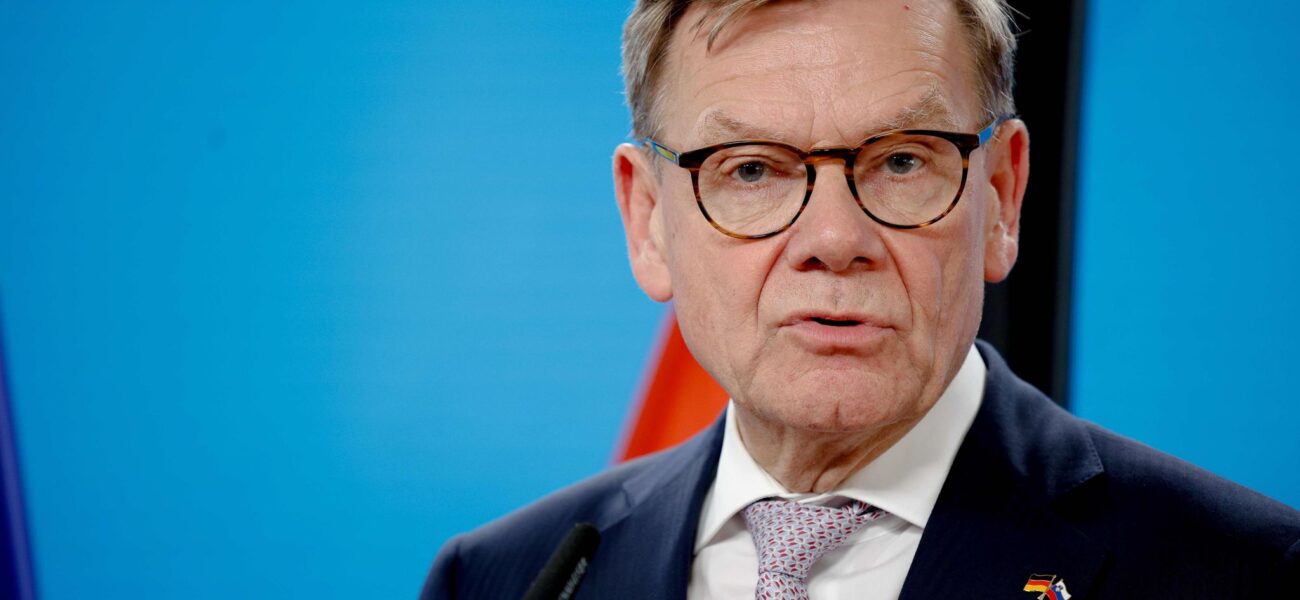
It’s not exactly a bold new vision, not yet anyway. But German politician Johann Wadephul has recently floated an idea that might just reshape how outsiders view Lebanon’s perpetual crisis: a joint German-French initiative. Think of it like this: Europe’s big siblings, Germany and France, deciding it’s time to offer more than just humanitarian band-aids. They’re looking for a structured, unified approach to yank the country back from the brink. You could almost feel the collective sigh of resignation from Beirut’s long-suffering citizens, aware that this kind of international attention usually comes with strings, thick and unyielding, attached.
The goal? Stability, they’ll tell you. Long-term viability. Preventing an outright implosion, which—let’s be honest—would cause a migration headache across the EU’s southern flank. Wadephul articulated a need for what he termed a [QUOTE_PLACEHOLDER], calling it a [QUOTE_PLACEHOLDER]. He suggested that without a combined Franco-German strategy, it becomes harder for Europe to really influence things. And he’s got a point. Individual nation-state diplomacy often feels like spitting in an ocean for a country like Lebanon, which has weathered far greater geopolitical storms than a few earnest entreaties from Bonn or Paris alone.
The underlying framework of this new push isn’t terribly novel. It involves linking financial support — and recovery efforts directly to fundamental political and economic reforms. They want to see good governance (where have we heard that before?), an end to endemic corruption, and a truly independent judiciary. Basically, all the stuff Lebanon’s political elite has skillfully avoided implementing for decades. But this time, perhaps, there’s a sharper edge to the demands, a sense that Europe’s patience has worn thinner than an old coat sleeve.
This initiative could be a game-changer, but there’s a real skepticism too. Lebanon’s deep sectarian divides make any lasting reform incredibly complex. You’ve got power sharing arrangements that often mean paralysis, with every faction clinging to its piece of the pie while the nation starves. It’s a bit like trying to rebuild a house with each carpenter working from a different blueprint, often sabotaging the others, you know? And outside influence, particularly from states like Iran, casts a very long shadow, making true internal consensus difficult to achieve.
The situation isn’t unique, if you step back a little. Just look at the long history of intervention and conditional aid in other Muslim-majority nations across South Asia and the broader Middle East. Countries like Pakistan, for instance, have seen cycles of international support tied to everything from counter-terrorism efforts to democratic transitions—often with mixed, if not outright disappointing, results. The International Monetary Fund (IMF), for example, has committed to over 20 programs with Pakistan since its independence, most aimed at economic stabilization, but consistently challenged by political instability and reform resistance. These programs, frequently accompanied by conditions for fiscal discipline and structural adjustments, often mirror the kind of demands now being placed on Lebanon’s political apparatus. It raises questions about how effective such external pressure can truly be when internal governance structures remain stubbornly entrenched and, dare I say, self-serving.
What this German-French move signals is a greater coordination effort within the EU, certainly, but also an acknowledgement that piecemeal approaches aren’t working. Wadephul mentioned something about creating a [QUOTE_PLACEHOLDER] for Lebanon, and that’s precisely what they’re trying to fashion here. It’s not about regime change, usually—or not overtly, at least—but about creating an environment where a responsible government can finally, theoretically, emerge and function.
📄 POLICY WIRE WHITEPAPER PUBLISHED: PAKISTAN'S NATIONAL SECURITY POLICY PRIORITIES
👉 READ BY CLICKING HEREBut will the Lebanese political class actually play ball? That’s the billion-dollar question. They’ve perfected the art of deferring, delaying, and deflecting for so long, one has to wonder if they even remember what governance looks like. Perhaps Europe is betting that the pain of doing nothing, and watching the country completely disintegrate, finally outweighs the comfort of the status quo for Beirut’s entrenched powerbrokers. They certainly wouldn’t be the first foreign powers to underestimate the resilience of political inertia.
What This Means
This joint initiative marks a subtle but significant shift in European policy toward Lebanon, moving beyond purely humanitarian aid to a more overtly political and economically conditional engagement. Politically, it signals a deeper EU commitment to stabilizing its southern flank, driven by fears of migratory pressures and wider regional destabilization. But it also risks entrenching European influence in a country already heavily entangled in geopolitical power plays, potentially oversimplifying a deeply complex, internally driven crisis. For France, a traditional player in Lebanon, German involvement could lend weight and credibility to efforts that have often struggled with accusations of neo-colonialism. But it’s still a huge gamble.
Economically, tying financial aid to rigorous reforms, while essential on paper, faces formidable hurdles. Lebanon’s economic woes are so profound—its currency has lost over 90% of its value in just a few years, for instance—that even comprehensive reforms might take a decade to yield tangible results, if the political will even materializes. It’s not just about auditing the central bank or restructuring debt; it’s about breaking a kleptocratic system that benefits from the current chaos. This could either force genuine, albeit painful, structural change or lead to increased resentment and further instability if reforms are perceived as externally imposed and ineffective in the short term. History across South Asia tells us that conditional aid rarely creates instant miracles; it usually fosters dependency and often prolongs suffering, even as it prods—haltingly—towards reform. Will this initiative be different? It’s far too soon to tell. Check out our previous coverage on similar economic entanglements, like when global capital mobility creates surprising geopolitical stakes elsewhere in the world, or how Asia navigates its own delicate dances for self-interest.