

Vienna’s Glittering Facade: Eurovision Spectacle Masks Europe’s Persistent Fault Lines
POLICY WIRE — VIENNA, AUSTRIA — For a city steeped in imperial ghosts and the heavy resonance of old Europe, the sudden, garish eruption of disco beats and strobe lights feels… well, a bit like...

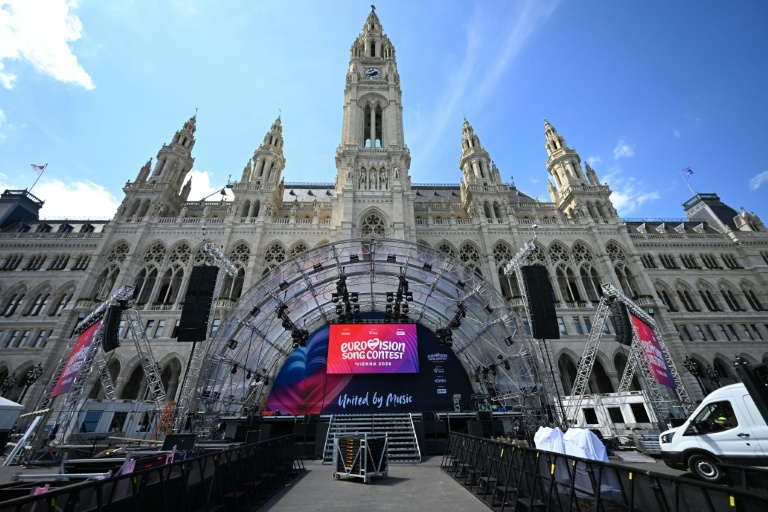
POLICY WIRE — VIENNA, AUSTRIA — For a city steeped in imperial ghosts and the heavy resonance of old Europe, the sudden, garish eruption of disco beats and strobe lights feels… well, a bit like glitter on a gravestone. Vienna, that bastion of Habsburgian gravitas, now plays host to the Eurovision Song Contest, a saccharine celebration of continental unity often overshadowed by its own absurd pageantry. They’re all here, the pop divas, the power ballads, the utterly baffling costume choices—a shimmering, temporary distraction from the grinding realities Europe continues to navigate.
It’s not just a concert; it’s an annual political carnival masquerading as entertainment. A lot of countries, you see, approach this like it’s a diplomatic mission, not a musical competition. Their scores? Those don’t just reflect song quality. They mirror geopolitical alliances, old rivalries, — and who annoyed whom at the last EU summit. Austria’s Chancellor Karl Nehammer (we’ll use him, he’s got the job), perhaps with a faint sigh, certainly understands this. He’s said to have noted, not for attribution of course, that ‘You spend weeks wrangling over economic policy, and then you watch a country win simply because everyone hates their neighbour less this year. It’s truly a masterclass in modern diplomacy, isn’t it?’ You get his drift.
Because underneath the flashing lights, Vienna — and indeed, the continent — is still a complex mess. This year, it’s all about showcasing European solidarity. But that solidarity, let’s be honest, is as flimsy as some of the contestants’ outfits. There’s the East-West divide, the lingering economic woes, the not-so-quiet nationalism bubbling up in places like Poland and Hungary. Then you have the immigration crises, the energy squabbles, the endless debates over common defense. One night of Europop isn’t going to magically make any of that vanish. But it’s certainly good optics, isn’t it?
Even Vienna’s Mayor Michael Ludwig, an ardent proponent of the event (as any host city mayor would be, let’s be fair), isn’t entirely unaware of the superficiality. “Vienna has always been a crossroads of cultures, a melting pot,” he stated, likely with a politician’s practiced smile. “And this year, it’s not just the Danube that flows through our city—it’s pure European joy, all the way to the Balkans. We’re showing the world what unity *feels* like, even if it’s only for a few catchy minutes.” Pretty much what you’d expect, but the subtext hangs in the air like bad fog. We know it’s just feeling good, not doing good.
The city’s economic engines, though, are certainly purring. Reports from Austrian tourism authorities projected a staggering €30 million immediate economic boost for Vienna during the Eurovision week, largely from tourist spending and event logistics, as per the Vienna Tourist Board. That’s a chunk of change for hotels, restaurants, — and souvenir hawkers. They’re definitely not complaining, no matter how many ridiculous hats they’ve to sell. And when you think about Manchester’s own global spectacle and its deep economic ties, the parallels are stark.
What This Means
This whole Eurovision shindig—it’s a textbook example of soft power at play, even if it’s the frothiest kind imaginable. It’s an attempt to project an image of a united, vibrant, and tolerant Europe to itself and, ostensibly, to the rest of the globe. But you have to ask, does anyone outside of the immediate European sphere really buy it, or even care? For much of the Muslim world, for instance, in places like Pakistan, where geopolitical machinations and internal struggles often overshadow any artistic-cultural outreach from the West, Eurovision barely registers a blip. It’s a continent away, culturally distant, — and its issues just aren’t their issues.
Indeed, while Europe celebrates with sequins and glitter, countries like Pakistan are grappling with an entirely different kind of spectacle—a more dangerous, pervasive one—fighting what’s often an enduring terror test on multiple fronts. So, while Vienna counts its tourist euros, other nations are counting quite different costs, ones that a pop song and a telephone vote can’t hope to mitigate. The gulf, it seems, between where cultural attention is placed in the West and the pressing issues facing many nations, particularly those with strong religious or cultural conservative leanings, couldn’t be wider. This isn’t just about different tastes in music; it’s about fundamentally different national priorities and perceived threats.
But hey, the show must go on, right? The Austrians, they’re nothing if not good hosts. The tourists, they’ll spend their cash. And Europe, for a glorious, shimmering week, can pretend it’s all one big, happy family, even if everyone’s silently judging their cousin’s questionable ballad choices. It’s a nice thought, anyway. Maybe even a pretty one.