
Gridiron Paradox: How a Fifth-Round Pick Is Dominating NFL’s Merchandise Market
POLICY WIRE — Cleveland, Ohio — The scouts had their say. The draft boards solidified what many considered a humble beginning for Shedeur Sanders in the pros. A fifth-round selection, sure, good...

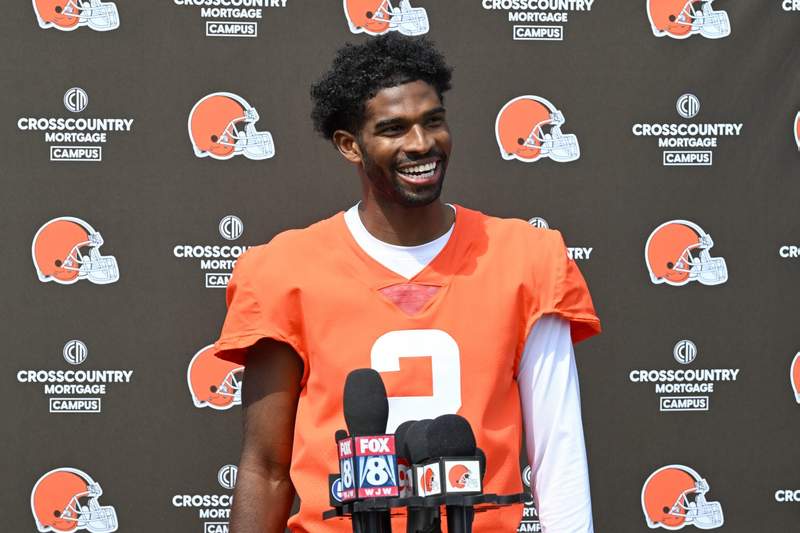
POLICY WIRE — Cleveland, Ohio — The scouts had their say. The draft boards solidified what many considered a humble beginning for Shedeur Sanders in the pros. A fifth-round selection, sure, good enough to get his foot in the door—but not usually the stuff of legend, nor the vaulting-off point for superstar money. Nobody blinked when his rookie contract came in at about $4.65 million over four years, with a signing bonus just north of $447,000. It’s what you’d expect, honestly. And then, the numbers hit like a two-ton blitz.
It turns out the kid is a brand in himself. A bona fide money-making machine, no less. Shedeur Sanders is projected to rake in an astounding $17.7 million from NFLPA group licensing in 2025 alone, according to a recent report by Front Office Sports. Think about that for a second. That figure doesn’t just dwarf his on-field earnings; it puts him ahead of the sport’s golden boy, Patrick Mahomes, in that specific, highly lucrative category. A fifth-rounder—the ultimate long shot—is commercially outmaneuvering arguably the greatest quarterback of his generation, right out of the gate.
“Look, you always draft for potential and team fit,” one NFC General Manager, who spoke on background as is often the case with these candid assessments, recently told Policy Wire. “Sanders had a high floor, but some of the bigger questions about his arm talent — and processing speed pushed him down. Now, does his brand value make us rethink things? You bet your boots it does. We’re in a new era, aren’t we?”
Indeed, this isn’t just about selling a few more jerseys. Group licensing money directly reflects fan demand for a player’s name, image, — and likeness on official merchandise. It’s the ultimate thermometer for popularity. Sanders’ draft-day slide could’ve been a death knell for many players’ commercial aspirations. But not for him. Fans, it seems, didn’t care much for scouting reports when it came to their wallets. They bought into the ‘Prime Time’ progeny anyway, demonstrating a market force completely detached from traditional evaluation metrics. His commercial status isn’t just elite; it’s practically extraterrestrial for a rookie who hasn’t taken a single NFL snap.
Because Sanders isn’t just hawking the usual rookie hope. He’s selling identity, a dynastic family name, — and an undeniable curiosity. His college NIL profile had already marked him as one of the nation’s most marketable athletes, with endorsements ranging from Nike to Mercedes-Benz before he even touched an NFL pro day. So, this $17.7 million windfall? It’s not a fluke. It’s the pro-level iteration of the commercial juggernaut he’d already built at Jackson State — and Colorado. That kind of self-made value often goes unrewarded in a league built on top-down decision-making, which makes his situation even more jarring.
“What Shedeur’s done, it isn’t just about selling jerseys,” explained Bethany Clarke, a veteran sports marketing consultant based in New York. “He’s managed to convert raw charisma into hard cash at a pace most MVPs couldn’t dream of. It’s a seismic shift, proving personal brand often trumps draft status, especially for Gen Z audiences. And teams can’t ignore that—they simply can’t afford to.”
But his situation does beg a bigger question: in a league where contracts often resemble golden handcuffs, are we seeing a genuine shift in player agency?
What This Means
This isn’t just a sports story; it’s an economic one, a sociological one, and yes, a deeply political one within the power structures of professional sports. Shedeur Sanders’ unprecedented licensing income is nothing less than a thunderclap echoing through the NFL’s boardrooms and scouting departments. For years, the draft has been the sanctified hierarchy—the higher you go, the more valuable you are, the richer you get, the more attention you command. Sanders has taken a wrecking ball to that premise.
It means team owners and general managers, long accustomed to dictating player value based almost entirely on on-field performance and draft position, now have to contend with an entirely separate, self-generated economic ecosystem. And this system values things like social media engagement, narrative, and cultural resonance above pure athleticism—or at least, *in addition* to it. This blurs the lines. It suggests that a player can be a “fifth-round project” on the field, yet simultaneously a “franchise-level attraction” in the marketplace.
This dynamic introduces fascinating implications for contract negotiations. If a player is bringing in tens of millions off the field, will agents demand higher guaranteed money to reflect this external value, regardless of their draft slot? Or will teams begin drafting for marketability as much as—or even more than—raw talent in later rounds? This creates a thorny economic problem for the NFL’s salary cap structure — and overall player compensation philosophy. It could even fuel more intense debates over collective bargaining, as players look at Sanders and realize their individual brands might be more powerful than the teams that draft them.
This isn’t some niche phenomenon, either. We see this blurring of traditional value metrics in markets far beyond North America. In places like Pakistan, for instance, a cricketer’s social media following can now dictate endorsement deals far beyond their on-field stats, reflecting a similar fan-driven economy. And for young consumers from Lahore to London, authenticity—or at least the appearance of it—sells. So, while the Browns still need to figure out what kind of quarterback Shedeur Sanders actually is on the field, one thing’s clear: his off-field business? That’s already Super Bowl worthy.