


The Global Kick-Off: Manchester’s Billion-Dollar Ball Game Reflects Broader Struggles
POLICY WIRE — Manchester, UK — Forget the ninety minutes, the dazzling footwork, or even the breathless drama that allegedly unfolds on English football pitches. What transpires this Wednesday...

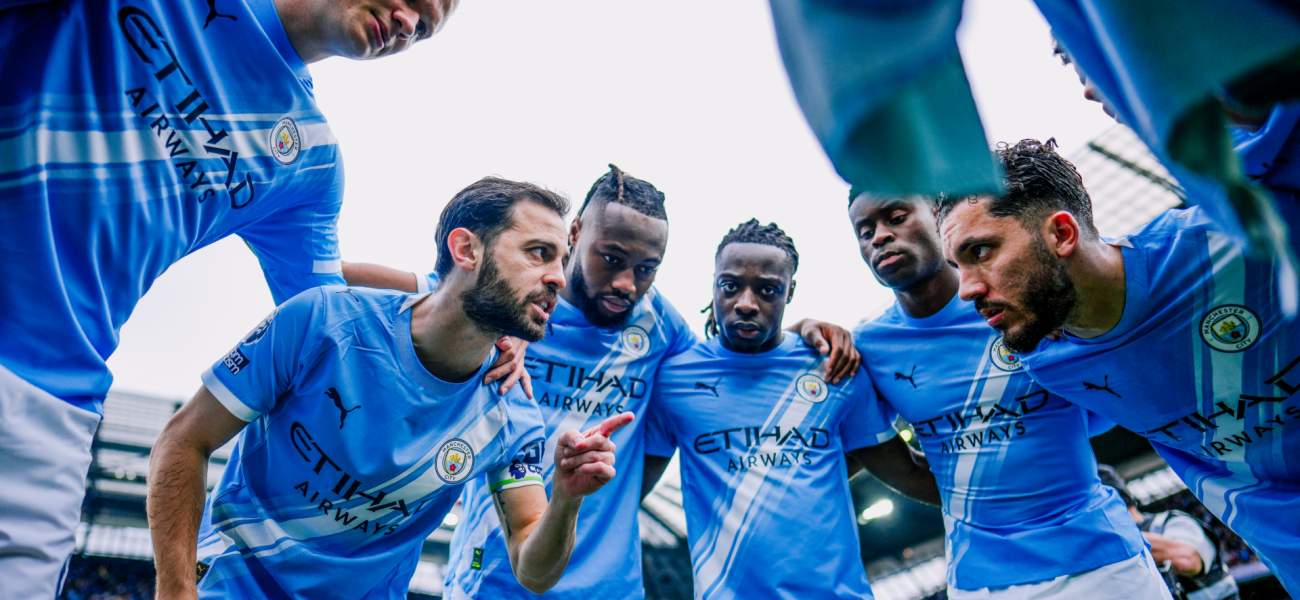
POLICY WIRE — Manchester, UK — Forget the ninety minutes, the dazzling footwork, or even the breathless drama that allegedly unfolds on English football pitches. What transpires this Wednesday evening at the Etihad Stadium between Manchester City and Crystal Palace isn’t merely a game; it’s a meticulously curated spectacle, a potent symphonic hum of petrodollars, global branding, and statecraft in cleats.
It’s easy to get lost in the immediate—the chase for another league title, the relentless pursuit of silverware that’s become a digital-age opiate. But beneath the surface-level clamor, the thrumming, pulsating heart of Manchester City, owned by Abu Dhabi’s powerful City Football Group, beats to a much grander rhythm. A rhythm that echoes from the gleaming skyscrapers of the Gulf to the bustling bazaars of Lahore, Pakistan.
And let’s be blunt: when a club like City, essentially a sovereign wealth fund’s most visible sporting asset, faces off against an outfit like Crystal Palace, it isn’t a fair fight in economic terms. It’s a contest between nations by proxy, a proxy war fought with ball possession statistics — and transfer market muscle. The very act of scheduling the match for a UK 8 PM kick-off, which translates to the ungodly hour of midnight in much of South Asia, is a stark reminder that this ‘local’ derby plays to a profoundly international audience, many of whom aren’t just fans but aspirational viewers in economies increasingly reliant on, or connected to, Gulf capital.
Pep Guardiola, the tactical maestro at City’s helm, rarely discusses global finance directly, but his words often hint at the immense pressures inherent in his role. He’s said before, (and one imagines, he’d reiterate before such a fixture), “We aren’t just playing a game; we’re maintaining an empire’s image. The stakes? Far higher than three points.” He’s not wrong. For many, Manchester City’s success, and its global presence, serve as a potent symbol of modern, ambitious Arab states seeking influence beyond oil wells.
Contrast that with Crystal Palace, a club, despite its own share of investment, still feels rooted in a more traditional, perhaps quaint, version of English football. They’re managed by Oliver Glasner, a relative newcomer to the Premier League’s chaotic theater, who’s nonetheless already guided the Eagles to surprising victories. His achievements – qualifying for the Champions League with Wolfsburg, or reaching the Europa League final with Eintracht – reflect a different kind of ambition. One grounded more in sporting acumen than in endless capital.
A senior financial analyst, who requested anonymity to speak candidly about geopolitics in sport, articulated the quiet consensus. “What happens on the pitch, in an era of hyper-globalized capital, is never just football. It’s a barometer of brand power, a soft-power play that few genuinely comprehend.” Indeed, these matches aren’t merely about points; they’re about narrative control, about asserting a certain global presence that bypasses traditional diplomatic channels.
For example, a staggering 150 million viewers from across the Muslim world and South Asia tuned in to watch various Premier League matches last season, according to data from Sport Business International. That’s a demographic goldmine, — and a diplomatic soft spot, for any state actor looking to extend influence. The ‘beauty’ of the game becomes a Trojan horse for other agendas.
City, still hot off a dominant 3-0 victory against Brentford, looks formidable. Goals from Jeremy Doku, Erling Haaland, and Omar Marmoush — a nod to their squad depth— underline the efficiency of their industrial-scale football operation. This win, pushing them just two points shy of Arsenal at the top, isn’t just a league position; it’s a declaration. It’s the constant validation required when you’re not merely representing a city, but projecting an entire nation’s ambition.
What This Means
The Wednesday night fixture against Crystal Palace isn’t just another notch on Manchester City’s campaign belt; it’s a microcosm of the modern world’s intricate power dynamics. It illuminates how sports, especially high-profile ones like the Premier League, have transcended mere entertainment to become powerful instruments of diplomacy and economic projection. For the UAE, City’s continuous success legitimizes massive investments and cultivates a positive global image, subtly deflecting critiques often aimed at its geopolitical stances. This form of ‘sports diplomacy’ effectively opens doors and softens perceptions in regions from Southeast Asia to the Americas.
Because, make no mistake, every win, every global broadcast, subtly strengthens the bonds between disparate markets and Abu Dhabi’s burgeoning influence. It means the outcome impacts more than just league tables or fan bragging rights; it impacts national narratives and, perhaps, even future investment flows. It’s an unspoken contest of soft power, where a dazzling midfielder’s goal could ironically prove more impactful than a state visit. It’s a geopolitical football game in the truest sense, and we’re all, whether we realize it or not, playing on the same field.