



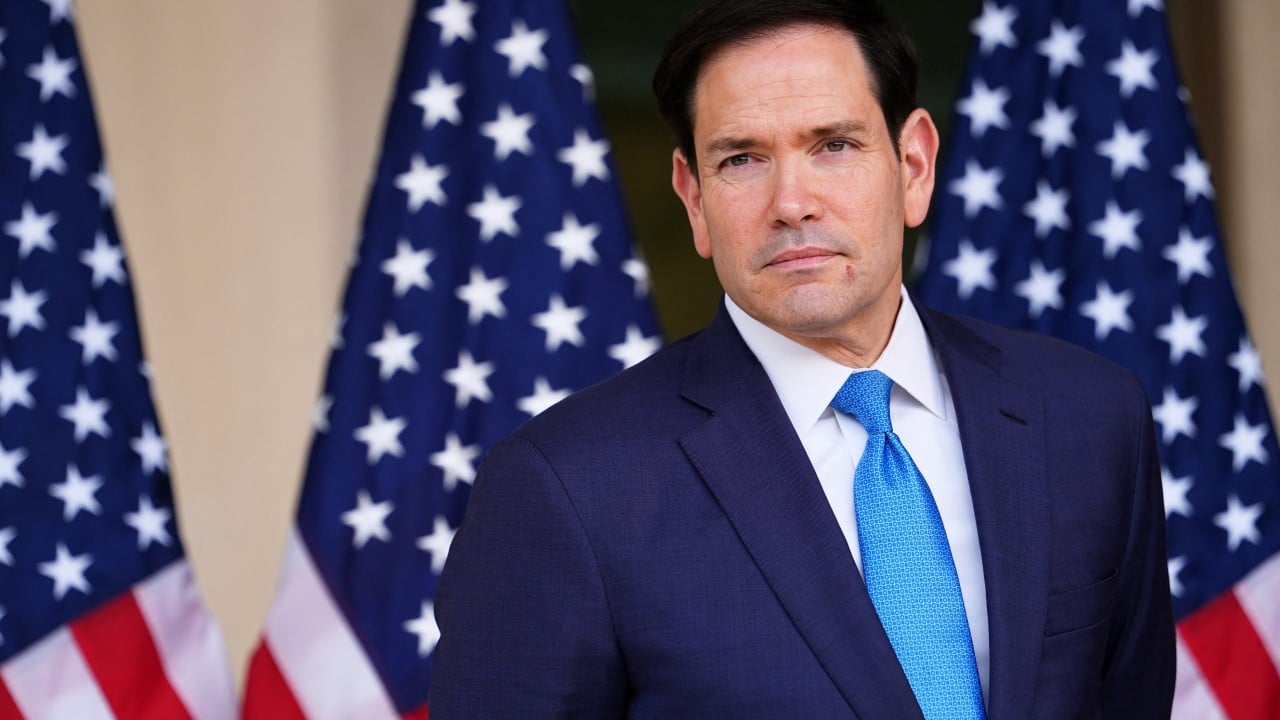
Rubio’s Delhi Dispatch: Washington’s Double Helix Diplomacy Amidst Asia’s Great Game
POLICY WIRE — New Delhi, India — The ink on Beijing’s lavish welcome mats for President Donald Trump barely dry, American diplomacy found itself on a wholly different trajectory this past Saturday....

POLICY WIRE — New Delhi, India — The ink on Beijing’s lavish welcome mats for President Donald Trump barely dry, American diplomacy found itself on a wholly different trajectory this past Saturday. Not a cooling-off period, not a recalibration, but a rapid pivot, proving Washington’s foreign policy isn’t one to sit still. Secretary of State Marco Rubio, fresh from the grand halls of Chinese statecraft, immediately plunged into the boisterous democracy of India. One could say he barely had time to shake off the jet lag before rolling out a considerably different sort of welcome for an Indian Prime Minister. What a tight turn on the diplomatic tarmac, huh?
It was less than seven days, a mere blip on the international relations clock, since Rubio had accompanied Trump on a state visit that many had characterized by its effusive (some might even say surprisingly warm) exchanges with Chinese leadership. But the spotlight, quick as a hawk, shifted its gaze south. Rubio, visiting both titanic Asian powers for the very first time in his current role—quite a rookie tour, that—touched down in New Delhi. He wasn’t there for casual chai, either. No, he made straight for Prime Minister Narendra Modi, a sit-down stretching well past the hour mark, where, it’s understood, a formal invitation to the White House was extended. Talk about quick succession. [QUOTE_PLACEHOLDER]
And so, Washington appeared to perform an astonishingly agile, almost gymnastic, diplomatic maneuver. They were keen to turn the page, rhetorically speaking, from what had been — and often still is — a relationship between the U.S. and India pockmarked by various points of friction. All this despite that new-found U.S. warmth towards China being conspicuously, almost glaringly, present. It wasn’t just a simple visit; it was a clear signal. A message transmitted across continents: America’s gaze in Asia, apparently, is wide enough for more than one significant relationship. But could anyone miss the contrast?
Rubio, during his time in the Indian capital, made a point to characterize India as a natural partner. It’s a phrase that’s easy enough to utter, but it carries a considerable weight, especially when balanced against the backdrop of recent engagements with a strategic rival. For a superpower seemingly attempting to have its cake — and eat it too, this required a deft touch. And from an outsider’s vantage point, watching these overtures unfold, you’ve got to admit, it’s a show of remarkable—if sometimes bewildering—diplomatic elasticity.
The message delivered, presumably intended for consumption far beyond India’s borders, aimed to soothe any concerns of neglect after the Beijing excursion. An overtures designed to cement bonds, perhaps. But the inherent complications in Washington’s balancing act are evident to anyone watching. The narrative from New Delhi must now be squared with that from Beijing. How does one maintain ‘natural partner’ status while simultaneously engaging so warmly with a neighbor seen, in certain quarters, as a long-term strategic competitor? This is where the diplomatic tightrope gets its real workout, folks.
This engagement isn’t just about Washington — and New Delhi, of course. For neighboring nations like Pakistan, watching from just across the border, these renewed U.S.-India ties are often perceived through a lens of apprehension and shifting power dynamics. Any strengthening of one regional player, particularly with powerful external backing, invariably prompts reassessments of strategic alignment and security imperatives in others. India’s population, estimated at over 1.4 billion people according to the World Bank’s latest figures, makes it a demographic titan, a fact that underlines its geopolitical heft in any equation, regardless of how Washington phrases its affections. For Islamabad, seeing this embrace, it’s not just abstract policy; it’s about regional stability — and influence.
The subtle, often unspoken, messages that emanate from such high-level visits often ripple further than any carefully drafted communique. And so the chess game in South Asia, one marked by historic rivalries and complex economic dependencies—such as the burgeoning China-Pakistan Economic Corridor (CPEC)—continues its intricate play. Each move, each gesture, each warm hand extended, gets meticulously scrutinized. That’s just how it works in this part of the world. It’s never simple, it’s never isolated. There are always ramifications, always counter-moves considered.
During the meetings, Rubio is quoted saying, ‘The world’s oldest democracy in…’. This incomplete utterance, part of the official transcript, feels almost symbolic of the delicate, unfinished nature of global alliances today. Democracy, after all, is a perpetually evolving, imperfect experiment, even when it’s ancient. And the alliances supporting it? Well, they’re just as fluid.
What This Means
Rubio’s rapid-fire tour isn’t just a simple diplomatic dance; it’s a high-stakes demonstration of Washington’s multi-pronged, sometimes contradictory, foreign policy strategy in Asia. On one hand, it’s about not putting all the eggs in one geopolitical basket—engaging Beijing economically while simultaneously shoring up partnerships, especially military and strategic ones, with regional heavyweights like India. From an economic standpoint, the U.S. is betting on India’s massive market and growing economy to counterbalance China’s economic dominance in the long run, even while needing to trade with Beijing today.
Politically, the implication is a nuanced message: while the U.S. may seek avenues of cooperation with China, it won’t do so at the expense of its relationships with other democratic, strategically located nations. This kind of calibrated approach is intended to prevent either New Delhi or Beijing from feeling exclusively courted or entirely ignored. It’s an exercise in complex signal processing for governments globally. But for Pakistan, it might feel less like a balancing act and more like Washington affirming traditional regional divides. The geopolitical implications for the broader Muslim world, too, are noteworthy. As alliances shift, and superpowers pick partners, it subtly realigns the weight distribution of international relations. A stable, or volatile, South Asia invariably influences stability stretching from the Middle East to Southeast Asia. These kinds of moves—even if presented as just normal diplomacy—they’re reshaping tomorrow’s global order, bit by excruciating bit.
