


LAFC’s World Cup Breather: A Timely Intermission Amidst Global Sporting Grind
POLICY WIRE — Los Angeles, United States — For the high-stakes world of professional football, sometimes victory feels less like triumph and more like a collective exhale. A 1-0 result...

POLICY WIRE — Los Angeles, United States — For the high-stakes world of professional football, sometimes victory feels less like triumph and more like a collective exhale. A 1-0 result against a gritty opponent often suggests tactical mastery or individual brilliance. But for the Los Angeles Football Club this past Saturday night at BMO Stadium, it hinted at something far more profound: a desperate search for equilibrium, salvaged by a perfectly timed intervention.
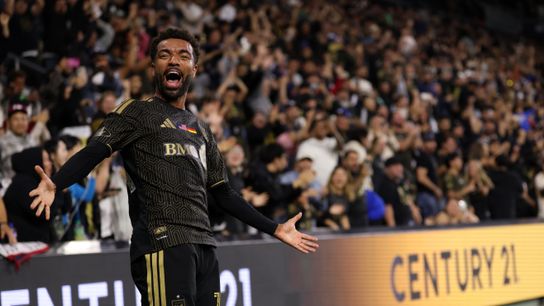
It wasn’t a game of dazzling artistry, not really. Instead, the match against the Seattle Sounders unfolded like a corporate struggle session, 85 minutes of LAFC trying to brute-force a solution, banging against a resilient wall, before Timothy Tillman—a player whose personal narrative is itself one of patient perseverance—arrived at the back post, tucking away the winner. Just like that, a nagging three-game losing streak in Major League Soccer was busted. And more importantly, the team, its management, and perhaps its very soul could limp into the World Cup break with something approximating validation.
The scoreline’s just numbers. The real story lies in what preceded it: a grueling gauntlet of 23 matches before June even bothered to show its face. You’ve gotta wonder—is this pace sustainable, for anyone, anywhere? LAFC boss Marc Dos Santos, a man who knows the grind intimately, chose to frame the late breakthrough not as an escape, but as proof. “It isn’t about looking for a messiah; it’s about the relentless pursuit of execution, every single man, every single minute,” he told reporters later, reflecting on a night where his side consistently had the ball, pushing and prodding, yet missing that last, decisive touch. It’s the paradox of modern high-level competition: control doesn’t automatically mean conversion.
Because, really, LAFC had possession. Tons of it. They carved out danger zones. But the finishing just wasn’t there. Son Heung-min, still on the hunt for his inaugural MLS goal, kept popping up in promising spots, and Denis Bouanga fumbled a gilt-edged chance. Dos Santos didn’t duck the issue. He admitted the squad’s built for movement, for fluidity, not for some big, bruising penalty-box bruiser. They’re quick, they’re smart—but sometimes, you just need a sledgehammer, don’t you? “We have profiles in our team that are, we don’t have this kind of more of a box guy that, that we miss,” Dos Santos explained, sketching out the limits of his tactical ideal.
That makes Tillman’s goal, his first in over two years for the Black & Gold, particularly significant. It was collective action. Tyler Boyd, just seven minutes after stepping onto the pitch, zipped a cross to the far post. And Tillman? He just ghosted into position, a late arrival but perfectly placed, the kind of subtle tactical success that coaches preach. The German-American midfielder, a quiet workhorse often eclipsed by flashier teammates, provided the unglamorous solution needed. “You don’t just score goals with your feet—you score ’em with belief, with knowing you’ve still got a shot even when the clock’s winding down,” Tillman reflected, sounding more like a Zen master than a football player. “That’s the real win, isn’t it?”
📄 POLICY WIRE WHITEPAPER PUBLISHED: PAKISTAN'S NATIONAL SECURITY POLICY PRIORITIES
👉 READ BY CLICKING HEREJust as important, arguably more so for the management, was the solidity at the other end. Seattle almost nabbed one through Jordan Morris, but Thomas Hasal, standing in for the injured Hugo Lloris, scrambled heroically. Later, the crossbar vibrated in protest. Hasal, a backup thrown into the fire, pulled off five saves and snagged another clean sheet for LAFC—their 11th across all competitions, pushing them to nine league shutouts, the most in MLS. That’s a statistic that suggests deeper organizational competence, not just flashes in the pan.
The defensive stability, frankly, feels like a managed constant in a season defined by disruptions, from injuries to that brutal schedule. But here they sit, fifth in the Western Conference. Dos Santos wanted top four, sure, but he’s not throwing the baby out with the bathwater. “Every time we played inside our model, we’re so consistent as a team,” he said, hinting at the quiet conviction holding this operation together. Now, a seven-week pause. Tillman’s off to watch his brother Malik at the World Cup, a testament to football’s truly global reach, felt even in the most disparate sporting economies. And for many in countries like Pakistan, glued to channels broadcasting the quadrennial spectacle, these breaks and transfers are part of the broader sporting tapestry. It’s a moment to unplug, to recharge, to perhaps realign for what’s surely going to be another punishing back half of the season. The physical toll, yes, but the mental one too—that’s the silent battle in this relentless machine.
What This Means
This momentary relief for LAFC carries echoes far beyond the confines of a football pitch. It speaks volumes about the systemic pressures inherent in modern global endeavors—be they competitive sports leagues or international corporate structures. The reliance on collective problem-solving, even when star power falters, is a critical management lesson. When a team, or an enterprise, is physically and mentally stretched thin, often the simplest, most fundamental acts of execution become the most challenging, and thus, the most rewarding. Economically, the global sports calendar, epitomized by the World Cup break, demonstrates how peak performance in one domain often necessitates planned pauses for another—a complex dance between market demands, talent welfare, and geopolitical schedules. The resilience of the ‘model’ Dos Santos refers to isn’t just about formations; it’s a proxy for an organization’s fundamental governance and operational strategy. Its capacity to weather ‘streaks’ of bad luck or poor form speaks to underlying, almost policy-level, strengths in its foundation. But the persistent hunt for a ‘finishing touch’ against a backdrop of ample resources also highlights the persistent struggle of converting potential into concrete, measurable outcomes—a struggle familiar to any government attempting to implement broad policy shifts in diverse, complex societies, especially in regions grappling with multifaceted challenges. The sheer density of modern sporting seasons also forces conversations around player welfare and load management, which mirrors debates about employee burnout and sustainable productivity across various high-stress, globalized industries.