


Cleveland’s Perpetual Query: Media Demands Answers While Coach Plays Coy on Quarterback Quandary
POLICY WIRE — Washington D.C. — It’s often said that familiarity breeds contempt. In Cleveland, however, it simply spawns more questions—endless, relentless questions, specifically about the...

POLICY WIRE — Washington D.C. — It’s often said that familiarity breeds contempt. In Cleveland, however, it simply spawns more questions—endless, relentless questions, specifically about the beleaguered Browns’ starting quarterback. Forget seismic geopolitical shifts or simmering international crises; the pressing matter occupying considerable bandwidth this preseason seems to be whether Deshaun Watson, Shedeur Sanders, Dillon Gabriel, or rookie Taylen Green will under center. And local media, as it turns out, isn’t about to apologize for its singular, almost religious, focus.
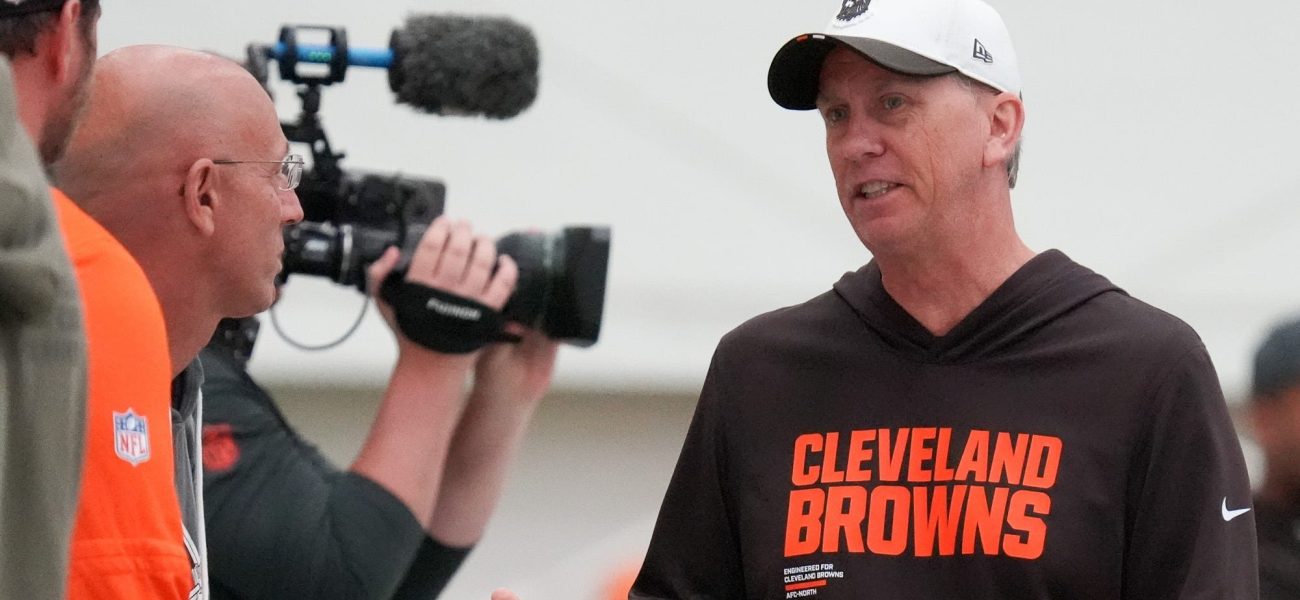
For first-year Head Coach Todd Monken, the preseason has been less a honeymoon — and more an interrogation. Each media availability invariably steers back to the gridiron’s most eternal dilemma: who’s getting the snaps? He isn’t exactly thrilled about it. “Nothing’s really changed, you know? It’s a different day, but you lot are firing the same questions, aren’t you?” Monken told reporters last week, a visible tremor of exasperation barely contained. His public demeanor suggested a man who’d rather explain quantum physics to a chimp than rehash the rotation policy for his signal-callers.
But the media, as media tends to do, sees it differently. And why wouldn’t they? This isn’t just about football; it’s about clicks, eyeballs, and the peculiar blend of local pride and existential dread that defines Cleveland’s unique sporting pressures. It’s also about the fundamental, messy compact between public figures — and the press that scrutinizes them. Anthony Lima, a talk show host at 92.3 The Fan, minced no words, pushing back hard against fans and pundits who felt the media should dial it down. “We’re gonna ask every day who’s in the lead. That’s how it works!” Lima declared, exasperated by the criticism. He gets it; coaches don’t like getting pressed on these things, but it’s their job. Lima argued that any coach worth his multi-million-dollar contract (a staggering amount, for most folks) is prepped for these “non-bombshells.” It’s part of the gig, plain and simple. Imagine a general, preparing for an important offensive maneuver, and *not* being asked about his troop deployment strategy. Utterly absurd, no?
Because ultimately, these aren’t trivial concerns in a league where winning equals big money, and losing, well, that equals a lot of uncomfortable questions for someone. According to Forbes’ 2023 valuations, the Cleveland Browns franchise clocks in at an estimated $4.62 billion. That’s a considerable chunk of change riding on the arm, accuracy, — and general competence of a young man under center. No wonder the press corps feels it has a fiduciary, if informal, duty to ask who’s driving the $4.62 billion bus. And honestly, Lima reckoned Monken probably deep down expects – even craves – the attention, no matter how repetitive. It signals relevance, doesn’t it?
It’s not so different, come to think of it, from the unfailing, unflinching media gaze on political machinations in places like Pakistan. Think about the daily barrages faced by cabinet ministers or military brass there, particularly during moments of national crisis or electoral uncertainty. They might deflect, they might stonewall, they might even try to discredit the questioner. But the questions don’t stop, do they? Whether it’s about a new economic policy or the security situation in Balochistan—a region facing its own complex and persistent questions about leadership and safety—the public, through its media, demands accountability. It might seem like a stretch comparing an American football coach to a Pakistani politician, but the underlying dynamic of public expectation, scrutiny, and often, thinly veiled irritation from the questioned party, remains remarkably consistent across disparate cultures and contexts. The only real difference is usually the stakes involved—one generally results in losing a game; the other can reshape a nation.
📄 POLICY WIRE WHITEPAPER PUBLISHED: PAKISTAN'S NATIONAL SECURITY POLICY PRIORITIES
👉 READ BY CLICKING HERE“They think Monken should be shielded from this?” Lima later scoffed on X, formerly Twitter, referring to irate Browns fans. “You couldn’t hack it in a real big market.” He remembered Rex Ryan enduring daily badgering about Mark Sanchez back in the day, a media circus ten times the size of Cleveland’s. “Rex handled it like a big boy. Pretty sure Todd can, too,” he quipped. It’s a pragmatic view from someone in the trenches: this is what you sign up for when you ascend to such a high-profile position in American public life. You’re paid handsomely to not only do the job, but to answer for it, ad nauseam, whether you like it or not. This relentless transparency, however performative, is part of the modern contract with the public.
What This Means
This persistent media scrum around the Browns’ quarterback situation isn’t merely about sport; it’s a microcosm of deeper societal tensions concerning transparency, accountability, and the economics of public interest. For Policy Wire, it highlights how market forces, particularly in multi-billion-dollar industries like professional sports, demand constant narrative and content generation. Coaches and executives are paid not just for their strategic acumen, but for their ability to manage a perpetual, often draining, public narrative. Their willingness – or reluctance – to engage becomes part of their professional performance, a skill increasingly valued in leadership roles, political or otherwise. It speaks volumes about our collective appetite for constant updates, for answers, even when none are immediately available or perhaps even truly necessary for the immediate outcome. And yet, this isn’t going away. Because silence, in the hyper-connected public sphere, only breeds more speculation.