


Britain’s Cold Shoulder: Relegation Reignites Debates on National Sporting Ambition
POLICY WIRE — Zurich, Switzerland — The echoes for Latvia, bouncing off the sleek surfaces of the Zurich arena, probably sounded like a dirge back in Great Britain. But then again, does...

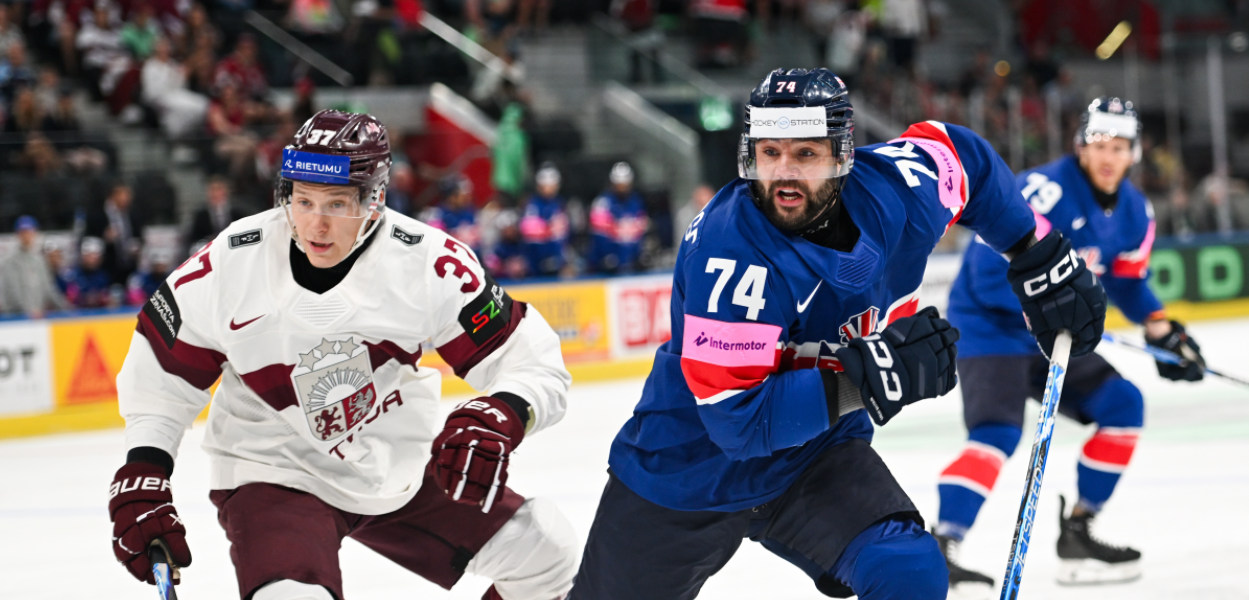
POLICY WIRE — Zurich, Switzerland — The echoes for Latvia, bouncing off the sleek surfaces of the Zurich arena, probably sounded like a dirge back in Great Britain. But then again, does anyone over there really listen? Because while Latvia’s ice gladiators punched their ticket for another day of glory, securing their spot at the table (and keeping quarter-final dreams alive, they play Hungary next, if you’re tracking), their opponents — a contingent from the Isles — were sent packing. This wasn’t just a simple 6-0 rout; it was another unceremonious slide out of the top division of the World Championship, an ignoble retreat from a global stage many didn’t even realize they were on.
It’s easy to dismiss a thrashing like this. Hockey? From Britain? Who knew they played the game, let alone at an international level? But they do. And they try. Their recent efforts — or lack thereof — demonstrate a recurring problem for a nation that once prided itself on athletic ubiquity, not just colonial reach. Six games played, six utterly dismal losses. The numbers don’t lie; they mock. Liam Kirk, David Clements, Brett Perlini — their shots, we’re told, were saved. Others, it seems, just evaporated into thin air. Latvia, a nation with barely two million souls, simply had more grit. Martins Dzierkals initiated the inevitable, followed by Deniss Smirnovs — and Rudolfs Balcers. And then, a trio more: Eduards Tralmaks, Haralds Egle, — and Renars Krastenbergs, just to underscore the point. It was an exhibition of futility, a slow-motion car wreck for anyone vaguely rooting for a plucky underdog.
“It’s never nice to face relegation, but this is part of the cycle of sports,” offered British Minister for Sport, Olivia Thornton, in a rather sanguine email statement from her office. “We must recognize the incredible dedication of our athletes and view this as an opportunity to reassess grassroots investment and identify future talent.” Plausible, certainly, but hardly inspiring. For Latvia’s part, hockey isn’t just a game; it’s a national assertion. Foreign Minister Edgars Rinkēvičs, a known ice hockey aficionado, was more direct: “Our performance reflects national character. We fight, we endure. Smaller nations can still stand tall, can’t they? And sometimes, we stand taller than those who presume their place.” An unmistakable barb, if you cared to interpret it. I don’t think he’s wrong.
And so, after Monday’s ceremonial fixture against Germany (what’s another loss, really?), Britain will return to a lesser tier, presumably to regroup, rebuild, or merely to reflect on what could’ve been, what always seems just beyond their grasp in this particular frozen pursuit. But let’s not forget the financial underbelly here. According to official UK Ice Hockey Association reports from 2023, despite being hailed as the biggest indoor sport by attendance in the country, national funding for elite programs remains stubbornly flat, experiencing barely a 2% real-terms increase over the last five years. Contrast that with, say, synchronized swimming, which often garners disproportionate sums simply for its aesthetic appeal at major multi-sport events. It’s about priorities, isn’t it?
What This Means
This isn’t just about hockey sticks and a 6-0 scoreline; it’s a symptom of a larger geopolitical and economic question facing the UK — what are its post-Brexit sporting ambitions, really? Relegation from the top flight in *any* global sport, no matter how niche within Britain, chips away at a perception of comprehensive national competence. Because perception, ultimately, counts for a lot. How can a nation project itself as a global player if it can’t even hold its own on the ice against countries many barely locate on a map?
📄 POLICY WIRE WHITEPAPER PUBLISHED: PAKISTAN'S NATIONAL SECURITY POLICY PRIORITIES
👉 READ BY CLICKING HEREThe incident also subtly highlights the ongoing dilemma for developing nations. Consider Pakistan, for instance. Its ice hockey federation — a relatively new, if largely ignored, entity — dreams of international recognition. They’ve participated in lower-tier tournaments, often struggling, sometimes even just to get adequate equipment. Their journey, however, represents a clear, if embryonic, foreign policy tool — a subtle attempt to build bridges, assert identity, and secure soft power, much like China’s massive investment in winter sports before its Olympics. Britain’s quiet retreat, conversely, might signal a retreat from that very global sporting diplomacy that even aspiring nations understand the value of. It tells the world: some stages just aren’t for us, anymore. But are they choosing that, or is it chosen for them by decades of disinterest — and under-investment? One has to wonder how a country — say, in South Asia — trying to expand its global sporting footprint and project influence would look at a former colonial power seemingly unable to keep pace in a discipline that demands agility, strategy, and sheer will.
It’s an ironic spectacle, watching a former imperial power slip down the ranks in an international competition — particularly one so emblematic of speed and direct competition — while smaller, nimbler nations rise. But that’s the reality of modern sports. And global power, really. Sometimes, the soft power of a winning national team can make more headlines, and maybe even open more doors, than a thousand diplomatic communiqués. Just look at the enduring impact of a French basketball star on transatlantic relations, for instance. But for Britain’s hockey team, the message sent was more of a sigh than a shout. A rather cold reality, indeed.