


Twilight Frontier: New Species Haul Challenges Old Maps, Raises Islamabad’s Stakes
POLICY WIRE — Islamabad, Pakistan — The planet’s ‘unexplored’ corners? They aren’t just quaint cartographic curiosities anymore. No, they’re active sites for quiet,...

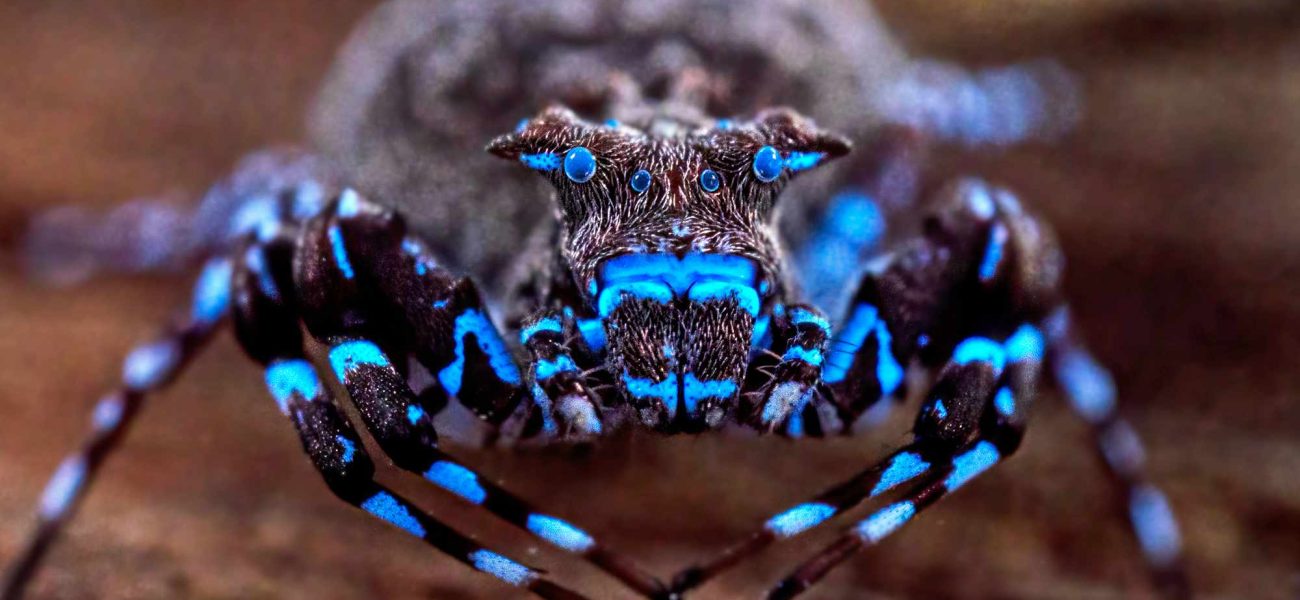
POLICY WIRE — Islamabad, Pakistan — The planet’s ‘unexplored’ corners? They aren’t just quaint cartographic curiosities anymore. No, they’re active sites for quiet, consequential policy dilemmas. An expedition deep into the scarcely mapped, rugged fringes of Balochistan, Pakistan, recently dragged some sixty new species into the light of scientific scrutiny. Not just beetles and botanicals, mind you—one discovery, a particularly unnerving, iridescent blue arachnid that quite literally glows in the dark, is setting tongues wagging far beyond the scientific community.
It wasn’t a journey for the faint of heart, or indeed, the well-funded. Scientists, ecologists, and local guides spent weeks navigating terrain so unforgiving it makes previous expeditions look like Sunday strolls through a municipal park. They’ve peeled back a sliver of Earth’s mystery, confirming suspicions that even in the age of satellites and drone mapping, vast pockets of life remain utterly alien to us. The glowing spider, provisionally dubbed Arachnus Noctilucus Balochi, is the flashy headline, sure. But the real story? It’s the sheer, jaw-dropping volume of unique life that’s been hiding in plain sight—a quiet rebuke to our pervasive arrogance about having conquered the natural world.
Because these discoveries, while initially a cause for scientific celebration, quickly morph into thorny questions of governance, resource management, and international responsibility. Pakistan’s government, already juggling a dozen other pressing domestic issues, now finds itself the reluctant custodian of a biodiversity hotbed its own maps barely recognize. What do you do with a pristine, but economically underdeveloped, mountain range teeming with organisms that could hold medical breakthroughs or, just as easily, be wiped out by encroaching human activity?
But make no mistake, the stakes are astronomical. “This isn’t just about pretty creatures,” remarked Dr. Armaan Ali, lead ecologist on the expedition, his voice raspy from the field. “This is about genetic libraries we haven’t even cataloged, potential solutions to problems we don’t yet grasp. We’ve barely scratched the surface, — and what we’ve found already screams for immediate protection.” He’s not wrong. Roughly 10% of global species remain undescribed by science, and the rate of discovery consistently outpaces conservation efforts.
And then there’s the broader narrative. The Muslim world, often stereotyped through lenses of conflict or development struggles, consistently plays host to some of the planet’s most unique ecological treasures. From the ancient cedar forests of Lebanon to the coral reefs of the Red Sea, and now, the unexpected bioluminescent inhabitants of Balochistan’s rugged east, the region holds untold biodiversity. But conserving it isn’t cheap; it demands concerted, sustained political will and economic backing that’s often diverted to more immediate crises.
Pakistan’s Minister for Climate Change, Dr. Sameera Khan, acknowledged the weight of the moment. “This is an immense source of national pride, certainly,” she stated in a recent press conference, a faint, weary smile playing on her lips. “But it’s also a solemn responsibility. We must secure these precious resources, not just for our people, but for the global community. The path forward involves careful planning, international collaboration, and frankly, some tough decisions about balancing progress with preservation.” Sounds simple enough, doesn’t it?
Consider the potential for eco-tourism—a glittering promise of revenue for cash-strapped regions, but also an invasive threat to fragile ecosystems. And who truly ‘owns’ the biological material discovered? The indigenous communities who live alongside it? The nation-state under whose flag the land sits? Or the international scientific consortiums who facilitate its study?
These aren’t hypothetical quandaries; they’re immediate policy fires that need dousing. For comparison, consider the often-strained dynamics of managing environmental resources detailed in Policy Wire’s look at “Iron Rails, Scorched Earth.” The push and pull between development and natural preservation is a global constant, amplified here by the remoteness and biological density of the discovery zone.
What This Means
The sudden emergence of such rich biodiversity in Balochistan fundamentally alters the calculus for both Islamabad and international conservation bodies. Economically, these discoveries open doors to bio-prospecting and regulated eco-tourism, but also require significant investment in infrastructure and enforcement to prevent illegal poaching or unregulated exploitation. Politically, it strengthens Pakistan’s hand in global environmental discourse, demanding a seat at tables where decisions on climate funding and species protection are made. Internally, it could lead to new land-use policies, potentially impacting local communities—raising questions about sovereignty, equitable benefits, and local buy-in. It’s a complex equation: discovery breeds opportunity, but opportunity, unchecked, can just as easily birth catastrophe. This isn’t merely a scientific anecdote; it’s a raw policy test for a nation navigating the precarious balance between development and its inherent natural wealth.
It’s messy. It’s complex. And it’s just the start of what promises to be a very, very long conversation about glowing spiders and our dwindling planet. Because sometimes, the light you find in the darkness reveals more problems than it solves. Just don’t let anyone tell you otherwise.