


Shadow of a Bullet: South Africa’s Anti-Migrant Fury Explodes Into Murder Investigation
POLICY WIRE — Johannesburg, South Africa — A gunshot, brutal and precise, ripped through the thin veneer of South Africa’s democratic stability this week. It didn’t target a head of state or a...

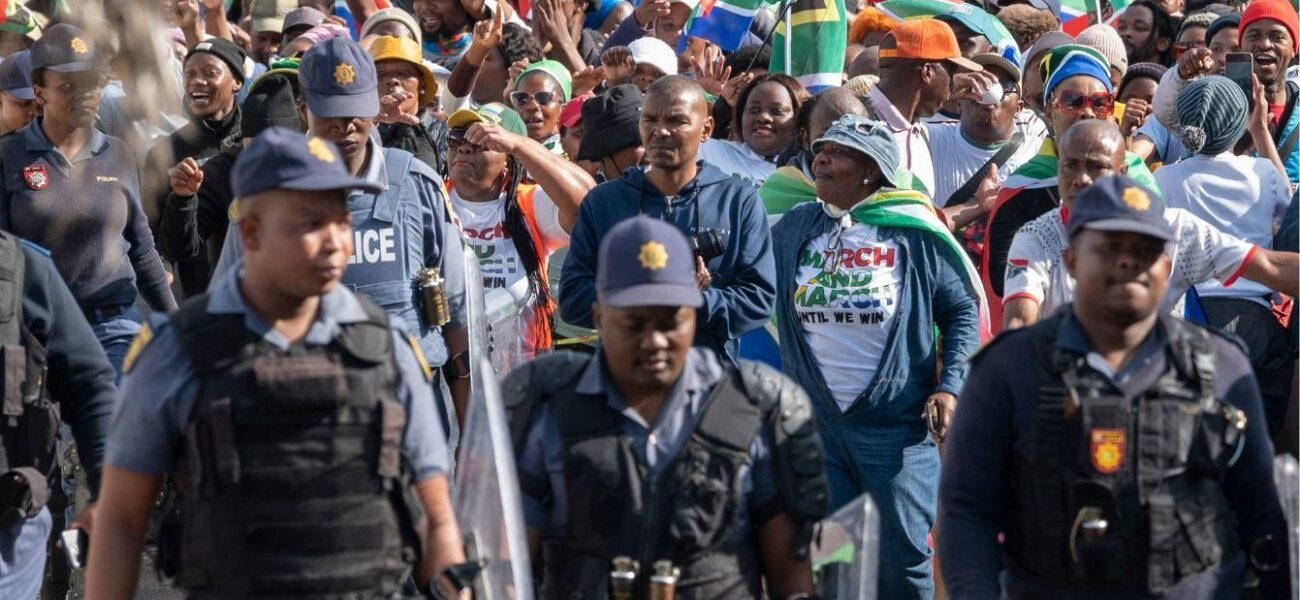
POLICY WIRE — Johannesburg, South Africa — A gunshot, brutal and precise, ripped through the thin veneer of South Africa’s democratic stability this week. It didn’t target a head of state or a syndicate boss. No, the fatal volley claimed the life of an anti-migrant crusader, a figure whose public rhetoric — often vitriolic, sometimes incendiary — gave voice to a growing, fractious chorus. Now, the state, ever keen to manage optics — and control volatile narratives, has convened a special investigative unit. They’re chasing answers to a crime that isn’t just about one man’s death; it’s about the simmering rage tearing at the nation’s seams, particularly regarding its migrant populations.
It’s an almost cinematic development in a country perpetually on the brink. Here’s a nation grappling with persistent unemployment—hovering around 32% nationally according to Statistics South Africa’s Q4 2023 Labor Force Survey—and profound income inequality, but finds itself fixated on the scapegoat. The murder of this self-proclaimed protector of ‘local’ interests, shot down in what police describe as an ambush, tosses a molotov cocktail into an already charged debate. And frankly, it leaves us wondering: was this a retaliation, an internal power struggle, or something even more sinister designed to further inflame an already explosive situation?
Law enforcement hasn’t wasted a breath confirming the severity. Brigadier Thandi Modise, a seasoned veteran of the National Prosecuting Authority, spoke with a stern face. “This isn’t just another homicide; it carries implications far beyond typical criminal intent,” she asserted. “We’re committing significant resources because the integrity of our social fabric—our commitment to the rule of law, no matter how unpopular an individual’s views—is on trial here.” Her words, carefully chosen, reveal the underlying panic within Pretoria’s corridors of power.
But the incident’s political aftershocks are already tangible. Some elements within the anti-migrant movement are already weaponizing the death, painting it as martyrdom. Others, perhaps more cynically, are quietly calculating how to exploit the newfound sympathy. It’s a grisly dance, you see, between genuine outrage — and calculated opportunism. Many South Africans—Black, white, coloured, and Indian—feel ignored, desperate, and they often direct their frustration at the millions of economic migrants who’ve arrived seeking better lives. These newcomers, from Zimbabwe, Mozambique, Nigeria, and even further afield from places like Pakistan, frequently become easy targets for blame when basic services crumble or jobs prove elusive.
“We can’t allow this tragic event to be twisted into justification for further division or violence against any group, regardless of origin,” urged Dr. Sipho Mbele, a spokesperson for the Ministry of Justice — and Correctional Services. His tone was weary, like a doctor who’s seen the same symptoms recur again — and again. “Our constitution enshrines rights for everyone within our borders. It’s a bedrock principle, and we’ll defend it.” A noble sentiment, no doubt, but the gap between constitutional ideals and lived reality in many townships feels, at times, like an unbridgeable chasm.
Because the issues underpinning this murder are far too complex for easy answers. It’s not simply ‘us versus them.’ It’s historical grievances, present-day economic anxieties, and a desperate search for accountability all tangled up. In Johannesburg’s bustling markets and informal settlements, migrants from nations like Pakistan and other South Asian countries, who’ve often established vibrant trading communities, haven’t been immune to xenophobic rhetoric or sporadic attacks. Their presence, like that of other foreign nationals, frequently becomes a convenient flashpoint for resentment, sometimes wrongly portrayed as ‘taking’ resources, other times unfairly connected to illicit trade. It’s an issue the government walks on eggshells around, lest they alienate significant voting blocs. Don’t think for a minute they don’t know it.
📄 POLICY WIRE WHITEPAPER PUBLISHED: PAKISTAN'S NATIONAL SECURITY POLICY PRIORITIES
👉 READ BY CLICKING HEREThe establishment of this special police team—a stark admission of the extraordinary circumstances—isn’t just about bringing a killer to justice. It’s a desperate play to quell public unrest, to demonstrate that the state still holds the reins, even as frustration with foreign residents bubbles precariously close to the surface. It’s also an acknowledgment that political assassinations, especially ones steeped in identity politics, carry the potential to unravel an already delicate peace. The ripple effects will be felt for weeks, perhaps months.
What This Means
This murder, however unfortunate, significantly reshapes the landscape of South Africa’s migration debate. Politically, it presents a conundrum for the ruling party: condemn xenophobia outright and risk alienating a portion of the electorate that feels marginalized, or appear soft on migration and lose urban youth voters who often lean towards progressive social policies. It forces the state to perform a delicate tightrope walk, one that might fail. We’ll likely see a short-term uptick in rhetoric from anti-migrant factions, emboldened by the ‘martyrdom’ narrative. But there’s also the distinct possibility that such overt violence might repel some who, while agreeing with the sentiment, aren’t ready to embrace its most brutal manifestations.
Economically, the incident exacerbates existing uncertainties. South Africa relies on certain immigrant populations—skilled and unskilled—to fill gaps in its labor market, from healthcare to informal trading. Heightened xenophobic tensions, stoked by incidents like this, inevitably deter investment — and talent. Businesses, both foreign and domestic, want stability, not the specter of street violence or politically motivated crime. It adds another layer of risk, another reason for potential investors to look elsewhere (think about how economic pressures are shifting populations elsewhere). The tragic irony is that deepening divisions and scaring away capital only make the economic woes—the very root of much anti-migrant sentiment—even worse. This isn’t just a crisis of policing; it’s a crisis of confidence, — and it’s hitting the nation hard.