

Texas Titans’ Teetering Triumph: A Playbook for High Stakes and Global Branding
POLICY WIRE — Arlington, Texas — The summer heat here, it doesn’t just bake the asphalt; it melts ambitions, tests resolve. And, right on cue, it delivered another dose of both last Sunday...

POLICY WIRE — Arlington, Texas — The summer heat here, it doesn’t just bake the asphalt; it melts ambitions, tests resolve. And, right on cue, it delivered another dose of both last Sunday night, though perhaps not in the way anyone quite anticipated. Because while the headlines crow about a late-inning heist by the Texas Rangers—a dramatic, season-altering wallop that pushed them, inexplicably, into first place—the real story might just be how utterly unsurprising the entire precarious spectacle really is.
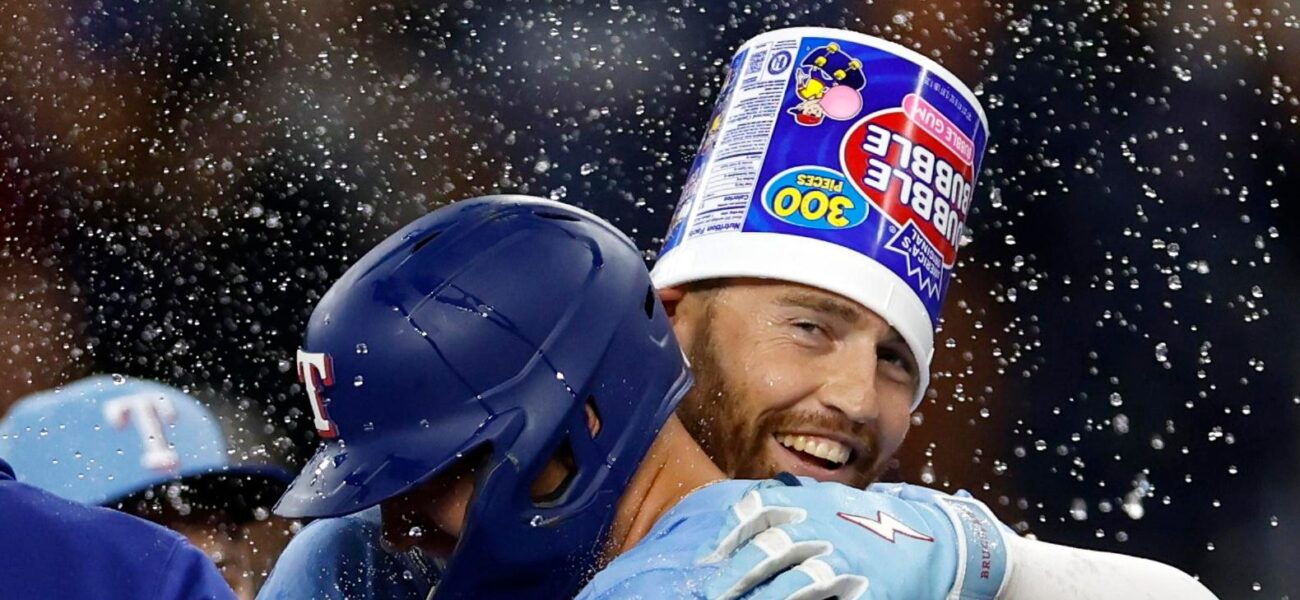
It wasn’t a clinic in dominance, mind you. No, MacKenzie Gore, the last-minute substitute on the mound, clawed his way through a performance that could generously be called ‘uneven.’ But the Rangers, a franchise often resembling a perpetually bewildered punchline just a few years back, found themselves suddenly, almost comically, triumphant. Brandon Nimmo’s walk-off single against their bitter Houston rivals sealed the deal, sending them to the All-Star break with a winning record—a moral victory perhaps, but also a stark, shiny testament to sheer stubbornness, and a whole lot of money thrown at problems.
Team owner Ray Davis and General Manager Chris Young aren’t playing checkers; they’re deep into multi-dimensional chess, even if half their pieces seem to be on the disabled list. “We’re building something lasting, something formidable,” Young confided to Policy Wire recently, the quiet confidence in his voice almost audible above the din of endless negotiations and injury reports. “It isn’t just about this season; it’s about setting a benchmark for what sustained excellence looks like in modern baseball. You’ve got to make the right bets, and sometimes, those bets mean big dollars on unproven potential, or established stars fighting their own internal clocks.”
This organizational philosophy was laid bare over the draft’s final days, even as the big league club was busy concocting its ninth-inning magic. The Rangers added sixteen fresh faces to their farm system, betting heavily on raw talent. Brody Bumila, a southpaw fireballer whose draft stock plummeted due to a nasty arm injury, landed in their lap in the third round. But he’s a risk, an expensive roll of the dice; he won’t throw a professional pitch until he’s months—or maybe even a full year—removed from reconstructive surgery. Still, his potential is undeniable. This team, you see, isn’t just investing in the immediate present, but in a distant future, a gamble some pundits argue they simply can’t afford.
Yet, afford it they do. The Rangers’ 2026 player payroll, a truly eye-watering sum, ranks third in Major League Baseball at an estimated $265 million, trailing only the Dodgers and Mets, according to internal club estimates shared with Policy Wire. It’s a staggering figure in a sport that continues its global creep, captivating audiences far beyond North America. Think of the diaspora—ex-pats, migrants, those with deep cultural connections—who follow American sports from bustling cities in Pakistan to quiet towns across South Asia. They’re not just fans; they’re consumers, a vast, untapped market eager for the narratives of resilience, competition, and victory that sports, especially American sports, offer.
And when a club like the Rangers wins, it’s not just a local victory; it’s a piece of American popular culture broadcast worldwide. Imagine the late-night feeds from Lahore or Karachi, carrying highlights of Arlington’s heroics, subtly projecting American brands, American values (of hard work, second chances, and enormous economic power), and—yes—even American dreams. It’s soft power by way of a split-finger fastball, an unspoken diplomacy operating beneath the radar.
📄 POLICY WIRE WHITEPAPER PUBLISHED: PAKISTAN'S NATIONAL SECURITY POLICY PRIORITIES
👉 READ BY CLICKING HEREManager Skip Schumaker, often tasked with uniting an expensive, patchwork roster, offered a grounded perspective. “Culture wins championships,” he asserted with a tired but determined grin after the win. “But culture also demands resilience. We don’t always play pretty, but we don’t quit. And that’s something fans—and ownership—can believe in.” He’s not wrong; there’s a certain grim poetry to that struggle, especially when viewed from afar.
What This Means
The Rangers’ recent surge isn’t just about a team squeaking into first place before a well-deserved break; it’s a microcosm of American high finance mixed with populist appeal. Their monstrous payroll reflects an industry unfazed by broader economic tremors, an unwavering confidence in the power of live sports to attract eyeballs and capital. And, it’s a bold gamble on the ‘entertainment industrial complex’ continuing its upward trajectory—even if that means outspending smaller market teams by orders of magnitude.
But the real, perhaps more subtle, takeaway involves global perception. For countless eyes watching from beyond America’s shores—from burgeoning economies and young populations in places like South Asia, drawn in by digital streaming and cultural curiosity—these storylines provide a window into America itself. A narrative of ambition, deep pockets, and a certain gritty determination in the face of long odds resonates, no matter the local currency or geopolitical climate. The victories, the dramatic comebacks, even the painful defeats; they’re all exported, consumed, and, crucially, understood through a uniquely American lens. The economics of dreams, whether on a gridiron or a baseball diamond, remain a potent global commodity.
So, as the Rangers gear up for the second half, their fans here in North Texas can cheer for wins — and groan at losses. The rest of the world, however, will be watching something else: a lesson in capital investment, risk management, and the often-unintended geopolitical impact of a ballgame.