


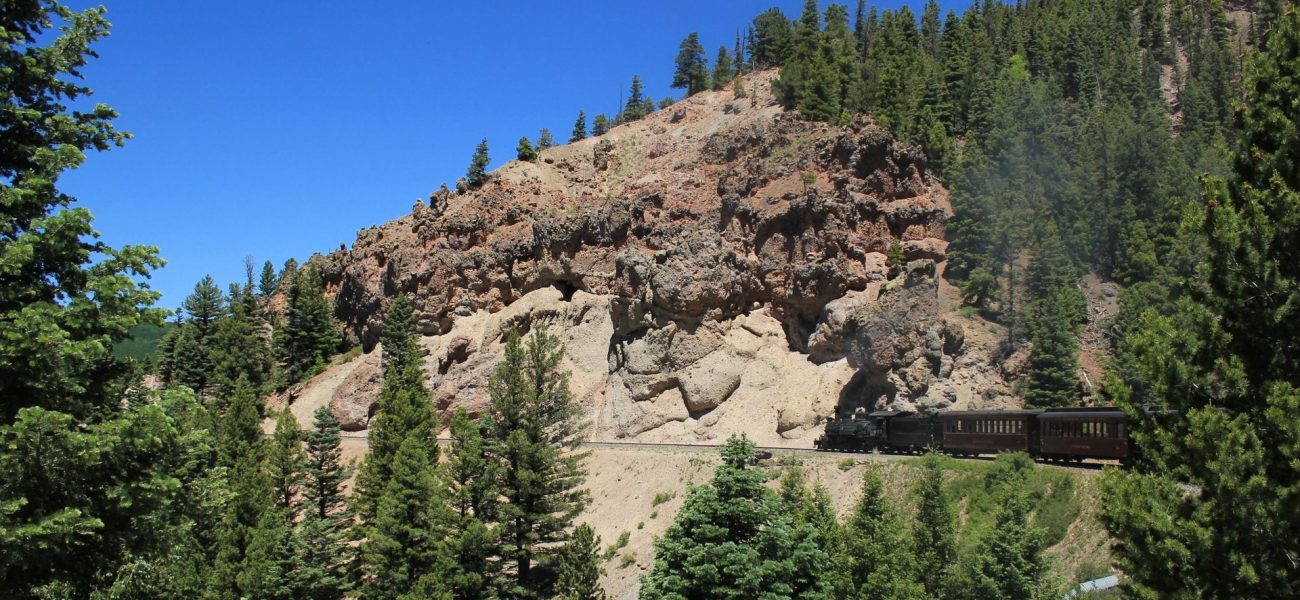
Iron Rails, Scorched Earth: High Desert’s Scenic Line Battles Climate’s Grip
POLICY WIRE — CHAMA, N.M. — The quiet sigh of relief that swept through Chama last week wasn’t just about tourists finally booking their long-delayed tickets. No, it was something far more...

POLICY WIRE — CHAMA, N.M. — The quiet sigh of relief that swept through Chama last week wasn’t just about tourists finally booking their long-delayed tickets. No, it was something far more profound. It was the sound of a community—and an entire industry, really—taking a collective breath, a brief reprieve in the ongoing, brutal struggle against an adversary you can’t see but whose effects scar the landscape: climate change. The iconic Cumbres & Toltec Scenic Railroad, a rolling museum of Americana, is finally set to rumble to life on June 9th. It’s about time, folks. May was supposed to be the start, but then, the drought bit hard, and wildfire danger loomed—like a spectre over these arid New Mexico mountains.
It’s not just a train, is it? This isn’t just about quaint steam engines chugging along a narrow-gauge track. This is about livelihoods. About small-town businesses clinging to the promise of summer crowds. And when Mother Nature says ‘hold up’ (or, more accurately, ‘dry up and burn’), those promises get awfully thin, don’t they?
The railroad’s CEO, Eric Mason, sounded appropriately relieved when the June 2nd review by the Cumbres & Toltec Scenic Railroad Commission finally gave the all-clear. “Our patience has certainly been tested,” Mason acknowledged, a wry hint of understatement in his voice. “But welcoming folks back, hearing that whistle scream its way across the landscape? It’s not just about the railroad; it’s about these communities, pulling through, yet again. We’re eager to get those wheels turning, to make up for lost time.” It’s the sort of earnest declaration you hear from someone who’s spent sleepless nights watching fire reports and rainfall totals. But his relief? Palpable. You bet it’s.
Because that initial May 23rd launch? It dried up. Literally. The New Mexico high country, like much of the American Southwest, has been teetering on the edge of ecological crisis for ages now. Over 20 years, the American Southwest has battled a persistent megadrought, described by NOAA scientists as the driest period in 1,200 years. So, when the winds pick up — and the timber grows bone-dry, well, that’s when you postpone pleasure for prudence. You’ve gotta.
State Senator Dolores Mendoza, whose district often feels the sharp edge of these environmental shifts, didn’t mince words. “When a tourist attraction like the Cumbres & Toltec, a backbone for Chama’s economy, has to pump the brakes, it sends a clear message. This isn’t an inconvenience; it’s a stark bell tolling for our region,” she told Policy Wire. “We can’t ignore the climate shifts staring us right in the face. It’s about protecting our resources—and the futures of folks who call this place home. We really have to connect these dots, understand?”
And so, on June 9th, the whistle will indeed blow. There’ll be a grand old party on June 13th in Chama, too, dovetailing with Chama Western Heritage Days. Think live music, vendors, rodeos—the whole kit and caboodle. And, just to add a bit of polish to the whole ‘against all odds’ narrative, the railroad recently clinched the USA TODAY poll for the nation’s best scenic train ride. That’s a good marketing hook, especially with a 25% discount on coach tickets through August if you book by June 7th. They’ve also got Dark Sky Train departures on June 12th and 13th, ferrying stargazers to spots where light pollution is basically a rumor.
What This Means
The saga of the Cumbres & Toltec isn’t just a quirky local news story. Not even close. It’s a micro-drama playing out against the macro-backdrop of a planet grappling with environmental instability. Economically, these delays ripple out fast. Small businesses, like those little cafes or souvenir shops in Chama, don’t just ‘absorb’ weeks of lost tourist dollars. They feel it. Their staff feels it. It creates a domino effect of fiscal stress in communities often already on the margins. New Mexico, a state with vast natural beauty but also complex political landscapes and development challenges, relies heavily on its tourism appeal.
But there’s also a deeper, global echo here. Consider nations across South Asia, like Pakistan, where seasonal rains (or the lack thereof) can shatter agricultural cycles, leading to mass internal displacement, water scarcity, and political unrest. Imagine a heritage railway there—a colonial-era marvel or a critical supply line—idled by extreme weather. The impact is exponential, far more dire than the disruption to a leisure activity in New Mexico. But the root cause? Oftentimes, it’s disturbingly similar. The question isn’t *if* these climate-induced disruptions will affect human endeavors; it’s how frequently, and with what level of sustained economic and social collateral damage. And what sort of long-term investments in resilience are we truly making? Because these aren’t just one-off anomalies; they’re becoming the new rhythm. We’ve got to face that. And the price tag? Well, it’s getting higher by the season, isn’t it?