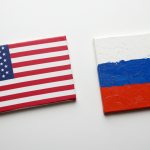



Trump’s Ukraine Policy Is a Profitable Contradiction, Not a Strategic Shift
The war in Ukraine, now in its fourth year, has left behind a trail of devastation. Thousands of lives have been lost, entire cities reduced to rubble, and millions forced to flee. Ukraine continues...

The war in Ukraine, now in its fourth year, has left behind a trail of devastation. Thousands of lives have been lost, entire cities reduced to rubble, and millions forced to flee. Ukraine continues to resist Russia’s aggression, depending heavily on Western support. This month, President Donald Trump made headlines with what appeared to be a major shift in U.S. policy announcing new weapons for Ukraine and warning Russian President Vladimir Putin of harsh economic penalties if he doesn’t agree to peace within 50 days.
But beyond the bold talk lies a much more troubling reality: Trump’s position is full of contradictions. While claiming to stand with Ukraine, he’s helping the U.S. arms industry profit from the war. While threatening Putin with tariffs, he continues to speak about him with admiration. While warning other countries to stop trading with Russia, he gives investors and adversaries reasons to believe he’s bluffing.
This is not strong leadership. It’s hypocrisy. Trump announced that the U.S. will sell “top-of-the-line” weapons to NATO, including Patriot air defense systems, which will then be passed on to Ukraine. NATO allies will pay the full cost. In other words, Ukraine gets the weapons it needs, and the U.S. defense industry gets a massive payday. Trump proudly framed the deal as a financial success for America, calling it “very big” putting profit at the center of a life-or-death war.
This transactional approach reveals where Trump’s priorities truly lie. Instead of offering military aid as a show of solidarity, he turned it into a business deal. Ukraine’s suffering has become part of a weapons marketplace. There is little sign of real moral responsibility only a desire to come out ahead. At the same time, Trump gave Putin a 50-day deadline to reach a peace deal or face 100% tariffs and secondary sanctions. He warned countries like China and India that continuing to trade with Russia would have consequences. But even as he made these threats, Trump stopped short of calling Putin what he really is: an aggressor who has ignored international law and targeted civilians. Instead, Trump called him a “very tough guy,” admitting only that he was “disappointed.”
This is the same Trump who, in past years, openly praised Putin’s leadership and treated him as a strategic partner. Now, he wants the world to believe he’s turning against him yet his words and tone suggest otherwise. This double message criticism mixed with admiration sends the wrong signal to Moscow. It suggests that Trump’s stance may be more performance than policy.
And investors seem to agree. Following Trump’s announcement, Russian financial markets actually rose. The ruble gained strength. Why? Because they don’t believe Trump will follow through. His history of unpredictable and inconsistent foreign policy leaves room for doubt. If Putin waits long enough, they assume, the pressure might ease or shift direction. Once again, Trump talks tough but offers no proof that his words carry weight.
The lack of real follow-up planning is also alarming. What happens after the 50 days if Russia refuses to cooperate? Will Trump impose tariffs, or will he find a reason to delay? Will he punish nations like China at the risk of a wider economic conflict? There are no clear answers. And that makes it harder for Ukraine and its allies to trust him. Meanwhile, Trump’s sudden decision to send long-range weapons after criticizing previous U.S. hesitations shows another layer of hypocrisy. During his first term, Trump was vague and often soft on Russian aggression. Now, he wants to appear strong but does so by repeating delayed strategies without any new vision. He claims credit for moves others were once blamed for delaying.
📄 POLICY WIRE WHITEPAPER PUBLISHED: PAKISTAN'S NATIONAL SECURITY POLICY PRIORITIES
👉 READ BY CLICKING HEREUkrainian President Volodymyr Zelensky thanked Trump for his support. But no doubt, Kyiv remains cautious. It’s hard to rely on a leader who changes positions so easily and who treats a war not as a fight for freedom, but as a profitable exchange. The people of Ukraine are not props in a political performance. Their lives are not bargaining chips. They deserve steady, reliable, and values-based support. Real allies do not shift based on business deals or public image. Real leadership is measured not by flashy announcements, but by consistent action and moral clarity.
Trump may claim he’s helping Ukraine, but his mixed messages and profit-driven approach tell another story. The hypocrisy is clear: he warns Putin while refusing to condemn him; he threatens sanctions but praises weapons sales; he claims to seek peace but acts like a businessman closing a deal. If the United States wants to be a true global leader, it must do more than speak loudly. It must act with integrity. And that starts with calling hypocrisy what it is even when it comes from the highest office.
Author