


Truce Mockery: US-Brokered Ceasefire Collapses Amidst Ukraine Blame Game
POLICY WIRE — Kyiv/Moscow — You know how sometimes you really want something to work? Like, really, really want it? This week’s much-hyped, US-brokered three-day ‘truce’ between Ukraine — and Russia...

POLICY WIRE — Kyiv/Moscow — You know how sometimes you really want something to work? Like, really, really want it? This week’s much-hyped, US-brokered three-day ‘truce’ between Ukraine — and Russia just wasn’t one of those times. It belly-flopped so spectacularly, it’d be funny if people weren’t still dying.
President Donald Trump had, with his signature flair, announced the pause in fighting, timed around Russia’s Victory Day celebrations. He pitched it as a breakthrough, a ‘beginning of the end.’ But anyone with a shred of familiarity with this brutal, four-year grinding match — and let’s be real, that’s most of us — likely just raised an eyebrow. Or perhaps sighed a little. Because what happened next was as predictable as the sun coming up, only much less reassuring.
The ink wasn’t even metaphorically dry before the accusations flew like shrapnel. Kyiv pointed fingers. Moscow retaliated, rhetorically speaking. Both sides claimed the other side broke the flimsy understanding first, painting themselves as the injured party. It’s an old dance, this one, worn smooth by countless previous ‘ceasefires’ that proved more theoretical than actual.
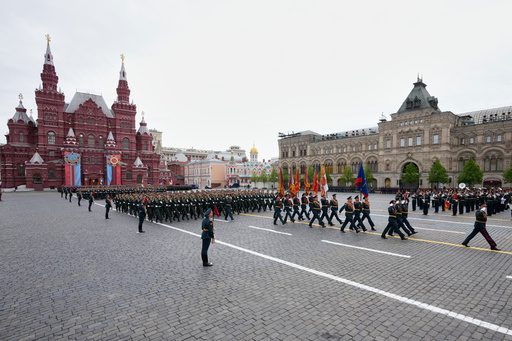
Ukrainian President Volodymyr Zelenskyy, who earlier had snarkily suggested Russian authorities feared Ukrainian drones buzzing over Red Square during their big parade, quickly dropped the pleasantries. He wasn’t having any of it. “Moscow talks a big game, pretends at peace, but it’s clear their word means little,” Zelenskyy reportedly fumed. “We’re always ready to meet aggression with equal — or greater — force. Our patience, you know, it’s not infinite.” His words didn’t exactly scream ‘surprise.’
On Russia’s side, their defense ministry claimed Kyiv had committed over 1,000 ceasefire violations. A tidy, round number, isn’t it? Very official. They insisted Russian forces were merely “responding in kind” to Ukrainian aggression, targeting civilian areas, which seems a peculiar response to alleged truce-breaking if peace was truly the goal. And Ivan Fedorov, the head honcho in Ukraine’s Zaporizhzhia region, told a different, grittier tale. He confirmed one person killed — and three others wounded by Russian artillery and drone strikes in just 24 hours. Sixteen more sustained injuries across other regions. Two people were also hurt in Kherson, per Russia-installed official Vladimir Saldo.
This isn’t just about statistics; it’s about lives. And about the gnawing futility of diplomatic theatre in the face of hardened battle lines. Donald Trump, ever the dealmaker, expressed his frustrations. “Look, I got them to agree, okay? Three days. That’s a good start,” he stated, channeling his exasperated bravado. “But these guys… they just don’t listen. It’s a complicated world, folks. Real complicated. But nobody does complicated like me.” The truth is, some things are too complicated even for the world’s self-proclaimed best deal-closer. Especially when the ‘deal’ means losing ground you’ve fought tooth — and nail to hold.
The constant, almost performative, shuttle diplomacy that yields precisely nothing has a broader effect too. It chips away at faith, not just in particular mediators, but in the entire concept of international mediation. From the dusty, perennially fraught border regions of Kashmir to the simmering geopolitical rivalries that stretch from Pakistan across South Asia and into the Middle East—where global powers often play their own, shadow games—such hollow attempts at peace talks create a corrosive cynicism. It feeds into the narrative that power, not diplomacy, always has the final word. A dangerous precedent, frankly.
Russia’s Yuri Ushakov, a presidential aide, still holds out for US envoy Steve Witkoff and Jared Kushner to visit Moscow. He said they’re expected “soon enough.” But Ushakov’s accompanying message was stark: Moscow ain’t budging on its demand for Ukraine’s total withdrawal from Donbas. Which, you know, makes any talk of diplomacy feel a tad, well, pointless. Until Ukraine waves the white flag on a major territorial concession, Russia plans to keep playing hardball. We’ve seen this movie before, over — and over again, through Orthodox Easter ceasefires and every other ill-fated pause.
What This Means
This rapid breakdown of the ceasefire signals not just the immediate failure of a specific initiative, but a deeper malaise in current conflict resolution efforts for Ukraine. Politically, it severely damages the credibility of US-led mediation efforts and particularly diminishes any perception of Trump’s diplomatic influence, confirming that while he can orchestrate a brief pause, he can’t force peace on unwilling belligerents. It shows Kyiv won’t be railroaded into concessions disguised as ceasefires, especially when the other side isn’t honoring the spirit—or the letter—of the deal.
Economically, the persistent instability means global commodity markets (especially for grains, which heavily impact countries like India and Pakistan) remain volatile. Investors shy away from long-term commitments in such a unpredictable geopolitical landscape. But it’s also a demonstration of how a prolonged, low-level conflict serves the strategic purposes of at least one party, which continues to bleed the opponent while waiting for larger shifts. The war, for now, remains an attritional affair, punctuated by meaningless pauses. And the ripple effect? That means ongoing defense spending increases globally, trade route disruptions, and sustained geopolitical friction, affecting everything from energy prices to Beijing’s strategic calculations.