


The Billion-Dollar Ball: Valkyries Rewrite Sports Economics, Leaving Titans Stunned
POLICY WIRE — Oakland, USA — For two decades now, I’ve watched sports executives pat themselves on the back, murmuring about market saturation, ‘fan engagement,’ and the relentless grind...

POLICY WIRE — Oakland, USA — For two decades now, I’ve watched sports executives pat themselves on the back, murmuring about market saturation, ‘fan engagement,’ and the relentless grind for every last sponsorship dime. Then along came the Golden State Valkyries, a franchise barely out of its swaddling clothes, blowing a gaping hole in every calcified projection about women’s professional sports. They didn’t just break the glass ceiling; they kinda, sorta, pulverized it, almost casually, while the rest of the world was still debating the viability of a full-size court.
Because let’s be honest, the whispers often followed: women’s sports, they said, lacked the necessary eyeballs, the sponsor muscle, the revenue streams to truly compete with the established giants. Nobody told Jess Smith, the Valkyries’ president, that particular fairytale. Last week, it was revealed her outfit – the one she’d assembled from scratch, virtually – was worth a cool billion dollars. Not projections, not some speculative pie-in-the-sky fundraise. A legitimate, bank-account-counting, billion-dollar valuation. They became the first women’s sports franchise ever to achieve such a thing, leaving quite a few old boys in suits looking distinctly less sharp.
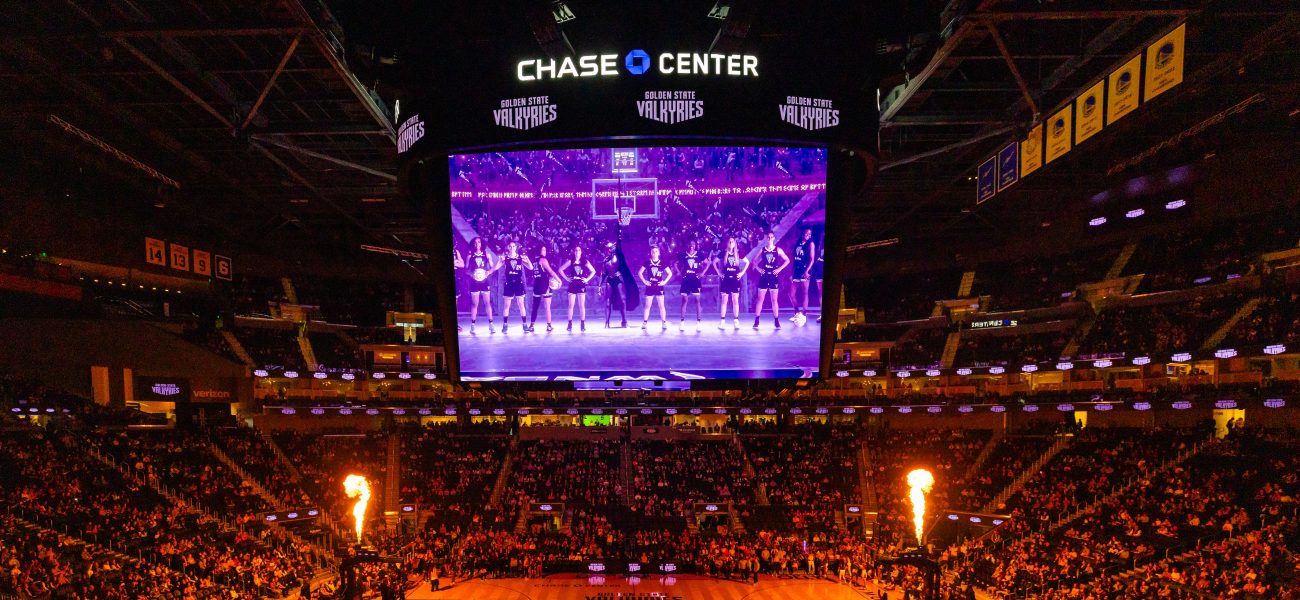
But there wasn’t champagne spraying from the rafters of the Chase Center that day. No, this crew was already prepping for tip-off, polishing strategy. That’s because the WNBA, for all its long history — and fighting spirit, is finally having its true commercial moment. And the Valkyries? They’re simply leading the charge – not a surprising position, mind you, for a Bay Area entity.
Smith, who’s already pocketed the WNBA Business Executive Leadership Award, had actually predicted this seismic shift. “If you’re following the continued growth of each league, and specifically the WNBA,” she told reporters with the dry certainty of someone who’d done her homework, “this is just the beginning of what’s on the horizon. We’re seeing what’s possible with more games, more visibility, more media dollars, more ticket sales, more merchandise, and—crucially—more international opportunities.” Her team is aiming for two billion now. Modest, ain’t it?
How does a team, fresh on the scene, pull this off? Well, Bay Area venture capital has always smelled an opportunity before the mainstream media catches a whiff, hasn’t it? It’s not just about winning on the court – though the Valkyries made playoffs in their first year, a genuinely stunning feat for an expansion team. It’s about cultivating an undeniable, unshakeable economic proposition.
Franchise valuations, in this era of inflated sports markets, are a weird beast. They often look like black magic to outsiders. They account for future revenue, scarcity, investor enthusiasm—stuff you can’t always quantify with last season’s attendance figures. The Valkyries, on a projected $78 million in 2025 revenue (as reported by CNBC), fetched a multiple of just under 13 times their earnings. Compare that to the NBA’s Portland Trail Blazers, sold at $4.25 billion on $315 million revenue—a similar multiplier. It’s an affirmation that this league isn’t just a feel-good story anymore; it’s big business. The fans are certainly buying in: the Valkyries have sold out every single game at the 18,000-seat Chase Center since opening, setting WNBA attendance records.
And this isn’t some niche, localized Bay Area fad either. The reverberations are global. The success of outfits like the Valkyries signals to emerging sports markets—perhaps in places like Pakistan, where women’s participation in sport, though often culturally fraught, is slowly gaining traction through grassroots initiatives and growing media exposure—that the business model is valid. The visibility, the funding, the prestige can trickle down. Even a casual interest in Hoops Hegemony’s High Stakes in the US can ignite conversations halfway across the globe about similar aspirations for female athletes.
But back in the States, the numbers really speak volumes. This wasn’t just good PR. The WNBA’s new 11-year media rights contract is worth an astounding $3.1 billion, a staggering 6.5 times the previous deal. That money fuels player salaries, which quadrupled, — and incentivizes investors. It also helps finance things like doubling the marketing team because, let’s be real, even billion-dollar outfits need better bandwidth to leverage all that sweet momentum. Golden State Warriors co-owner, Joe Lacob, never one to mince words when opportunity knocks, summed it up perfectly: “We always knew the market was there; it was simply a matter of aligning the stars, of giving fans the product—and the experience—they’ve always craved. This isn’t just about women’s basketball; it’s about smart business.”
They even smartly sacrificed the 8th pick in the draft—which became LSU phenom Flau’jae Johnson—to save salary cap space. Imagine saying no to a social media sensation. That’s a sign of a team playing the long game, not just chasing instant headlines, understanding that fiscal discipline is the real flex.
What This Means
This valuation isn’t just about a single sports team, folks. Not by a long shot. It’s a loud, unmistakable trumpet blast announcing the full, undeniable arrival of women’s sports as a financial powerhouse. Politically, this creates new levers. Suddenly, discussions around equitable pay, facilities, and media coverage move from moral arguments to hard economic sense. Lawmakers and sports federations can no longer dismiss women’s leagues as side projects; they’re legitimate drivers of revenue, employment, and—let’s face it—global soft power. This kind of success story has ripple effects far beyond American borders, challenging outdated notions about gender roles in sport and commerce across diverse cultures, from burgeoning markets in South America to established sports economies in Europe and potentially inspiring nascent movements in regions like the Middle East. It changes how girls growing up, anywhere, perceive their own athletic — and professional ceilings. For established leagues, it’s a wake-up call to innovate or get left behind. And for any entity that still thinks women’s sports is just ‘cute,’ well, a billion dollars isn’t cute. It’s cold, hard reality.