


Diplomatic Scramble: France Forces UN Showdown as Israel Pushes Deeper into Lebanon’s Shadow
POLICY WIRE — New York City — Forget the niceties, the diplomatic dances; things are getting ugly. Another round, it seems, in the Levant’s seemingly endless tragedy. The latest act opened not...

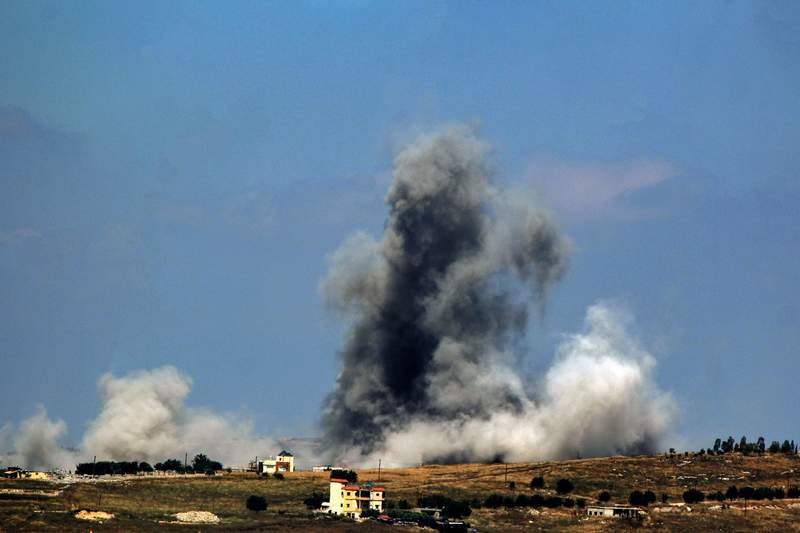
POLICY WIRE — New York City — Forget the niceties, the diplomatic dances; things are getting ugly. Another round, it seems, in the Levant’s seemingly endless tragedy. The latest act opened not with bombs, but with an urgent call from Paris, yanking the global diplomatic set back into emergency mode. France, with its historical ties to Lebanon, didn’t just ask nicely for a powwow—they practically slammed their fist on the table, demanding an immediate UN Security Council session to chew over what’s being described as Israel’s latest incursions into Lebanese territory.
It’s a familiar script, isn’t it? Israel moving, borders blurring, a regional fuse sputtering. This time, the reported Israeli advances deep into what Beirut views as its sovereign space—whether a preemptive strike, an intelligence operation gone sideways, or something far more unsettling—has stirred the pot with unusual ferocity. And Paris, you see, it can’t just stand by. They’ve got a dog in this fight, — and always have. French Foreign Minister Stéphane Séjourné didn’t mince words.
“We’ve been here before, many times, too many times,” Séjourné told reporters in a rushed press conference outside the Quai d’Orsay, his face grim. “But this time, the situation feels—different. We see actions that threaten to blow open a wound this region can scarcely afford. We must have immediate de-escalation, an adherence to international law, — and a robust commitment to UN resolutions. Our silence isn’t an option.” Strong stuff, for sure, even if the Security Council’s track record on such matters often resembles a well-rehearsed charade.
The call itself is less about resolving the immediate conflict and more about establishing who holds the moral high ground—or at least, who looks like they’re trying. Washington, caught in its usual geopolitical pretzel, finds itself trying to manage a prickly ally (Israel) while calming a perpetually frayed region. They’ll likely back some form of diplomatic intervention, but their heart’s not entirely in it; they never want to openly constrain Israel too much, do they?
Because let’s be honest, Israel’s narrative always frames such actions as necessary self-defense. And they’re sticking to it this time around too. “Our military operations are surgical, targeted, and designed solely to neutralize threats emanating from Hezbollah and other hostile groups on our northern border,” an Israeli Defense Forces spokesperson, Rear Admiral Daniel Hagari, was quoted stating in a background briefing that probably wasn’t intended for public consumption. “We don’t seek wider confrontation, but we won’t hesitate to protect our citizens from any aggression.” It’s the standard line, always has been.
For onlookers from places like Pakistan, these developments aren’t just headlines; they’re echoes of a larger struggle, part of a continuum of Western (and especially American) perceived indifference to the plight of Palestinians and broader Muslim nations. Pakistani Ambassador to the UN, Munir Akram, will undoubtedly use the platform to reiterate Islamabad’s principled stand, calling for immediate cessation of hostilities and highlighting the disproportionate impact on civilian lives. It’s a sentiment shared across much of the Muslim world, where such incursions are viewed as part of an expansionist agenda. Pakistan, a significant non-permanent member on previous Councils, understands the performative nature of these meetings but also their power to galvanize wider international opinion—or at least try.
But the numbers are sobering. A study published in the Journal of Conflict Resolution last year indicated that out of 38 UN Security Council resolutions concerning Israeli-Lebanese conflicts since 1978, only six resulted in lasting de-escalation for more than six months without further military intervention from either side. Not great odds, wouldn’t you say?
It’s all happening against a backdrop of deep regional instability, where Tehran’s shadow looms large over Hezbollah, effectively making Lebanon a chessboard for bigger, uglier games. And this is exactly what makes France’s sudden burst of assertiveness so intriguing; they’re effectively challenging the unwritten rules of engagement—or non-engagement, depending on your perspective.
What This Means
The French call, while ostensibly about Lebanon, speaks to a broader discontent with the current global power dynamics. Politically, it’s a direct challenge to the US-Israel ‘special relationship’ and an attempt by France to reassert itself as a key diplomatic player in the Eastern Mediterranean, where its economic interests—think energy, infrastructure—are considerable. Expect the Security Council meeting to be fractious, probably yielding another strongly worded, but ultimately unenforceable, resolution. No one’s expecting miracles from Turtle Bay, let’s be honest. Because Russia will posture, China will remain strategically opaque, and the US will seek to dilute any language overly critical of Israel.
Economically, any protracted instability or military engagement along the Israel-Lebanon border is devastating for a country like Lebanon, already teetering on the edge of utter collapse. Its economy is in freefall, and any renewed conflict means further destruction, more displacement, and less incentive for international investment—investments like those France and its European partners might one day consider for Beirut. A more stable Lebanon would also indirectly support wider regional trade — and security initiatives. The ripple effects will be felt across the region, from crude oil markets to the confidence of global investors in a region already defined by perpetual turmoil. It might even influence the tricky negotiations ongoing for Washington’s Latest Tehran Gambit—every spark counts, after all.
It’s not just about one border skirmish; it’s about setting precedents, managing narratives, and perhaps, just maybe, stopping a truly terrible situation from getting impossibly worse. But don’t hold your breath; history suggests otherwise.