

Beijing’s Tightrope: How Iran’s Shadow War Echoes in China’s Shrinking Oil Intake
POLICY WIRE — BEIJING, CHINA — You can always tell a tale by its numbers, but sometimes the real story lives in the blank spaces, in the things that didn’t happen. That’s precisely the vibe...

POLICY WIRE — BEIJING, CHINA — You can always tell a tale by its numbers, but sometimes the real story lives in the blank spaces, in the things that didn’t happen. That’s precisely the vibe wafting off China’s April energy balance sheet. For Beijing, a state typically ravenous for crude and natural gas, the dip wasn’t just a blip; it was a low hum signaling discomfort from half a world away.
It’s not just about a temporary lull in demand. No, this downturn in imports, especially crude from its more, shall we say, ‘sanction-resistant’ suppliers, comes packaged neatly with a simmering conflict in the Middle East—specifically, Iran’s ongoing tit-for-tat with pretty much everyone west of it. And Beijing, which prides itself on strategic flexibility, suddenly looks like it’s doing a tricky tightrope walk. Fuel exports from China? Those hit a decade low. A sharp observation, wouldn’t you say, given China’s industrial prowess? That tells you they’re hoarding, or perhaps more accurately, strategizing.
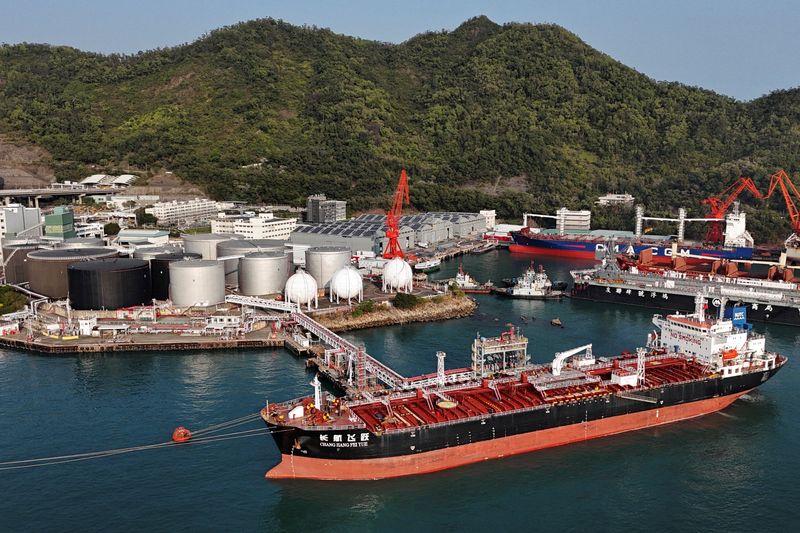
The numbers themselves are pretty stark, pulling back the curtain on an inconvenient truth: geopolitical tremors have immediate, palpable effects, even on the globe’s economic behemoths. According to the General Administration of Customs, China’s total crude oil imports actually decreased by over 1.5 million barrels per day (bpd) in April compared to March, hitting roughly 10.88 million bpd, marking one of the steepest month-on-month declines in recent history. That’s a lot of oil not flowing into the world’s second-largest economy.
But why? Because sanctions, even the sort that are, let’s call them, ‘loosely enforced’ when it comes to certain suppliers like Iran, still carry weight. When you’re staring down the barrel of broader international condemnation, or trying to appear responsible on the global stage, well, sometimes you make adjustments. Especially when regional volatility ratchets up. The ripple effects of that war between Iran — and its adversaries? They’re more than just theoretical for Beijing; they’re concrete and impacting shipping lanes, insurance premiums, and the very perception of risk.
“We’re certainly watching global energy dynamics with keen interest,” noted Chinese Ministry of Foreign Affairs spokesperson, Wang Wenbin, during a recent briefing. “Our energy strategy prioritizes stability — and diversification, not reliance on any single source. These temporary fluctuations reflect market adjustments, not strategic weakness.” It’s a practiced line, delivered with impeccable composure, yet it barely scratches the surface of Beijing’s quiet dilemma. You can almost feel the unsaid part: we really don’t want more trouble from that region.
And then there’s Pakistan, an eager partner in Beijing’s grand Belt and Road Initiative, often seen as a client state (politely, of course). They’re eyeing this Middle East commotion with genuine unease. Pakistan, a net energy importer itself, has been looking to Iran as a potential pipeline supplier for years—a pipeline that’s constantly delayed, largely due to U.S. sanctions pressure. For Islamabad, Beijing’s subtle distancing from Iran, even if temporary or partial, just underscores the region’s maddening energy politics. Any increased pressure on Iran’s oil production or export capacity tightens the already strained regional energy market, pushing prices up, hitting places like Pakistan hard.
“Regional stability is a fragile commodity, often overlooked until it shatters,” observed Dr. S. K. Zaidi, a senior energy policy analyst based in Islamabad. “The indirect impacts of Mideast tensions on China’s energy decisions are just another harsh reminder for nations like Pakistan that our own energy security is intricately tied to forces far beyond our borders. And believe me, those forces aren’t always rational.”
This drop in imports, paradoxically, sees China ramping up its internal refining capacity and becoming, if you can believe it, a net exporter of refined products when demand calls for it. But not in April, not when the global uncertainty dictated prudence over profligacy. This isn’t just about market fundamentals anymore. It’s never just about market fundamentals. It’s about China showing the world it’s aware of the diplomatic tightrope, the economic minefield, and the reputational cost of perceived alignment.
What This Means
This isn’t merely an energy story; it’s a profound political — and economic barometer. On the political front, Beijing’s quieter energy footprint regarding sanctioned nations suggests a calculation that goes beyond sheer profit margins. It’s about maintaining a veneer of international compliance—even if just for show—and preventing secondary sanctions from complicating its far grander geopolitical ambitions. They’re playing the long game, folks. Because you don’t want to give the West more ammunition than it already has, do you?
Economically, reduced imports, coupled with a decade-low in fuel exports, point to a deliberate strategic adjustment rather than an economic slump. China’s government might be choosing to drawdown strategic reserves, prioritize domestic supply security, or simply exercising caution regarding future availability and pricing from the Strait of Hormuz—a crucial choke point that could flare up with little notice. This conservativism hints at a leadership preparing for sustained instability, hedging its bets against unforeseen escalation in regions far from its immediate shores. And for the rest of us, especially nations already teetering on the edge of energy insecurity, it means the price of stability just went up, one way or another. Whether it’s through China’s energy choices, or by what it means for other regional players like Thai political maneuverings, the interconnectedness of global power dynamics has never been clearer.