


Tokyo’s Policy Pivot: A Hawkish Murmur Disrupts Japan’s Decades-Long Deflation Fight
POLICY WIRE — Tokyo, Japan — For years, Japan’s central bankers have waged a Sisyphean battle against deflation, wielding ultra-loose monetary policy like a sacred text. And for years, global...

POLICY WIRE — Tokyo, Japan — For years, Japan’s central bankers have waged a Sisyphean battle against deflation, wielding ultra-loose monetary policy like a sacred text. And for years, global markets mostly yawned, accepting the Bank of Japan’s idiosyncratic path as a quirk of the Far East. But a recent, rather stark utterance from a BOJ board member suggests that dogma, like all things, eventually faces its reckoning.
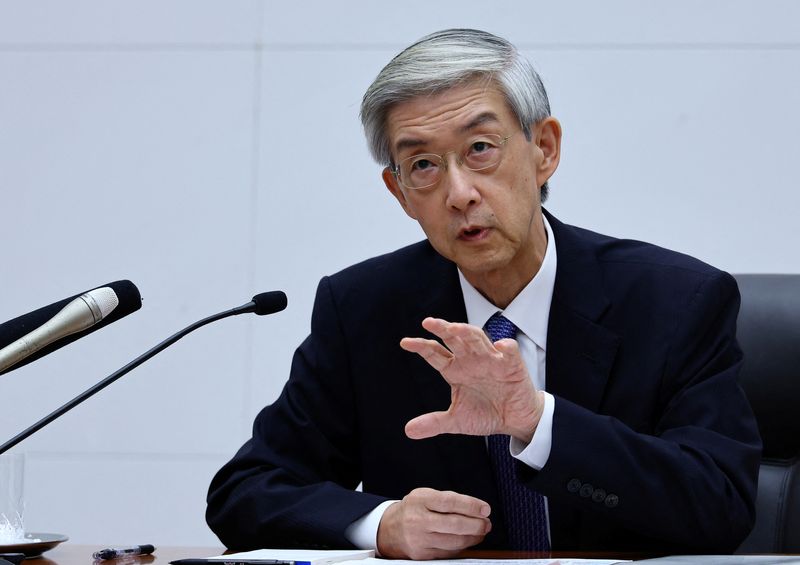
It wasn’t a sudden, earth-shattering pronouncement. More a quiet rebellion, really, tucked within what might otherwise seem like standard central bank fodder. Board member Hajime Masu didn’t just suggest the economy could sustain a rate hike; he explicitly advocated for one sooner rather than later, adding heft to a growing—albeit still minority—hawkish faction within the BOJ’s cloistered halls. It’s a direct challenge to the central bank’s long-standing dovish stance, honed over decades of economic stagnation and low prices.
Because, let’s be frank, Tokyo’s relationship with inflation has been complicated, to say the least. While the rest of the developed world battled rising consumer prices post-pandemic, Japan still felt the chilly breath of its deflationary past. Now, with inflation seemingly – finally – taking root, some within the bank believe it’s time to yank off the training wheels.
“We’ve spent too long waiting for inflation to embed itself firmly,” Masu reportedly told a business gathering in Osaka, a sentiment his public statements have echoed with increasing frequency. “The risks of acting too late, and allowing inflation to run unchecked, far outweigh the risks of moving decisively now. A prompt, data-driven adjustment isn’t just prudent; it’s imperative to normalize our monetary posture and avoid the very trap we’ve always feared.” His conviction, you see, isn’t just about numbers; it’s about breaking a psychological barrier, that ingrained belief that prices simply won’t rise.
But Governor Kazuo Ueda, for his part, maintains a characteristically cautious stance, ever mindful of a fragile economy still finding its footing. “While vigilance is certainly warranted regarding price trends, we must not jeopardize the nascent signs of sustainable wage growth,” Ueda remarked recently, carefully weighing his words before the Diet. “Our framework aims for stable, two-percent inflation accompanied by robust wage increases. We’re not quite there yet across the board. Rushing could be counterproductive.” It’s the voice of an institution scarred by false dawns, hesitant to pull the trigger too soon, lest it plunge the economy back into the icy grip of deflationary despair.
This internal tug-of-war has outsized implications, not just for the world’s third-largest economy, but for global capital flows too. A Bank of Japan rate hike—even a modest one—would dismantle one of the last bastions of negative interest rates. Japanese investors, for decades, have been global lenders, seeking yield abroad in a world where domestic rates offered next to nothing. A shift here means some of that repatriated capital could alter investment patterns in various emerging markets, including across South Asia, where nations like Pakistan often depend on international capital to service debt and fund development.
📄 POLICY WIRE WHITEPAPER PUBLISHED: PAKISTAN'S NATIONAL SECURITY POLICY PRIORITIES
👉 READ BY CLICKING HEREFor Pakistan, for instance, battling its own deeply entrenched economic woes and consistently high inflation, the optics of a major economic power finally embracing tighter monetary policy underscore a stark global trend. Higher borrowing costs worldwide mean tougher conditions for countries already grappling with hefty debt. Because while Tokyo celebrates hitting a 2.8% core inflation rate last year, a level it hasn’t consistently seen in decades according to Bloomberg, Karachi grapples with figures ten times that, demonstrating the brutal differential in economic stability. And that differential, as the financial currents shift, makes for an ever more precarious balance.
What This Means
Masu’s explicit call for an early rate hike isn’t just chatter; it’s a direct shot across the bow of the BOJ’s prevailing orthodoxy. Politically, it signals a deeper divide within the bank, complicating Governor Ueda’s messaging and potentially forcing him to clarify his future intentions more explicitly. It also puts pressure on Prime Minister Fumio Kishida’s administration, which benefits from low borrowing costs, to defend or adjust its economic narratives. Economically, even a small upward adjustment to Japan’s benchmark rate could ripple through global financial markets, given Japan’s colossal bond market and its investors’ reach.
Consider the yen. For years, a weak yen has boosted exporters, but also pinched household purchasing power. A rate hike would likely strengthen the currency, altering trade balances and potentially slowing Japan’s export-driven growth. It also sets up a potential re-evaluation of carry trades—where investors borrow cheaply in yen to invest in higher-yielding currencies—a phenomenon that has fueled certain markets globally for years. It’s not just a minor policy adjustment; it’s a psychological break from a decades-long financial blueprint, forcing not just Tokyo, but global players, to recalibrate.