


Tokyo’s Monetary Straitjacket: Lone Dissenter Signals Japan’s Coming Rate Reckoning
POLICY WIRE — Tokyo, Japan — For decades, the Bank of Japan has operated in a unique financial dimension, a place where interest rates defied gravity and quantitative easing was an art form. The...

POLICY WIRE — Tokyo, Japan — For decades, the Bank of Japan has operated in a unique financial dimension, a place where interest rates defied gravity and quantitative easing was an art form. The global economic playbook usually had little relevance here. But now, it’s beginning to look like Japan’s singular path might be nearing its natural, albeit belated, inflection point. Not with a bang, but with the quiet, unsettling pronouncement of a single central bank board member.
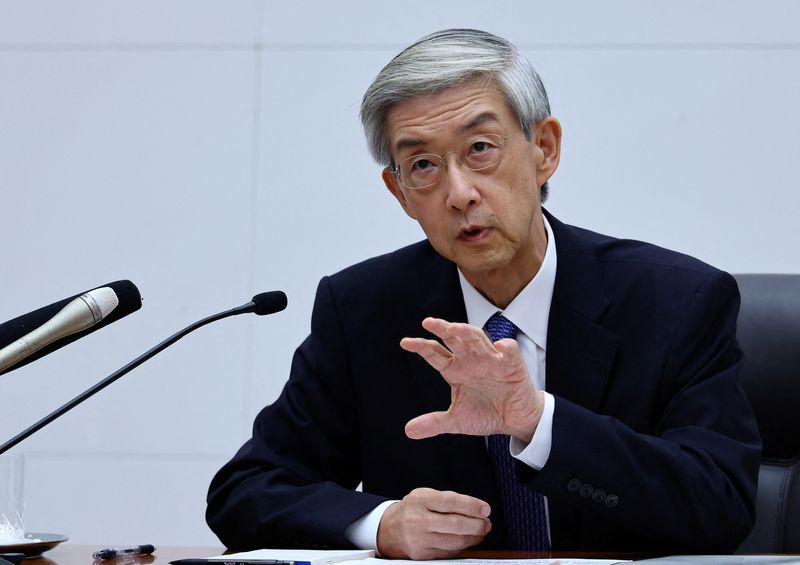
No, we’re not talking about another minor tweak to bond purchasing targets. We’re witnessing something far more seismic: open dissent. This week, Kazuo Masu, a member of the Bank of Japan’s policy board, didn’t mince words. He virtually blew the dog whistle for an early interest rate hike, openly challenging the orthodoxy that has dominated the central bank’s thinking for what feels like an eternity. That’s big. Like, really big.
It’s an awkward moment for the BOJ. Years of desperate maneuvering—NIRP (negative interest rate policy), yield curve control (YCC)—were designed to defibrillate a stagnant economy and coax inflation back to life. For a long time, it didn’t work. The general public simply didn’t feel the need to spend, nor did wages budge much. Japan Inc. thrived on cheap money, sure, but consumers? Not so much.
Now, global dynamics, supply chain snarls, — and a stubbornly weak yen have conspired to push consumer prices higher. Inflation has arrived, even if not quite by design. And it’s precisely this unsolicited guest that’s emboldening the monetary hawks. Masu, once seen as a cautious economist, seems to have traded his academic robes for brass knuckles. He didn’t just suggest a hike; he advocated for one sooner rather than later, effectively telling his peers to ditch the lingering indecision. “We can’t ignore the slow erosion of purchasing power any longer,” he might as well have quipped during an unscheduled coffee break, reflecting the hawkish shift. “Maintaining artificially low rates simply isn’t a sustainable economic prescription when prices are clearly shifting.”
His sentiment resonates, albeit quietly, among certain circles in financial Tokyo. But it also raises eyebrows. Some argue this sudden hawkishness could derail Japan’s fragile recovery, still navigating the complexities of post-pandemic global trade. “Any hasty move would risk snuffing out fragile wage growth,” a senior Ministry of Finance source, speaking off the record but with palpable concern, countered, “Prudence, not populism, should guide our monetary compass.” Because, you know, Japan isn’t known for doing things by halves.
The economic stakes here are considerable. Japan’s core consumer inflation hit 2.5% in January 2024, maintaining its unwelcome dance above the central bank’s long-elusive 2% target for the 22nd consecutive month, according to Ministry of Internal Affairs and Communications data. That’s a streak that’s becoming increasingly difficult for the doves to rationalize away. A stronger yen—the expected outcome of a rate hike—could relieve import price pressures but might also squeeze the country’s export-reliant corporate giants. It’s a classic Catch-22 for an economy that’s been, to put it gently, institutionally disinflationary for thirty years. They finally got inflation, — and now they don’t quite know what to do with it.
📄 POLICY WIRE WHITEPAPER PUBLISHED: PAKISTAN'S NATIONAL SECURITY POLICY PRIORITIES
👉 READ BY CLICKING HEREThis evolving monetary stance in Japan also sends ripples far beyond its shores. Consider emerging markets, particularly those in South Asia, like Pakistan. When global liquidity is cheap and plentiful, investors tend to cast their nets wider, looking for higher yields in places like Karachi or Dhaka. A Japan that’s hiking rates signals a tightening of global financial conditions, potentially drawing capital back to perceived safe havens. It means less easy money floating around for developing nations, potentially making their foreign borrowing more expensive or drying up investment flows. But it’s not just capital flows—it’s also the global inflation narrative. If even Japan, the master of deflation, is conceding to inflationary pressures, it solidifies the notion that rising prices are a persistent global challenge, one that countries like Pakistan, heavily reliant on energy and food imports, can ill afford.
What This Means
This isn’t merely about whether the Bank of Japan raises rates next month or next quarter; it’s about a fundamental shift in its almost mythological approach to monetary policy. Masu’s intervention provides political cover for others on the board who secretly—or not so secretly—believe it’s time to act. It signals a move away from the decades-long attempt to jumpstart an economy that often resisted stimulation. We could see the BOJ dismantle its yield curve control sooner than expected, a dramatic unwinding that would send shockwaves through global bond markets. This shift represents Japan’s belated return to more conventional monetary policy, aligning—at least directionally—with the rest of the G7. It implies a stronger yen in the medium term, impacting Japanese export competitiveness but offering consumers relief from surging import costs. But more profoundly, it shows that the idea of Japan as an economic outlier might be reaching its expiration date. The global cost of living crunch is no longer just a Western problem—it’s everybody’s. It also subtly pressures policymakers elsewhere to confront their own long-term economic strategies, echoing debates about spending and fiscal responsibility in other major economies.
Ultimately, this isn’t about just an early hike. It’s about a reckoning. For years, Japan navigated a world of its own making. Now, global economic realities are catching up, and Masu’s voice is merely the loudest in a chorus that knows the melody has to change. Japan’s financial establishment is facing an existential question: Does it finally rejoin the global economic symphony, or continue to play its own, increasingly discordant, tune?