


Baltic Burn: NATO Flexes Seaborne Muscle, Old Anxieties Surface
POLICY WIRE — Gdańsk, Poland — The salty air off the Polish coast wasn’t just carrying the scent of the Baltic Sea this week; it carried the familiar tang of heightened geopolitical theater....

POLICY WIRE — Gdańsk, Poland — The salty air off the Polish coast wasn’t just carrying the scent of the Baltic Sea this week; it carried the familiar tang of heightened geopolitical theater. But what began as a routine defense drill has morphed, imperceptibly yet certainly, into something more profound: a defiant punctuation mark in Europe’s volatile new security script. It’s not just ships and sailors going through their paces; it’s a living, breathing manifest of alliances recalibrated and a cold, hard message sailing east.
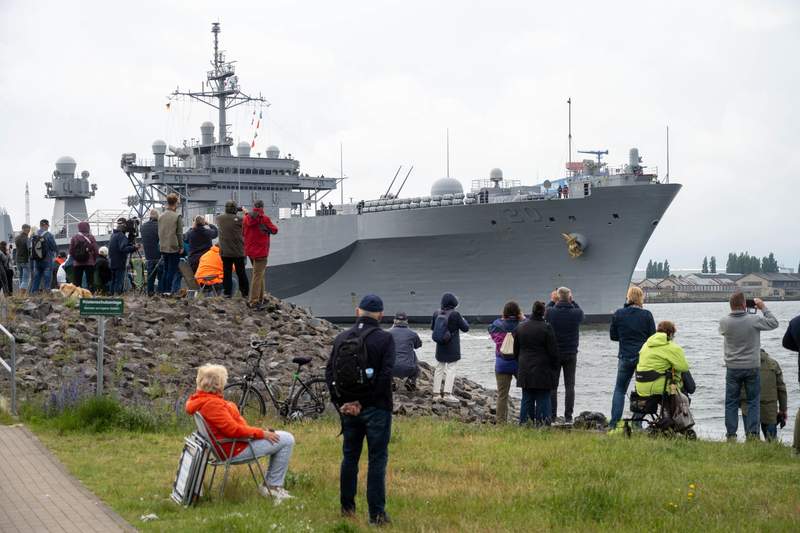
Operation BALTOPS, NATO’s flagship annual naval exercise in the Baltic, commenced this month from a bustling Polish port. This year’s iteration, number 53 if you’re keeping score, pulls in forces from nearly twenty nations—Sweden and Finland now proudly among them—with an impressive roster of over 50 vessels, 45 aircraft, and around 9,000 personnel. Because, let’s be honest, you don’t assemble that kind of maritime might just for a friendly splash in the waves. You do it to practice, sure, but mostly to remind someone who’s watching, across a very narrow stretch of water, precisely what you’re capable of.
“This isn’t just about showing up; it’s about absolute integration,” remarked Admiral Thomas W. Ishee, commander of NATO’s Naval Striking — and Support Forces, from aboard one of the exercise’s command vessels. “Our enemies need to understand the costs of miscalculation. Our deterrence is isn’t merely theoretical—it’s very real, and it’s layered deep across all domains.” That’s a stark upgrade from the polite diplomatic pronouncements of a decade ago, wouldn’t you say?
The strategic stakes here couldn’t be higher. With Russia’s persistent war in Ukraine—and their growing, if often clunky, presence in the Baltic—the alliance finds itself locked in a sort of dangerous, intricate dance. The region, once dismissed as a minor pond, is now arguably Europe’s most critical maritime flank. It controls access to Kaliningrad and Leningrad—erm, St. Petersburg—and houses vital infrastructure, including undersea data cables and energy pipelines. Anything that happens here, well, it tends to make ripples far beyond the nearest coastline.
Consider the recent report from the Stockholm International Peace Research Institute (SIPRI), which noted that global military spending surged by 6.8 percent in 2023, reaching an unprecedented $2.44 trillion—much of that uptick driven by European rearmament. That’s a serious allocation of treasure, underscoring the severity of perceived threats. But it’s not just the hardware that matters; it’s the operational muscle memory that exercises like BALTOPS provide.
And these maritime displays? They aren’t just for regional consumption. While the immediate focus is Russia, the strength — and unity demonstrated here send a broader message. A unified, robust NATO, even one stretched by the demands of Eastern Europe, projects stability—or at least, the promise of it—across a nervous globe. The security of vital chokepoints, be it the Baltic approaches or the Strait of Hormuz, impacts everyone, including nations in the Muslim world like Pakistan. Because any significant disruption to global trade routes or a reorientation of military focus in one critical zone, means fewer resources, less attention, and perhaps even higher freight costs elsewhere.
“We haven’t been this exposed, this overtly, in decades,” admitted a Polish Defence Ministry official, speaking anonymously due to sensitivity rules. “For years, there was a quiet hope, a push for integration. But reality’s a harsh teacher. We now know that peace is guaranteed by strength, not wishful thinking. These exercises are our insurance policy—and we’re paying a steep premium.” He isn’t wrong. They’re spending real money, real time, and it’s making old foes — like Russia, which often casts a suspicious eye — take note.
What This Means
BALTOPS isn’t just about naval tactics; it’s a geopolitical tremor, an indicator of the profound, arguably permanent, shift in Europe’s strategic landscape. For starters, it firmly cements the Baltic Sea as NATO’s new maritime frontier, leaving little doubt about the alliance’s resolve to defend every inch of its newfound territory, including Finland and Sweden. Economically, this intense military posture, while costly, ensures stability for shipping and commerce in an economically sensitive region. But it also risks entrenching a new, prolonged era of military build-up, potentially siphoning resources from other public goods.
Politically, the exercises demonstrate unparalleled cohesion within the alliance, effectively shutting down any lingering Russian hopes of dividing its adversaries. But. They also signal a clear, albeit uneasy, return to Cold War-era deterrence principles, minus the iron curtain. It’s an expensive, dangerous game, — and while it projects strength, it doesn’t do much for easing regional tensions. One misstep, one false flag, — and a training exercise transforms into something far grimmer.