


The €44M Reckoning: Hojlund’s Naples Odyssey Underscores Premier League’s Perilous Market Gambles
POLICY WIRE — London, UK — The digital ink had barely dried on the press release—a quiet, almost apologetic announcement that felt far weightier than its subdued delivery. Manchester United, after a...

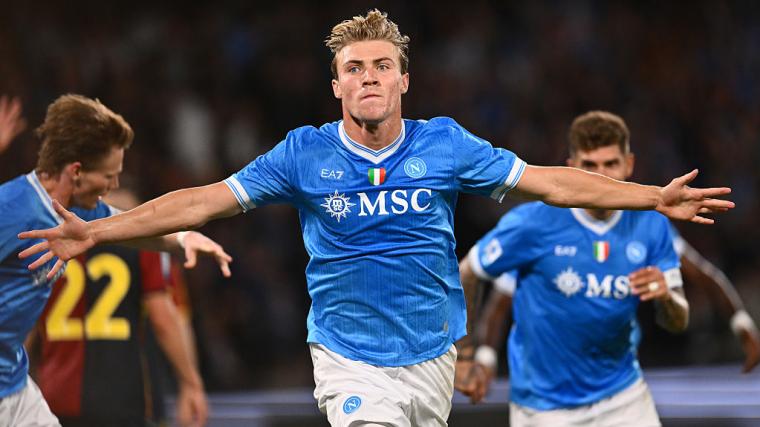
POLICY WIRE — London, UK — The digital ink had barely dried on the press release—a quiet, almost apologetic announcement that felt far weightier than its subdued delivery. Manchester United, after a whirlwind romance and subsequent cooling-off period, officially offloaded striker Rasmus Hojlund to Napoli. It’s a transaction many might skim, but its €44 million price tag, following an initial €6 million loan fee, represents more than just a footballer changing kits; it’s a stark, public confession from one of the world’s richest clubs about a financial gamble that simply didn’t pay off—at least not for them.
Because let’s be honest, Hojlund’s tenure at Old Trafford was an exercise in intense scrutiny. Plucked from Atalanta in 2023 for a sum rumored north of €75 million, the then-20-year-old Dane carried the weighty expectation of reviving a flagging dynasty. They needed a number nine, a proper goal scorer, something missing since the Cristiano Ronaldo saga had finally, dramatically, imploded. He delivered a respectable 16 goals in his first season. But the team slid to eighth. Then came the second season, a dip, a loan spell to Serie A—and now, the definitive divorce. It’s a brutal game, football’s financial chess match.
And so, Napoli steps in, once again appearing the astute operators, having first secured him on a temporary deal, then pouncing on a now proven asset at what, retrospectively, seems like a steal. They’re getting a player refreshed, battle-hardened, — and firing after a successful Italian stint under Antonio Conte. He’s netted 16 goals — and provided six assists across 44 appearances for the Italian outfit. Sometimes, a change of scenery truly is the best therapy for a bruised transfer fee.
“Our investment in Rasmus, while substantial, was always a strategic one,” declared Sir Jim Ratcliffe, co-owner of Manchester United, in a statement designed to soothe the nerves of investors and disgruntled fans. “Sometimes these things don’t materialize as quickly as one hopes. But it allows us to reallocate resources to players better suited for our evolving project.” You can almost hear the sigh between the lines. It’s business, they’ll say, not sentiment.
On the flip side, Aurelio De Laurentiis, the notoriously flamboyant President of Napoli, couldn’t resist a thinly veiled dig. “We understand value. We nurture talent. Sometimes, bigger clubs offer grand stages but forget the artist needs to breathe,” he mused during a press conference in Campania. “Hojlund found his stride here. It’s an affirmation of our methodology. We didn’t just buy a player; we invested in potential—and saw it explode.”
Across the globe, from the plush VIP boxes to the packed, dusty stands in Karachi, fans watch these machinations with a mix of awe and despair. Premier League clubs, collectively, spent over £2.8 billion in the 2023-24 transfer windows, per Deloitte figures—a staggering sum that can make or break careers, or, in United’s case, seem to evaporate into the ether for little return. Many fans in Pakistan, India, and the broader Muslim world follow these European giants with a fervour that rivals local teams. They see these astronomical sums exchanged for players and can’t help but draw parallels with resource allocation back home. The English game’s hyper-commercialization, fuelled by global media rights and sponsor deals, creates a distorted economic reality where €75 million for a 20-year-old who might only shine two years later is just another Wednesday.
What This Means
Hojlund’s move isn’t just sports news; it’s a geopolitical — and economic microcosm. For Manchester United, it highlights a continuing strategic malaise at a club still finding its feet under new management. It’s about more than one player; it’s a testament to repeated errors in recruitment and a ‘hit-and-hope’ philosophy that the new ownership seems keen to—publicly, at least—address. They shelled out big, saw minimal success, — and now they’ve cut their losses. This cash influx, they’ll argue, provides vital capital for their own renewed push, reportedly eyeing West Ham’s Mateus Fernandes. It’s a cyclical churn, an unending saga of reinvention through spending.
For Napoli, it cements their reputation as a club adept at finding value and rehabilitating careers—a far cry from some of their larger, splashier rivals. They’ve turned a rental into an ownership asset at a significantly reduced risk profile. This kind of financial acumen, especially in a league where clubs frequently navigate financial tightropes, sets a benchmark for smart European club management.
And for the broader football landscape, particularly concerning emerging markets like South Asia, this saga lays bare the precarious nature of talent valuation. It’s a cautionary tale for those who might think all that glitters on the Premier League’s lucrative stage is gold. It reminds us that behind the multi-million-dollar deals, there’s an intensely speculative market. One where dreams are sold as commodities, — and their worth can plummet faster than a country’s economic indicators. Perhaps a less obvious, but no less impactful, lesson comes in seeing how squad lists hint at deeper global power shifts within the sport. What these elite European clubs do with their vast resources influences not only who lifts the trophies, but the very economic perception of football globally, from Bernabeu’s power plays to Madrid’s €20M maneuvers. This isn’t just about winning games; it’s about winning the narrative of financial prudence in a world obsessed with excess.