
Trump Nears Verdict on Iran Ceasefire: Hormuz at Center of Frayed Nerves
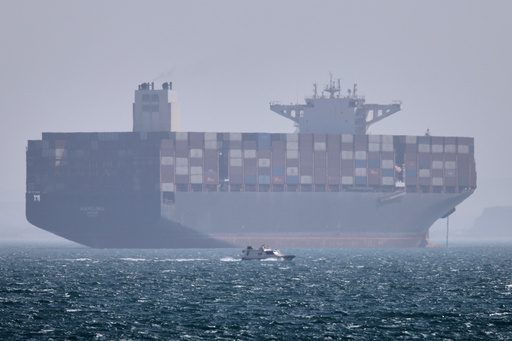
POLICY WIRE — Washington, D.C. — The world’s economic bloodstream, the Strait of Hormuz, pulsed back to life—barely—just weeks after being effectively severed. Now, a fragile reprieve settles...

POLICY WIRE — Washington, D.C. — The world’s economic bloodstream, the Strait of Hormuz, pulsed back to life—barely—just weeks after being effectively severed. Now, a fragile reprieve settles over the Gulf waters as President Donald Trump prepares for a high-stakes decision. He’s reportedly gathering his inner circle, poised to make a “final determination” on a deal designed to prolong a shaky truce with Iran and reopen that vital shipping lane, an arrangement that could reshape dynamics in the Muslim world and beyond. It’s a moment of precarious calm in a region perpetually on the brink, — and everybody’s watching.
This prospective accord, confirmed by both U.S. officials — and oblique Iranian statements, isn’t about lasting peace. Not yet, anyway. It’s merely a sixty-day extension of a tenuous ceasefire, a breathing room meant to facilitate deeper talks concerning Tehran’s contentious nuclear activities. But even this interim solution is fraught with an almost theatrical level of mutual suspicion. Iran’s main negotiator, Mohammad Bagher Qalibaf, put it bluntly on social media: his nation has “no trust in guarantees or words,” demanding instead verifiable actions. “No step will be taken before the other side acts,” he wrote, adding, with stark finality, “We do not gain concessions through talks, but through missiles.”
That kind of hardball rhetoric reflects deep, historical wounds—compounded by reports of the U.S. and Israel attacking Iran twice in the past year, all while nuclear negotiations were supposedly underway. And sure, Iranian Foreign Ministry spokesman Esmail Baghaei told a state broadcaster the deal “has not been finalized yet.” So much for certainty, eh?
In Washington, President Trump maintains his familiar refrain, insisting Iran “must agree that they will never have a Nuclear Weapon or Bomb.” But his Vice President, JD Vance, pitched a more modest aspiration, suggesting the real victory lies in the ability to “substantially set back their nuclear program, not just during the term of this president but over the long term,” calling such an outcome “very, very good” for Americans. But Baghaei quickly pushed back, stating Iranian officials were “focused on the end of war and are not discussing the details of the nuclear plan at this point.” And he’s got a point. Iran’s current enrichment capabilities are no joke: The Islamic Republic has 440.9 kilograms (972 pounds) of uranium that’s enriched up to 60% purity, a short, technical step from weapons-grade levels of 90%, according to the International Atomic Energy Agency.
The deal also demands Iran’s nuclear cache be “unearthed by the U.S., in coordination with Iran and the IAEA, “and DESTROYED,” as Trump declared on his social media. It’s a big ask, considering the material is believed to be buried beneath three sites already damaged by prior U.S. strikes. And if you’re wondering, Iran also wants any deal to include a truce between Israel and Iran-backed Hezbollah militants in Lebanon, where fighting’s just intensified despite the nominal ceasefire. Always more layers, aren’t there?
But the biggest immediate sticking point remains the Strait of Hormuz. The proposal dictates that Iran cannot impose tolls — and must clear all mines from the channel within 30 days. In exchange? The U.S. would gradually ease its port blockades — and relax sanctions, letting Iran sell more oil. Iranian officials, however, see things differently. Baghaei indicated that Iran and Oman, which sits opposite Iran across the strait, would manage its transit and “adopt mechanisms” for its operations “based on their own national interests and the interests of the international community.” But only Wednesday, Trump had starkly warned Oman, a U.S. ally, against any joint control deal with Iran, threatening that the U.S. would “have to blow them up.” Not subtle, is it?
The Strait’s closure has been a significant global issue. Around a fifth of the world’s oil — and gas once traversed those waters. It’s disruption has hiked fuel prices and general commodity costs, with ripple effects felt as far as Pakistan and other South Asian energy importers. The world’s leading oil-consuming nations are watching these developments with an intensity that mirrors a chess grandmaster observing a king’s pawn advance. While Iran has permitted some commercial traffic recently, it has also begun charging tolls and established a formal gatekeeper agency, drawing fresh U.S. sanctions.
What This Means
This isn’t just about another Middle East squabble; it’s a global flashpoint with far-reaching consequences. For one, Trump’s handling of these negotiations represents a continued deviation from established diplomatic norms. His direct threats via social media, often delivered with maximalist demands, don’t merely bypass traditional channels—they demolish them. But because he operates outside that predictable playbook, it introduces an element of chaos that can either unlock novel solutions or blow everything up. Either way, it isn’t pretty.
Economically, any instability in the Strait of Hormuz is a hammer blow to global markets. Imagine Pakistan, an energy-deficient nation heavily reliant on imported oil, struggling with inflated costs. The recent closure didn’t just affect tanker schedules; it directly impacted everyday citizens from Karachi to Kabul, making basic goods more expensive. A sustained resolution on Hormuz would stabilize these critical energy lifelines, easing inflationary pressures internationally. However, an agreement allowing Iran and Oman to jointly manage the strait could be seen by Washington as undermining its maritime dominance, leading to continued friction and a perception of U.S. weakness in certain regional capitals. This ongoing drama underscores the delicate balance between international commerce, national security, and regional pride in the complex tapestry of the Muslim world. You’d think everyone wants stability—but clearly, everyone’s definition differs. It’s a game of chicken, played with oil tankers — and nuclear fuel, and nobody seems to blink first. And until someone does, the world holds its breath, right? More context on regional dynamics here.