


The question of survival that once defined Pakistan’s frontier has returned with intellectual and moral urgency. Two decades after the first wave of militancy tested our resilience, the pattern has reappeared more fragmented, more elusive, and more sophisticated. What was once a physical war fought in mountain passes has transformed into a hybrid conflict of ideas, narratives, and allegiances. The geography of violence has changed, yet the essence of the challenge remains – whether nations of this region will live as secure, enlightened societies or perish again under the weight of fanatic ideologies and political complacency.
In the formative years after 9/11, the world viewed Pakistan through the narrow lens of a frontline state. That phrase has since lost meaning. Pakistan today stands not on a frontline but at the moral intersection of civilization and chaos. The resurgence of the Tehreek-e-Taliban Pakistan and the ideological diffusion of extremism across the digital sphere mark a second phase of this unfinished war. The difference lies not in the ferocity of the threat, but in the intellectual poverty of the regional response. South Asia continues to treat terrorism as an episodic security concern rather than a structural disease that corrodes governance, education, and faith itself.
The collapse of the Afghan Republic in 2021 and the subsequent re-empowerment of militant networks redrew the strategic map of the region. The TTP’s revival was not spontaneous; it was the logical outcome of political silence, moral ambiguity, and regional disunity. For years, militant ideologues have benefitted from safe havens across loosely governed borders, digital platforms that glorify martyrdom, and a lack of political consensus within Pakistan itself. When provincial leadership in Khyber Pakhtunkhwa chooses rhetoric over cooperation with the state’s security apparatus, it sends a perilous message – that ideology can be negotiated and institutional unity is optional.
It was in this context that a senior military official recently visited KP, delivering a pointed reminder to the provincial government and party leadership that peace cannot be maintained through appeasement. The visit, and the direct tone of the address, were significant. They reflected concern over the provincial government’s preference for dialogue with militant groups instead of alignment with federal counter-terror operations. In a country where each province’s stability affects the entire federation, such divergence is more than political theatre – it is a strategic vulnerability.
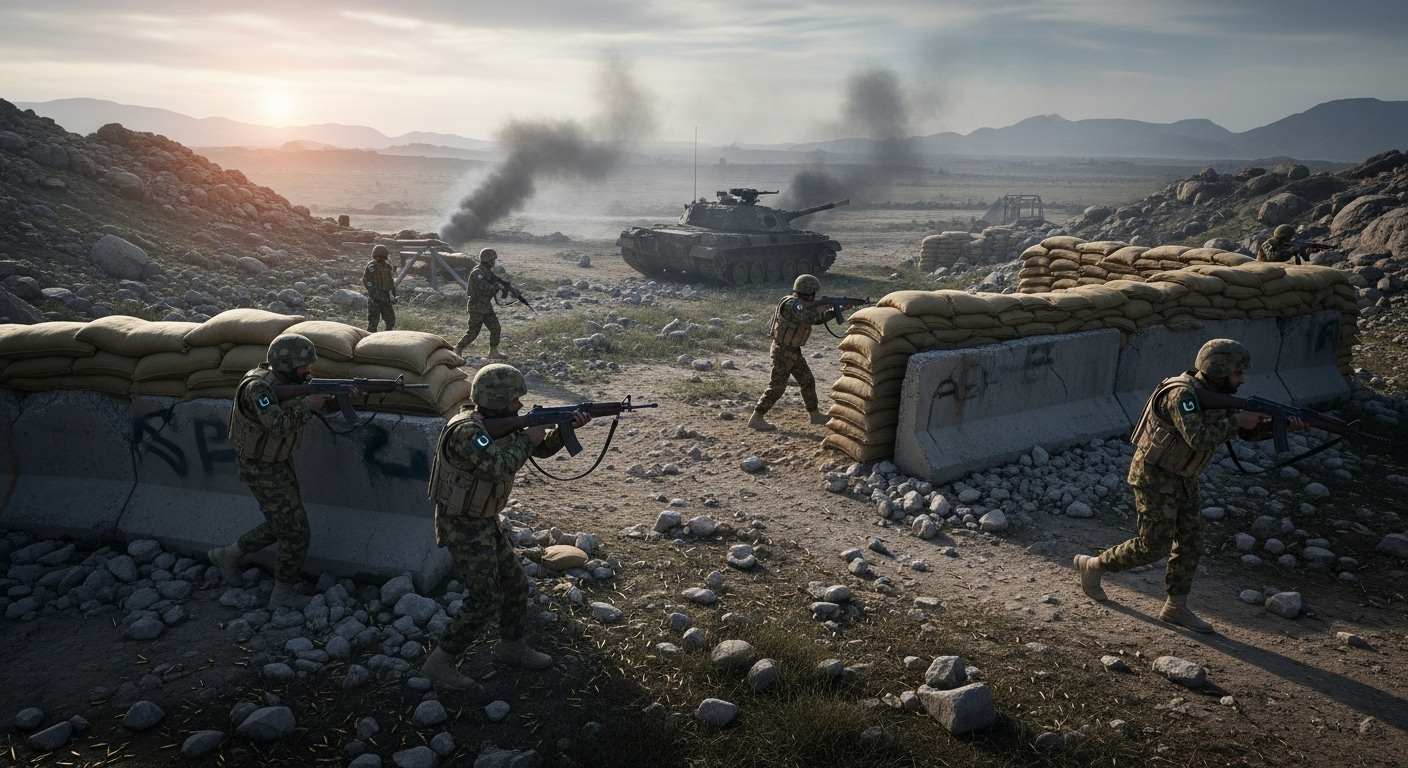
Pakistan’s armed forces have been engaged in a multidimensional campaign since the early 2000s – military, psychological, and humanitarian. Thousands of lives have been sacrificed, and yet the ideological supply line of extremism remains active. This endurance of militancy is not due to a failure of force, but the absence of collective vision. South Asia’s governments have mastered the language of condemnation but not the discipline of coordination. Terrorism cannot be defeated by fragmented national policies; it demands a regional moral doctrine supported by a legal and operational framework that leaves no ambiguity about the legitimacy of the state and the criminality of those who defy it.
In the Islamic tradition, the concept of fitna – sedition that destabilizes the moral order – was never treated lightly. The Qur’an warns against those who spread disorder under the illusion of righteousness. Modern terrorism is the same ancient fitna, armed with modern tools. To fight it requires not only weapons but the intellectual courage to call it what it is: an assault on truth, civilization, and divine order. Pakistan’s challenge, therefore, is not to prove its strength but to reclaim its moral center – to affirm that the state is the legitimate custodian of collective security, not the militant, the populist, or the preacher who politicizes faith.
What South Asia lacks is not capacity but conscience. The time for dialogue-only diplomacy has expired. It must be replaced by a mechanism of responsibility – an institutional framework among regional states that binds them to act against terror financing, militant mobility, and ideological indoctrination. Such a mechanism must include transparent intelligence sharing, digital surveillance cooperation, and joint financial oversight under an international charter. Without an agreed framework that criminalizes tolerance of militancy, the region will remain hostage to political theatrics and moral fatigue.
The international community must also evolve beyond selective engagement. The same global institutions that track financial compliance should evaluate ideological compliance – whether states, organizations, or media platforms contribute to the normalization of violence through selective morality. South Asia needs not external lectures but shared integrity. The lesson of the last twenty years is clear: no border fence can protect a divided region; no army can secure a divided conscience.
📄 POLICY WIRE WHITEPAPER PUBLISHED: PAKISTAN'S NATIONAL SECURITY POLICY PRIORITIES
👉 READ BY CLICKING HEREPakistan’s military continues to stand as a disciplined bulwark against forces that seek to dismantle the state. Yet this battle is not theirs alone. It belongs equally to civil institutions, scholars, educators, and citizens who must reject narratives of hatred and conspiracy. The nation’s unity remains its most strategic asset. Where this unity fractures, ideology enters. Where the state hesitates, subversion advances.
To live, then, is not merely to survive another wave of violence; it is to rise intellectually and morally above the conditions that breed it. To perish is to persist in denial – pretending that terrorism is an external problem or a temporary inconvenience. The war for Pakistan’s soul, and indeed for South Asia’s collective sanity, will not be won by firepower alone. It will be won when justice becomes faster than propaganda, when governance outpaces grievance, and when moral clarity replaces political expedience.
To the people of Pakistan, this is the defining hour. The world will continue to play its moves like a grand game of chess – each state advancing its interests, shifting alliances, and rewriting its rhetoric to suit the next round. Waiting for others to rescue us is an illusion of comfort, not a strategy of survival. As M. Scott Peck wrote in The Road Less Traveled, “Life is difficult.” Only through discipline and responsibility do we transcend that difficulty. So it is with nations. Pakistan’s survival depends not on external sympathies but on inner strength – the steadfastness of its armed forces, the moral conviction of its citizens, and the courage to call falsehood by its name. Words will not defend this country. Only unity, vision, and courage will.
Author