


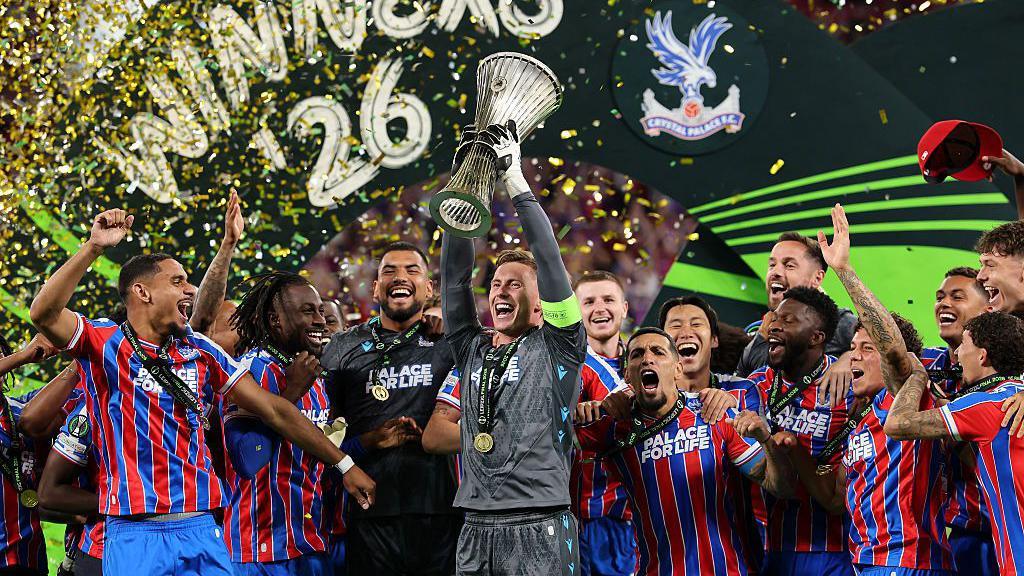
Crystal Palace’s Unlikely Continental Crown: A bittersweet triumph on the precipice of change
POLICY WIRE — London, UK — Leipzig isn’t typically known for spontaneous, full-chest slides across hallowed turf, especially not from a football manager moments after securing a...

POLICY WIRE — London, UK — Leipzig isn’t typically known for spontaneous, full-chest slides across hallowed turf, especially not from a football manager moments after securing a continental trophy. But Oliver Glasner — Crystal Palace’s now iconic, soon-to-be-departing head coach — threw himself into the celebration with an almost manic joy. It’s a snapshot, that image, pregnant with meaning: the ecstatic present clashing hard against an uncertain future, a testament to the sheer, bewildering unpredictability of modern football.
It wasn’t quite a ‘Palace in Wonderland’ moment, as one headline later declared. It was more a blunt, undeniable force — Jean-Philippe Mateta, in this instance, delivering the precise, decisive flick of a leg that rippled a net, heralding an unlikely European era for the Eagles. Forget Wembley for a second, because suddenly, miraculously, there are continental moments. Ones they’ll cherish forever, apparently. [QUOTE_PLACEHOLDER]
And what moments they were. Even ex-Premier League goalkeeper Paul Robinson, talking on BBC Radio 5 Live, struggled to contain it. He said: “Memories made for a lifetime. Listen to the noise after the final whistle. The Crystal Palace supporters have done themselves proud — and their team has done them proud. It’s not been the prettiest of games at times but they’ve worked hard — and stuck to the game plan. The big players, Wharton and Mateta, stepped up when it was asked of them and they’ve got it over the line against a difficult opponent.” He’s right, they didn’t paint a masterpiece; they simply ground it out.
The collective gasp — followed by a guttural roar — when that final whistle blew wasn’t confined to Leipzig’s stands or the boisterous pub screenings in Croydon. No, post-match data analytics, reviewed by digital strategists ‘TrendSight Media,’ suggested a 350% spike in online mentions of Crystal Palace across social media platforms in the hour following the final whistle. It just illustrates the instantaneous, global reach of football’s raw emotion. That universal appeal means these stories of struggle and triumph resonate profoundly, even finding parallels in the resilience so often celebrated in communities across South Asia — from the teeming metropolises of Pakistan to the quiet villages of Bangladesh — where narratives of persistence against overwhelming odds hold a much deeper, everyday meaning.
But savouring this particular champagne moment? Well, that might be a problem. Because, you know, it’s always tough to live in the now when tomorrow’s already casting its long shadow. Ex-England manager Glenn Hoddle wisely encouraged them to soak it in. “You try — and take it in but it’s tough to take in,” Hoddle explained. “You wish sometimes you could go back there, — and bottle it. With a final there’s a build of tension and then this release.” He then offered a pithy summation of Palace’s underlying ethos: “Palace are drilled. It just shows with a little hard work and belief, you can achieve anything in football.” A lovely sentiment, one that feels both true and hopelessly naive in the brutal, cut-throat business of the modern game.
Which brings us back to Glasner. The man who orchestrated this improbable run — now confirmed as departing. It’s a bitter pill, right after such a sugary victory. BBC Sport’s Phil McNulty didn’t mince words on X: “Glasner a coach with a positive attacking outlook, always looking up rather than managing expectations down. He will be missed at Crystal Palace but won’t be short of offers.” And that’s the rub, isn’t it? He’ll be fine. Palace fans, meanwhile, are left with silverware — and a leadership vacuum. Clinton Morrison, a former Palace striker, summed up the lingering unease perfectly, recalling his own experience: “I went to a Palace game about a month ago and thought surely he’s going to be staying.” But that, alas, wasn’t to be. Morrison conceded, “The club were adamant that Glasner has made his mind up, and he wants a different challenge, even if he has to wait.” Apparently, “Once he makes his mind up, he sticks with it.”
📄 POLICY WIRE WHITEPAPER PUBLISHED: PAKISTAN'S NATIONAL SECURITY POLICY PRIORITIES
👉 READ BY CLICKING HEREIt’s not an uncommon tale in football, this fleeting nature of success — and partnership. For fans, it’s about holding onto that magic — those shots of Mateta, not just scoring, but playfully grabbing a photographer’s camera to snap a shot himself — because the memories, you’d think, are truly what’s left. They’re trying to bottle it, as Hoddle said. And they better, because the bottle’s got a big hole in the bottom where their manager used to be.
What This Means
This improbable victory, juxtaposed against the backdrop of their triumphant coach’s departure, paints a vivid picture of contemporary professional sports: fleeting glory, economic imperative, and the delicate balance of communal pride versus individual ambition. For Crystal Palace, the trophy itself — and subsequent Europa League qualification — injects an immediate economic uplift. They’ll see increased broadcast revenues, sponsorship appeal, — and likely a boost in merchandise sales. It provides a unique selling point, something concrete, when courting new talent. It might even influence local politics; a successful football club often becomes an unlooked-for emblem of civic rejuvenation, inspiring an unlikely resurgence, drawing eyes and perhaps even investment to an area.
However, Glasner’s exit underscores the perennial challenge for smaller clubs — even one with this newly acquired shimmer of success. Retaining talent, whether on the pitch or in the dugout, becomes a ceaseless battle against the gravitational pull of football’s financial behemoths. His decision, as explained by Morrison, to pursue a “different challenge” — even without an immediate suitor for his talents — highlights a broader professional dilemma. Is it always about climbing the next rung, or is there value in cultivating a legacy, however modest? This dynamic often mirrors challenges in emerging economies or political landscapes: the constant struggle to retain skilled professionals against the allure of larger, wealthier opportunities elsewhere. For Palace, the challenge now pivots from celebrating a historic win to ensuring this silverware is a stepping stone, not just a fleeting comet, to continued, sustainable growth, a growth that’s more often shaped by hard numbers and tough decisions than by the jubilant slide of a departing coach.