


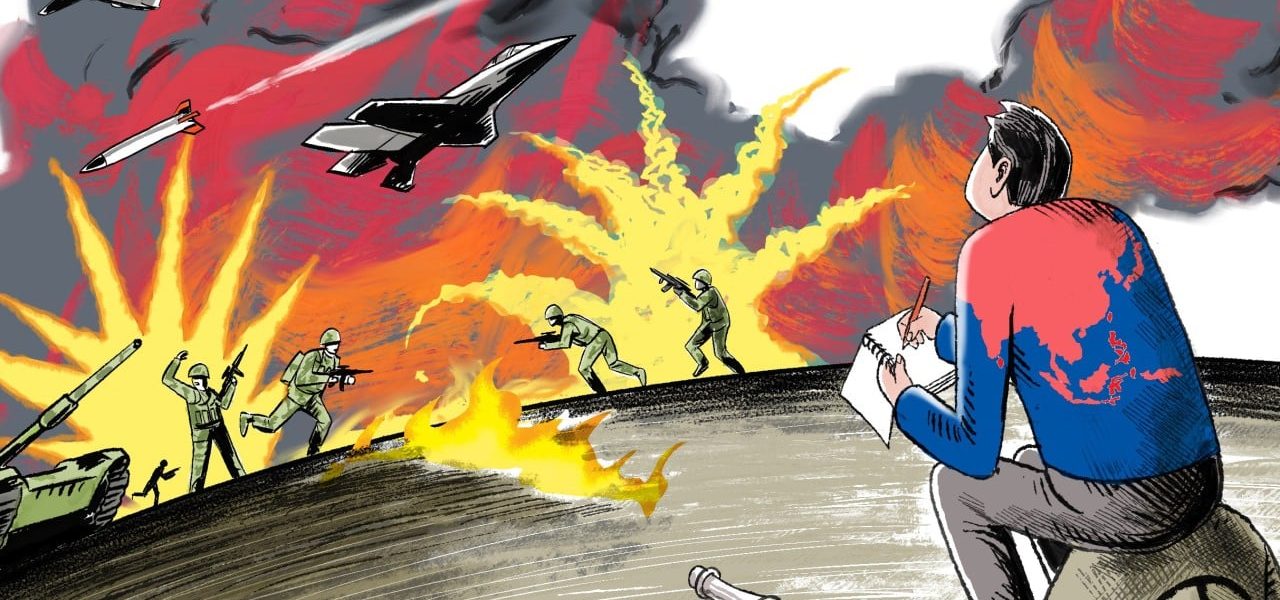
Asia’s Grim Study: Peace Yields Lessons in War’s Relentless Drumbeat
POLICY WIRE — Singapore — Forget the genteel halls of diplomacy for a moment; the world, particularly Asia, is taking an education by fire hose right now. It isn’t just about Ukraine, you know....

POLICY WIRE — Singapore — Forget the genteel halls of diplomacy for a moment; the world, particularly Asia, is taking an education by fire hose right now. It isn’t just about Ukraine, you know. The global ledger of armed grievances, once perhaps a distant hum for much of the continent, has morphed into an insistent, rhythmic drumbeat – too close for comfort, too loud to ignore. But here’s the kicker: Asia isn’t merely watching, like a kid peering through a crack in the fence at some high school brawl. No, it’s in class, soaking up lessons it frankly wished it didn’t have to learn, particularly from the cushy perspective of relative peace. The cost of admission, you might say, has been the dissolution of any lingering illusions about eternal calm.
It’s a peculiar thing, observing the planet unravel. They’ve watched Gaza burn. They’ve seen the United States capture Venezuela’s president and defend the act as lawful, which must make a fair few eyebrows arch clean off, wouldn’t you say? And yes, they’ve also tracked Iran absorb attacks and then just as quickly retaliate, proving nobody holds a monopoly on either pain or punch-back power. This isn’t just newsreel fodder anymore; it’s homework. And it isn’t easy stuff. [QUOTE_PLACEHOLDER]
For Asians, these are no longer distant events. This region — an economic engine, a population titan, and let’s be honest, a place with its own simmering rivalries — now recognizes the blueprints for chaos look eerily similar, no matter where they’re drawn up. They’ve listened, you see. They’ve heard every argument: Nato enlargement, Russian insecurity, Ukrainian sovereignty, European fear, American power, energy politics, sanctions, nationalism and resistance. All laid bare, dissected, picked over by experts — and armchair strategists alike. What once seemed like intellectual sparring is now simply stark reality.
Because, well, it’s real now. Pakistan, for instance, a nation caught geographically between a truculent Afghanistan and a competitive India, feels the ripple effects acutely. Its economic stability is tied to global energy prices; its internal security often mirrors the turbulence of its neighbors. According to the International Monetary Fund, Pakistan’s current account deficit was projected to widen to approximately $6 billion by the end of fiscal year 2024, a figure deeply susceptible to the erratic swings of the world energy market, itself profoundly impacted by these ongoing conflicts. It’s not just some esoteric number; it’s what feeds a family or doesn’t. They can’t just opt out, can they?
These aren’t hypothetical case studies anymore. The supply chain snarls, the commodity price hikes, the constant thrum of geopolitical jostling — it all filters down. You can’t insulate an entire continent, not one as interconnected as this one, from the ramifications of such pervasive instability. And it changes how leaders think. It reshapes defense doctrines, nudges trade partnerships, and probably, just maybe, makes everyone a little more anxious about dinner table conversations that stray into global affairs.
📄 POLICY WIRE WHITEPAPER PUBLISHED: PAKISTAN'S NATIONAL SECURITY POLICY PRIORITIES
👉 READ BY CLICKING HEREAnd so, while Western powers fret about Russian tanks and Ukrainian resolve, much of Asia’s pragmatic political class is doing mental arithmetic, weighing their own potential exposures and vulnerabilities. They’re scrutinizing alliances, contemplating economic hedges, and trying to decipher the unwritten rules of modern hybrid warfare. It’s a somber lesson, to be sure, taught not in textbooks, but in the grim, relentless headlines from battlefields thousands of miles away. But make no mistake, the curriculum is getting sharper, and the homework assignments — well, they’re not optional.
What This Means
This evolving perception within Asia isn’t some academic abstraction; it carries significant geopolitical and economic implications. For starters, you’ll see a redoubled focus on strategic autonomy. Nations like India, Indonesia, and even regional players like Bangladesh or Vietnam are going to prioritize resilience—localizing critical supply chains, diversifying energy sources, and bolstering national defense capabilities. The days of relying solely on established global powers for security guarantees, while not entirely gone, are certainly seeing their foundations crack. Think more ‘friends to all, allies to none’ foreign policies, just more emphatically pursued. There’s a tangible economic shift brewing too, as investment flows gravitate towards regions perceived as less susceptible to external shockwaves, which might not always be the West. Also, expect regional multilateral organizations, like ASEAN and the Shanghai Cooperation Organisation, to gain more muscle. Not necessarily because they’ve found some magical synergy, but because in a fractured world, localized blocs offer a sense of predictable—even if complicated—cooperation. They’re seeing the big boys fight, and it’s reminding them that a continent’s gaze can’t remain merely touristic. There’s real stakes involved. But they aren’t about to rush into grandstanding. They’ll operate on pure pragmatism, prioritizing stability over ideology, always. For Pakistan specifically, this means walking an even finer tightrope, balancing competing influences while trying to foster economic stability within a highly volatile neighborhood.