


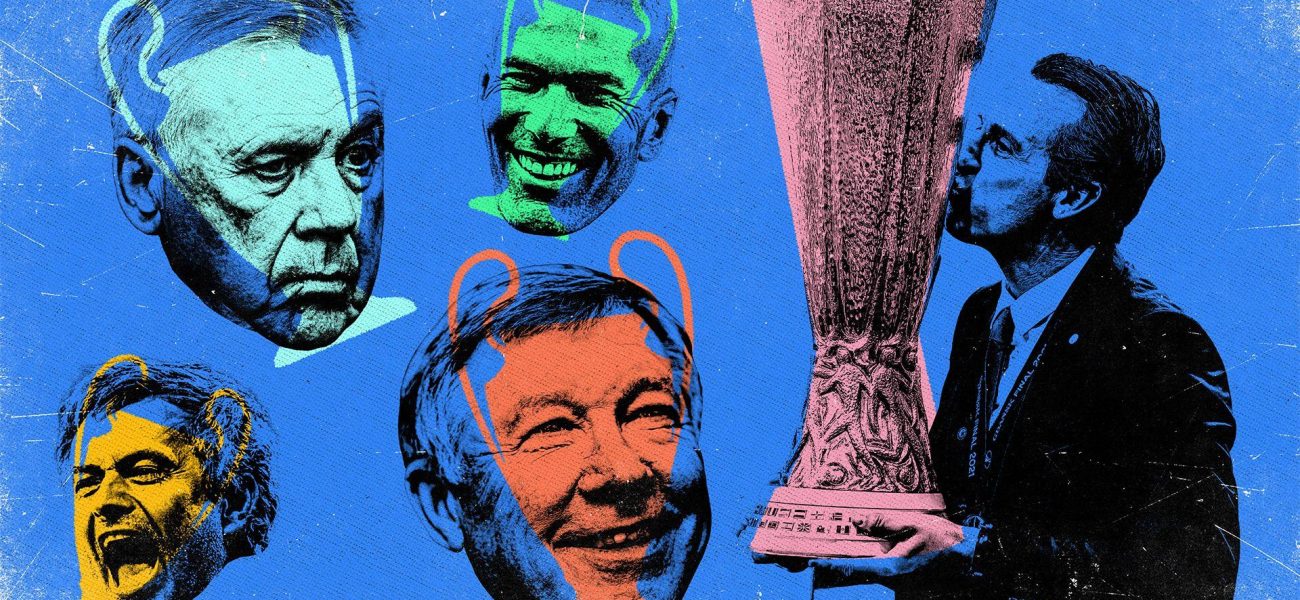
The Silent Architects of Europe’s Sporting Empires: Beyond the Glitz
POLICY WIRE — London, UK — Forget the carefully manicured press conferences. Ignore the social media fawning over ‘G.O.A.T.’ debates. Because when the noise dies down, and the glittering...

POLICY WIRE — London, UK — Forget the carefully manicured press conferences. Ignore the social media fawning over ‘G.O.A.T.’ debates. Because when the noise dies down, and the glittering dust settles on Europe’s most coveted football trophies, it’s the quiet accumulators, the master puppeteers, who stand truly tall. They’re the ones whose strategic brilliance wasn’t just about winning a single match, but about bending an entire continent to their will, sometimes over decades.
It’s easy, nowadays, to get swept up in the latest managerial phenom, isn’t it? The one who talks a good game, brandishes a tactical whiteboard like a wizard’s staff. But true mastery, the kind that spans generations — and competition formats, it’s a grittier thing. It’s Nereo Rocco, who in an era of pure guts and tactical conservatism—that Catenaccio of his—guided AC Milan to their first European Cup in 1963. He wasn’t about flash. He was about winning, brutal as it could be. And he set a benchmark for pragmatism that echoes even today. Before the age of instant gratification and 24/7 football news, these men were carving out legends with cold, hard silverware, often with far fewer resources than today’s Goliaths.
Carlo Ancelotti, for instance, isn’t just a manager; he’s a phenomenon. UEFA records confirm he’s won the Champions League a staggering five times as a coach, a feat unmatched in the competition’s storied history. That’s not luck, my friends; that’s sustained excellence across multiple clubs, diverse cultures, and different footballing eras. But you rarely hear him scream or throw a tantrum. He’s calm, deliberate. He’s seen it all. As he put it recently, reflecting on his unparalleled career, “You don’t chase history, you just build a good team, day by day. The trophies, they find you.”
Then you’ve got Jose Mourinho. Call him divisive, call him arrogant, but you can’t deny his trophy haul. His swagger often masks an incredibly shrewd footballing mind—a man who engineered one of the greatest underdog stories with Porto in 2004, snatching the Champions League, and then built a treble-winning Inter Milan. And he’s still at it. After claiming yet another European honour, he once quipped, “They talk about systems, about philosophy. Me? I talk about winning. And sometimes, you gotta break a few eggs—or egos—to do it.” That’s the essence of his often-bruising effectiveness, an unvarnished honesty that cuts through the saccharine niceties of modern sports punditry.
These aren’t merely European figures, mind you. Their gravitational pull extends across continents. From the passionate alleyways of Karachi to the bustling cafes of Lahore, millions of fervent fans stay glued to flickering screens, following every tackle, every goal, every tactical tweak from these distant European maestros. European football isn’t just a sport there; it’s an immersive, often escapist, drama that transcends local concerns, uniting fans in a global phenomenon. These coaches, whether they know it or not, are cultural ambassadors, their successes and failures dictating the emotional rhythm of countless households far from the rain-swept pitches of Europe.
We see the names roll off the tongue: Sir Alex Ferguson, Pep Guardiola, Zinedine Zidane, Bob Paisley. Each carved their own niche, whether it was Ferguson’s dynasty at Old Trafford—built on sheer longevity and fierce loyalty—or Guardiola’s hyper-modern, possession-based artistry that reinvented how we watch the game. Paisley, too. Following the iconic Bill Shankly, he not only sustained Liverpool’s success but took it to unimaginable European heights. It wasn’t about the individual; it was about the institutional power, the relentless pursuit of supremacy. And sometimes, that takes a certain detached genius.
What This Means
This relentless pursuit of European football glory by a select cadre of managers carries significant implications far beyond the pitch. We’re talking about colossal economics. The sheer capital flow around these tournaments—sponsorships, broadcasting rights, tourism, merchandising—is staggering. Cities transform during finals, host nations leverage tournaments for soft power, using the spectacle to project an image of capability and prestige. Think of Istanbul hosting another major final; it’s a statement, a nod to geopolitical relevance. these managers, particularly those at state-backed clubs, become unwitting or even willing tools in broader narratives. A victory for a Manchester City or Paris Saint-Germain isn’t just a win for the fans; it’s a triumph for the Abu Dhabi or Qatari brand. It normalizes investment, diverts scrutiny, — and projects an aura of global influence. These tactical battles, therefore, aren’t confined to 90 minutes; they’re skirmishes in a much larger economic and political theatre, shaping perceptions and moving vast sums of money. The coaches, the men in the dugout, are the face of these sophisticated operations, symbols of success or failure in a realm far more complex than a mere game.