
Arteta’s Precarious Perch: Double Glory Dreams Teeter on the Edge of Arsenal’s Casualty Ward
POLICY WIRE — London, UK — Mikel Arteta’s meticulously crafted Arsenal project, often praised as a masterclass in modern football management, now hangs by a thread—or perhaps, by several...

POLICY WIRE — London, UK — Mikel Arteta’s meticulously crafted Arsenal project, often praised as a masterclass in modern football management, now hangs by a thread—or perhaps, by several compromised ligaments and torn muscles. While the glitzy Premier League standings boast the Gunners at their summit, five points clear of challengers (a statistical fact keenly observed by global fans, from Highbury to Lahore, where Premier League match-day buzz dominates social media feeds according to social analytics firm Pulsar, reporting a 40% spike in related hashtags during match times in South Asia), the gritty reality of a rapidly dwindling defensive roster tells a more sobering tale. It’s a cruel game, isn’t it? One minute you’re charting a course for history; the next, you’re scrounging for healthy bodies.
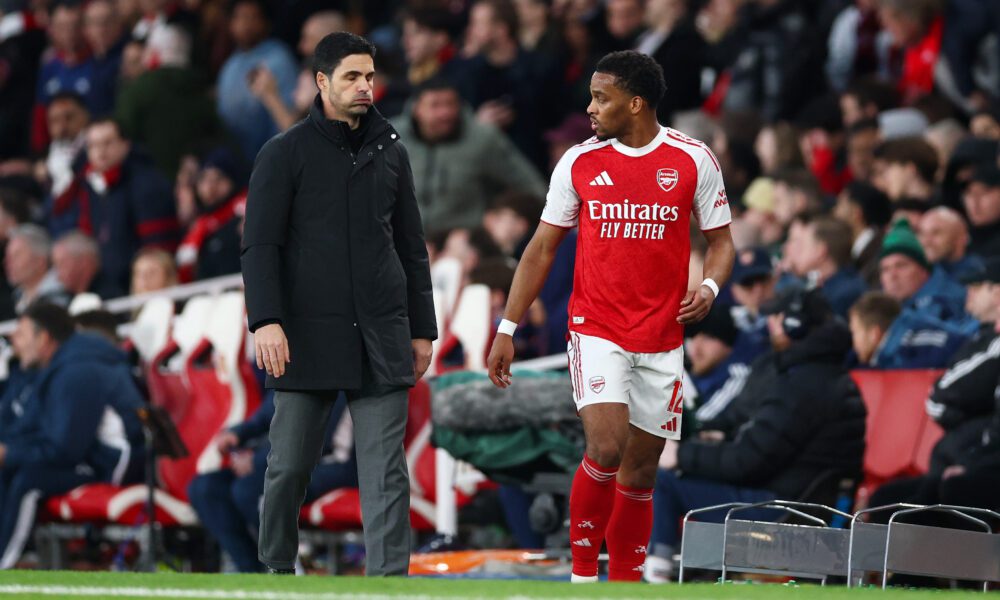
Arteta, a man whose sideline intensity often rivals the kinetic energy of a live grenade, found himself in the unenviable position this week of offering an update on Jurrien Timber, whose comeback was once pitched as Arsenal’s late-season trump card. Now, Timber’s return from a protracted injury — sidelined since March after a clash with Everton proved more stubborn than a bureaucracy at its worst — is less a certainty and more a long-shot bet in a high-stakes casino. The original prognosis had him back way sooner, too. But here we’re, facing down the barrels of European — and domestic finales with critical gaps.
“There’s a chance, but how big that chance is, I cannot tell you, being completely honest,” Arteta admitted, his tone carrying the faint echo of a leader preparing his public for unpleasant news. And you could tell he didn’t enjoy it. But what can he do? The cold, hard numbers just aren’t adding up on the pitch. This isn’t just about Timber, either. It’s about a wider collapse in defensive availability that threatens to unravel everything. Ben White, another pillar in Arteta’s defensive strategy, has bowed out with an MCL injury, definitively ending his season and snatching away any dreams of him featuring in the Champions League final, let alone the 2026 World Cup.
Because that’s the brutal calculus of elite sports: you lose two foundational right-backs—your first-choice options—and suddenly, the perfectly calibrated machine starts to grind. Arsenal’s once seemingly impregnable defense, forged on depth and tactical flexibility, now looks less like a fortress and more like a collection of increasingly porous sandbags. Christhian Mosquera has been flung into the fray, and Riccardo Calafiori, a man whose weekend performance saw him substituted at half-time against West Ham, now carries his own ‘fresh injury concern,’ though Arteta, ever the optimist (or perhaps, a pragmatist selling hope), suggested it’s “nothing serious.” Hope’s a thin gruel when you’re facing Paris Saint-Germain, wouldn’t you say?
“We’ve poured our souls into this season, pushed past every conceivable limit. To have it come down to whether a player can even lace up his boots, it’s frustrating beyond words for everyone involved,” a visibly strained Arteta confided in a closed-door briefing, reportedly running his hand through his hair. That’s the weight of expectation, right there. Arsenal’s ascent has been lauded as a triumph of strategy and belief, culminating in their strongest league position in years. Now, this — a series of unfortunate medical misfortunes — has thrown a wrench into the carefully constructed gears. The kind of unexpected twists that plague all high-stakes environments, be it football or finance. The sheer volume of matches played by top-tier athletes today is undeniably a factor, placing incredible strain on their bodies. But you’re in the elite, so you’re meant to cope. That’s the expectation. And the money certainly suggests they should be able to.
📄 POLICY WIRE WHITEPAPER PUBLISHED: PAKISTAN'S NATIONAL SECURITY POLICY PRIORITIES
👉 READ BY CLICKING HEREAnd let’s be honest, the prospect of lifting both the Premier League and European Cup would represent the club’s most significant opportunity in a generation—a generational chance that’s increasingly reliant on a patched-up backline. Navigating this brutal final stretch, shorn of trusted lieutenants, won’t just test Arteta’s tactical genius but his ability to summon resilience from the most unexpected corners of his squad. It’s not just a physical contest; it’s a mental marathon, particularly for fans stretching from Karachi’s bustling streets to the Emirates Stadium.
What This Means
This isn’t just about football; it’s a potent illustration of how grand aspirations, whether sporting or geopolitical, can be catastrophically undone by unexpected, tangible weaknesses—in this case, flesh and bone. For Arsenal, the political economy of success is razor-thin: prolonged failure to capitalize on a dominant position due to injury could deflate their international brand, impacting merchandise sales, future sponsorship deals, and their standing in the cutthroat global football marketplace. It reflects the broader truism that even with monumental investment and meticulous planning, unforeseen contingencies can derail an entire operation. Arteta’s ability to improvise, drawing upon players who, just weeks ago, were squad periphery, won’t only define Arsenal’s season but will offer a masterclass in crisis management under the harsh glare of public scrutiny. It’s a parable for any leader attempting to deliver on sky-high expectations with suddenly diminished resources. The stakes aren’t just points and trophies; they’re credibility, financial returns, and the emotional investment of millions.