

The World Must Wake Up to India’s War on Its Own Minorities
Pakistan’s call for interfaith harmony on the International Day for Tolerance arrives at a crucial moment for South Asia, a region where demographic diversity has always been both a strength and a...

Pakistan’s call for interfaith harmony on the International Day for Tolerance arrives at a crucial moment for South Asia, a region where demographic diversity has always been both a strength and a challenge. President Asif Ali Zardari’s appeal for unity and peaceful coexistence reflects a recognition that stability requires an active commitment to protecting minority rights. By urging religious scholars, community leaders, media figures, and citizens to promote compassion and understanding, Pakistan is attempting to place inclusion at the center of national discourse. The recent passage of the National Commission for Minorities Rights Bill 2025 and the formation of a new Minorities Caucus in the Senate indicate a policy level effort to institutionalize protections for vulnerable groups.
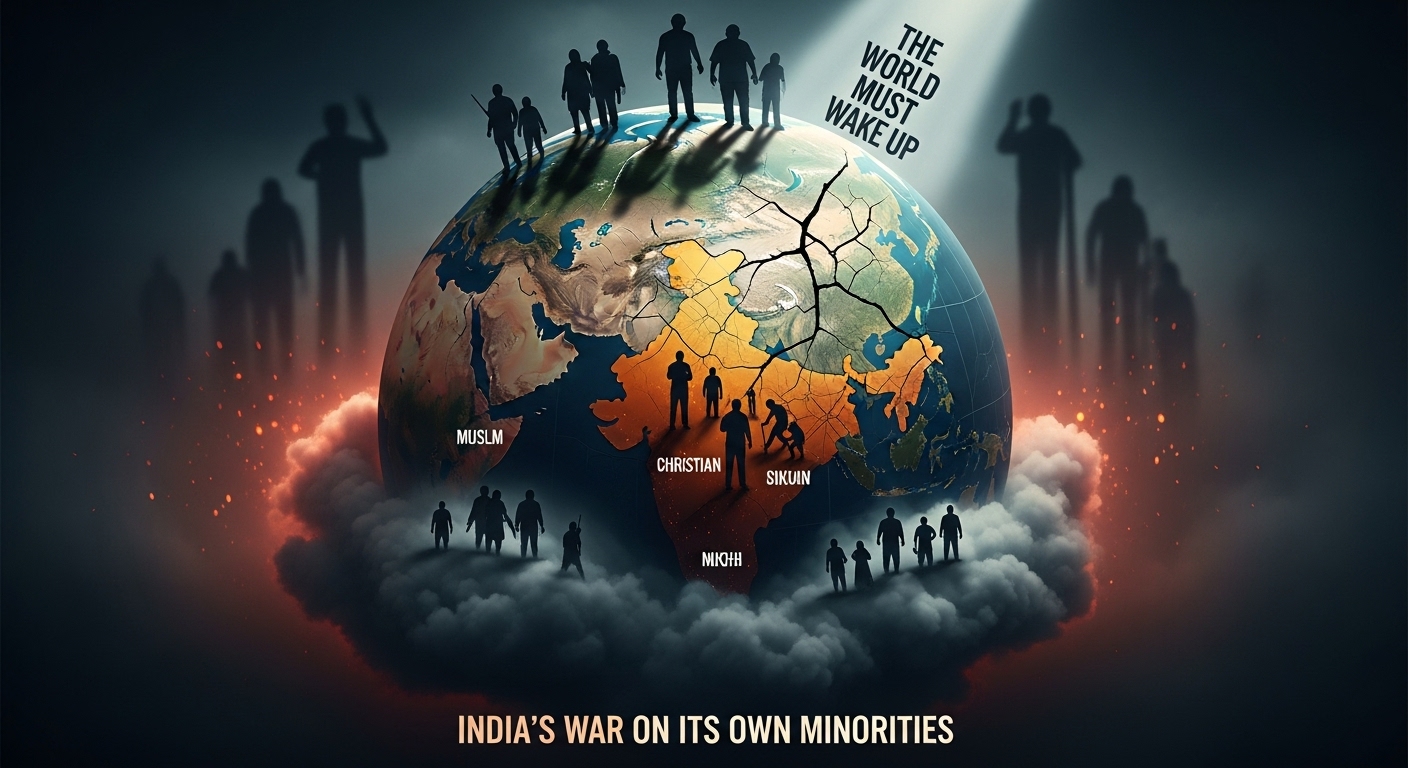
This message gains significance when viewed alongside troubling trends unfolding next door. India, historically known for its pluralism and constitutional promises of equality, has been experiencing rising concerns about the influence of majoritarian nationalism. International human rights organizations, academic researchers, and foreign governments have documented patterns that raise questions about the direction of social and political life in the country. The contrast between Pakistan’s recent legislative steps and India’s growing climate of anxiety for religious minorities invites an important regional discussion.
Numerous reports have highlighted increased hostility that affects India’s Muslim and Christian populations. Human Rights Watch recorded more than one hundred cases of mob violence and vigilante attacks against Muslims between 2015 and 2023, with many incidents connected to cow protection campaigns or communal political rhetoric. In several cases, perpetrators acted openly and filmed the assaults, confident that they would not face consequences. This confidence reflects a disturbing relationship between extremist groups and political authorities, one in which those who engage in violence often find protection rather than punishment.
Administrative measures also expose the growing intolerance. Bulldozer demolitions have become a form of collective punishment, disproportionately targeting Muslim neighborhoods in states governed by the BJP. Homes and businesses have been flattened under the pretext of urban enforcement, often without due legal procedures. Independent legal analysts and journalists have described these demolitions as punitive actions disguised as policy. The message behind such actions is clear: the state reserves the right to discipline minority communities through fear and economic destruction.
Civil liberties continue to erode as well. Activists, journalists, and scholars who document abuses or question state policies frequently face charges under anti terror or sedition laws. Amnesty International reported multiple cases where organizations investigating human rights violations were raided or forced to shut down. The shrinking space for democratic dissent reflects a broader strategy to silence competing narratives.
International bodies have taken notice. The United States Commission on International Religious Freedom has repeatedly recommended that India be designated a country of particular concern due to systematic violations of religious freedom. Global media outlets from The Guardian to The Washington Post have published extensive investigations detailing rising authoritarianism and targeted discrimination. These findings contradict the Indian government’s attempts to portray such criticism as foreign interference. When patterns of repression become undeniable, the world has a responsibility to recognize them.
Pakistan’s message on the International Day for Tolerance highlights the importance of institutional protection for minorities. While India speaks of democracy, its policies increasingly undermine pluralism and equality. This contrast calls for serious international attention, because instability created by discrimination rarely stops at domestic borders. South Asia is an interconnected region shaped by shared histories and population flows. When the largest state marginalizes millions of its own citizens, it creates the conditions for alienation, unrest, and long term regional insecurity.
India’s current political trajectory, driven by an exclusionary ideological agenda, poses risks that the global community cannot afford to overlook. The rise of Hindutva movements and their influence over state institutions has made life more difficult for marginalized groups. Reports of violence, discriminatory laws, and suppression of dissent show a pattern that demands accountability.
Pakistan’s commitment to coexistence on this international day is therefore more than a symbolic gesture. It is a reminder that tolerance must be practiced and protected, or it disappears. Hindutva driven policies have created an atmosphere where minorities in India feel increasingly unsafe. If the international community remains silent, it risks enabling a future in which exclusion becomes normalized and democratic values are sidelined in favor of an ideological project.
The stakes for South Asia are immense. The future of the region will depend on the willingness to confront rising intolerance, hold powerful states accountable, and defend the rights of communities whose security defines the stability of the broader subcontinent. Silence will only strengthen the forces that seek to reshape the region through division rather than coexistence.
“Minorities are the first to feel the heat of intolerance, but history shows that once the fire starts, it consumes the whole house.”
Author