


Wellington’s Delicate Dance: New Zealand PM Confronts Beijing Over Travel Bans Amid Trade Imbalance
POLICY WIRE — Wellington, New Zealand — In the grand, often cynical theatre of global statecraft, sometimes the smallest props signal the biggest plays. A travel ban, seemingly minor, isn’t...

POLICY WIRE — Wellington, New Zealand — In the grand, often cynical theatre of global statecraft, sometimes the smallest props signal the biggest plays. A travel ban, seemingly minor, isn’t just about blocked itineraries for New Zealand lawmakers. It’s a precise instrument of diplomatic pressure, a quiet declaration from Beijing that its terms are non-negotiable—and Wellington, for all its Southern Hemisphere swagger, knows it’s playing a very high-stakes game.
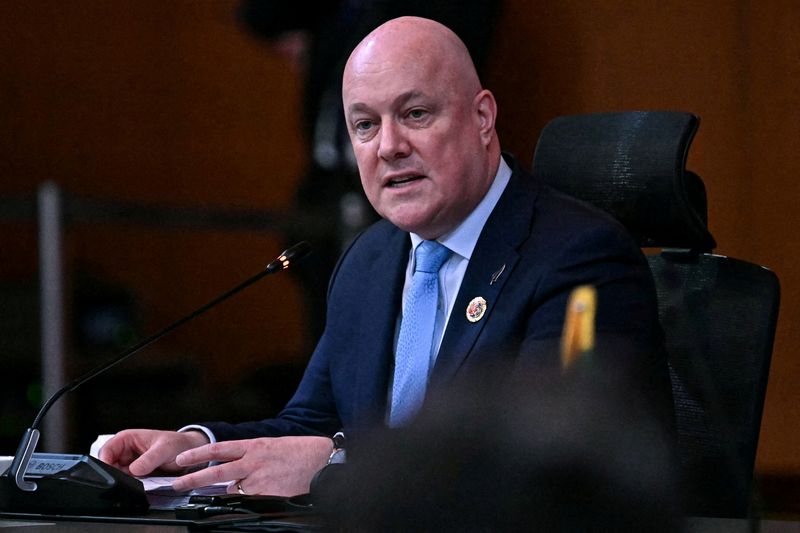
Prime Minister Christopher Luxon, stepping onto this precarious stage, has declared his intention to directly confront China about these restrictive measures. But let’s be blunt: this isn’t just a friendly chat about scheduling conflicts. It’s New Zealand, a nation heavily reliant on the Chinese market, carefully pushing back against a rising superpower. The issue, we hear, concerns lawmakers who’ve been barred entry following their criticism of China’s human rights record or its activities in areas like Xinjiang.
It’s an old tune, really, this economic leverage in service of political conformity. Beijing wields it, they’ve perfected it, — and they expect smaller nations to largely fall in line. Because what choice do you have when the alternative means significant economic disruption? “We’ve got our own path to chart, and that includes the freedom to engage globally, without, shall we say, external prescriptions,” Luxon quipped recently, sounding less like a global power broker and more like a determined shopkeeper guarding his reputation while the landlord looms large. It’s a good line, but you have to wonder if it’s got teeth enough to chew through Beijing’s granite-like resolve.
And China’s position? Predictable, like clockwork. “Each nation retains the sovereign right to determine its entry policies for individuals whose actions could compromise bilateral relations or national security,” a representative from the Chinese Embassy, who preferred not to be named directly for attribution, relayed to Policy Wire’s sources this past week. It’s boilerplate, sure, but it’s delivered with an unblinking certainty. This isn’t just about entry permits; it’s a lesson in who sets the rules, an object lesson, if you will, in global hierarchy.
New Zealand isn’t alone in this delicate dance. You’ve got countries across South Asia—Pakistan, Sri Lanka—also grappling with balancing economic lifelines from China against their own national interests or global alliances. It’s a consistent feature of our age: the siren call of investment, often followed by a political quid pro quo that can make a sovereign state feel awfully small. The optics of this, even for distant island nations, can ripple through broader regional dialogues, including those in the Muslim world, where perceived appeasement or resistance to great powers can dramatically reshape internal and external relations.
Consider the raw numbers, the ones that really stick. China remains New Zealand’s largest trading partner, with bilateral goods and services trade hitting NZ$38.4 billion in 2023, according to Statistics New Zealand. That’s a significant chunk of the country’s economic lifeblood, translating directly into jobs — and prosperity. You don’t just walk away from that kind of relationship over, say, a few inconvenient travel restrictions—not without some serious collateral damage. So, Luxon’s challenge isn’t just diplomatic; it’s existential, for his country’s pocketbook, anyway.
📄 POLICY WIRE WHITEPAPER PUBLISHED: PAKISTAN'S NATIONAL SECURITY POLICY PRIORITIES
👉 READ BY CLICKING HEREBut the move to address this isn’t a surprise. Luxon’s conservative National Party government has been inching closer to traditional Western allies like Australia and the United States, forming a more unified front against what they see as China’s increasingly assertive regional posture. That means more pointed conversations, more discomfort. It means acknowledging the shifting plates of power that complicate even basic parliamentary visits. For more on the intricacies of regional diplomacy, one might look at the tense thaw between Beijing and Delhi, a similar struggle for equilibrium amidst geopolitical friction.
What This Means
This isn’t just about New Zealand’s legislative members missing out on a trip abroad; it signals a hardening of the lines. Economically, any aggressive pushback from Wellington could invite retaliatory measures from Beijing, impacting sectors like agriculture or tourism—mainstays of New Zealand’s economy. The immediate implications for domestic politics aren’t simple, either. The government’s attempt to assert sovereignty while maintaining trade ties will be watched closely, shaping future policy decisions regarding engagement with China, and indeed, with all other major players. It’s about calibrating risk.
Diplomatically, New Zealand’s decision to press the issue directly, rather than quietly acquiescing, could embolden other smaller nations to voice their own grievances, particularly those also walking the glacial diplomatic tightrope with China. Conversely, if Luxon’s efforts yield no meaningful change, it could reinforce the perception that Beijing’s economic might gives it impunity in bilateral relations, a discouraging message for those hoping to stand their ground. Ultimately, it’s a litmus test for New Zealand’s ability to maintain an independent foreign policy in the face of daunting economic realities. And for many observers, it’s just getting started.