Digital Mirage: AI-Generated Hajj Bans Sow Discord, Test Saudi Credibility
POLICY WIRE — Riyadh, Saudi Arabia — The annual pilgrimage to Mecca, a spiritual anchor for billions, finds itself navigating an increasingly treacherous digital landscape, where the sacred meets the...

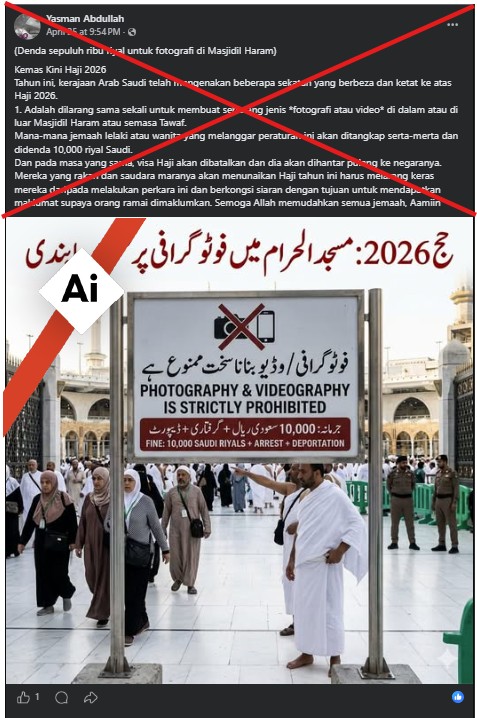
POLICY WIRE — Riyadh, Saudi Arabia — The annual pilgrimage to Mecca, a spiritual anchor for billions, finds itself navigating an increasingly treacherous digital landscape, where the sacred meets the synthetic. It’s not the physical journey that’s being questioned, but the veracity of information surrounding it—specifically, the insidious spread of AI-generated imagery depicting a fictitious ban on photography and videography within the holy sites. And while the Kingdom of Saudi Arabia strenuously denies such restrictions, the very act of rebuttal underscores a deeper, more troubling erosion of trust in the digital age.
Behind the headlines of devotion — and arduous travel, a subtler, more pervasive challenge quietly brews: misinformation. These digitally conjured visuals, often grainy and unsettlingly plausible, portray signage and enforcement measures that simply don’t exist. They’ve circulated widely across social media platforms, particularly within communities eager for news from the Hajj, fostering a baseless narrative of prohibitive control. It’s a classic information operation, albeit one using cutting-edge tools to target deeply held religious sentiments.
Saudi authorities have, predictably, pushed back. “We wholeheartedly welcome pilgrims to document their spiritual journey, to share their reverence with the world,” asserted Dr. Tawfiq Al-Rabiah, Saudi Arabia’s Minister of Hajj — and Umrah, addressing reporters in Jeddah. “Our aim is to enhance the pilgrim experience, not to curtail it. These fabrications are a disservice to the millions who embark on this sacred path.” His comments, though firm, struggle against the virality of visual untruths. It’s an uphill battle, you see, where a captivating fake can travel halfway around the world before truth can get its boots on.
Still, the false claims carry real-world implications, particularly for a nation investing heavily in its image and pilgrim services. Saudi Arabia’s Vision 2030 — a sweeping blueprint for economic diversification and social reform — heavily relies on attracting more tourists and religious visitors. Tainting the Hajj experience with such unfounded restrictions could inadvertently deter future pilgrims, or at least sow seeds of confusion and resentment among them. For the nearly 1.8 million pilgrims who undertook the Hajj in 2023, according to official Saudi statistics, the ability to capture and share moments of profound personal significance remains a cherished right.
The echoes of these fabricated bans resonate particularly strongly in the broader Muslim world, a region already grappling with digital literacy challenges and a heightened susceptibility to sensationalized content. In Pakistan, for instance, a significant source of Hajj pilgrims, such disinformation can cause genuine distress. “Misinformation concerning religious practices or sacred journeys isn’t just a nuisance; it’s a threat to communal harmony and individual peace of mind,” lamented Dr. Fahd Hassan, a cybersecurity expert — and advisor to Pakistan’s Ministry of Religious Affairs. “We’ve seen how quickly such narratives can spread, creating unnecessary panic — and mistrust. It’s imperative we invest in digital education as fiercely as we do in counter-terrorism.” His observation hints at a more complex geopolitical undercurrent, where information warfare can undermine even the most apolitical of events.
And it’s not just about what Saudi Arabia allows or forbids. It’s about who controls the narrative, who shapes perception in an era where verifiable facts are often overshadowed by compelling fictions. The very ease with which these AI-generated images are created and disseminated makes them potent tools for destabilization—or at least for embarrassing a state keen on projecting an image of modernity and openness. But it also highlights a critical vulnerability shared by nations across the Muslim world — and beyond.
What This Means
At its core, this incident isn’t just about a Hajj photo ban; it’s a stark illustration of the escalating digital arms race shaping international relations and domestic stability. For Saudi Arabia, the rapid debunking of these AI-generated falsehoods is crucial for maintaining its credibility as the custodian of Islam’s holiest sites and a nation embarking on ambitious modernization. Any perceived infringement on pilgrims’ rights, even fabricated ones, risks alienating a vital demographic and undermining the Kingdom’s extensive investments in religious tourism and infrastructure. Economically, a dent in pilgrim confidence could have tangible impacts on the billions generated annually by religious tourism—a cornerstone of the Vision 2030 diversification strategy.
Politically, the incident underscores the pervasive threat of deepfakes and AI-powered disinformation campaigns, particularly in regions where religious sentiment runs deep and trust in traditional media is often low. This type of digital meddling isn’t confined to the Gulf; countries like Pakistan are increasingly wary of information warfare targeting their populations, as seen in various internal political struggles. (You can read more about some of these regional currents in Delhi’s Precarious Pivot.) It forces governments to divert resources from tangible development to intangible digital defense, creating a constant, low-level drain. it exposes a broader vulnerability in the global information ecosystem, where state and non-state actors alike can weaponize synthetic media to sow discord, inflame tensions, or simply undermine official narratives. This isn’t merely an inconvenience; it’s a profound challenge to governance and societal cohesion in an increasingly interconnected, yet fractured, world.