


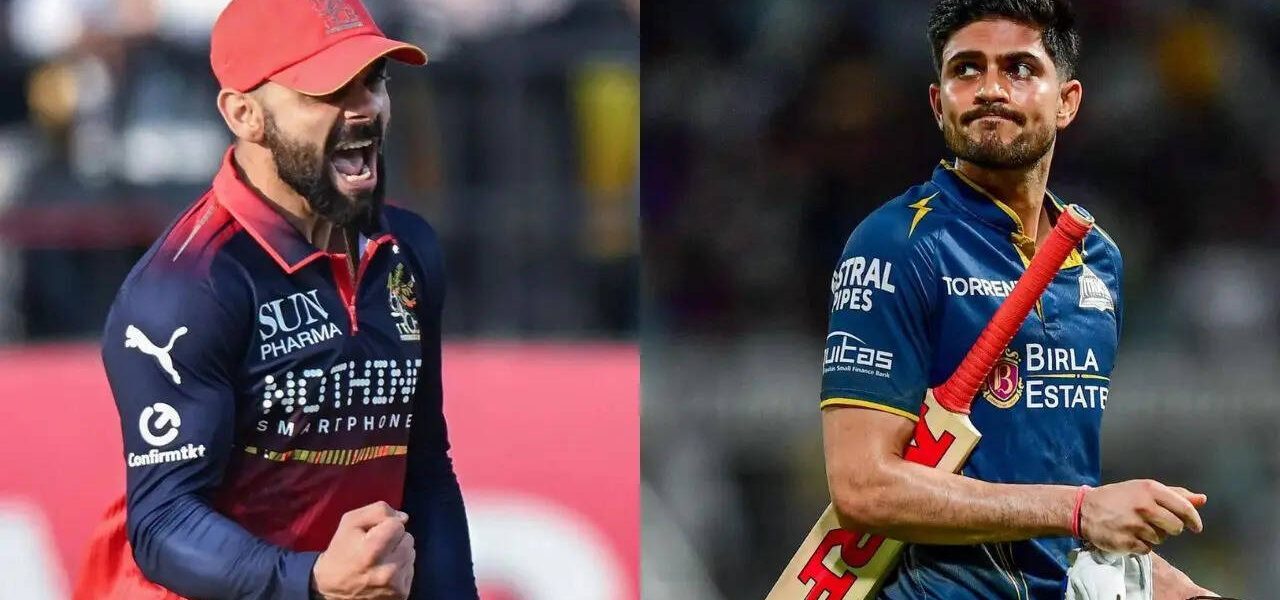
The Himalayan High Ground: Bengaluru, Gujarat Clash in IPL’s High-Stakes Financial Arena
POLICY WIRE — Dharamsala, India — Forget for a moment the customary political squabbles that usually dominate headlines across the subcontinent. Never mind the interminable debates in legislative...

POLICY WIRE — Dharamsala, India — Forget for a moment the customary political squabbles that usually dominate headlines across the subcontinent. Never mind the interminable debates in legislative assemblies, or the quiet machinations of statecraft that often feel abstract to the everyday citizen. Because tonight, the real drama — the kind that truly grips hundreds of millions — unfolds in the chill mountain air of Dharamsala.
It’s here, amidst the stunning, often ethereal backdrop of the Dhauladhar range, that two corporate behemoths masquerading as cricket teams — Royal Challengers Bengaluru (RCB) and Gujarat Titans (GT) — aren’t just playing a game. No, they’re battling for bragging rights, billions in broadcast revenue, and the kind of collective national delirium that few political victories can muster. This isn’t just Qualifier 1 of the Indian Premier League (IPL) 2026; it’s a tangible exhibition of India’s economic muscle and cultural hegemony in a region often starved of unifying spectacles. And it happens to be good sport, too.
These two franchises, both stalwarts in the relentless pressure cooker of elite sport, stand evenly matched in head-to-head encounters—a precise four victories apiece. They’ve both made four playoff appearances in the last five seasons. But for all their consistent excellence, this particular high-wire act, their first postseason clash, feels different. It’s got that raw, immediate intensity only a sudden-death qualifier can provide. Because you win, you’re in the final. You lose, well, you get a lifeline, but the initial fall from grace still stings like heck.
“This isn’t just about bat and ball anymore; it’s about soft power, about unifying a subcontinent through shared passion, even when diplomatic channels might feel, shall we say, a bit frosty,” observed the Honorable R. K. Singh, Minister of State for Sports Affairs, speaking candidly to Policy Wire this week. “The sheer scale, the engagement from Lahore to Colombo – it’s something governments often only dream of harnessing. Frankly, it’s a national asset.”
Bengaluru comes packing heat, their batting line-up a formidable beast with depth — and power to spare. They’ve got these batters who just won’t quit, capable of pulling the team out of any mess. Gujarat, by contrast, relies more on its formidable top three: Shubman Gill, Sai Sudharsan, and the perpetually dangerous Jos Buttler. But don’t sleep on their bowlers. They’ve assembled one of the most balanced attacks in the league, a crucial factor when a cold Dharamsala night demands precision.
The individual duels here, of course, hold particular fascination. Bhuvneshwar Kumar, the veteran RCB pacer, has some seriously good numbers against GT’s heavy hitters. He’s reportedly dismissed Buttler nine times in T20s, — and Gill five. For RCB, all eyes will inevitably be on Virat Kohli — and his postseason form, an annual national obsession. Meanwhile, Rajat Patidar’s ability to handle the short stuff could literally make or break Bengaluru’s innings. Over on the Gujarat side, they’ll lean hard on Rashid Khan’s wizardry in the middle overs and Kagiso Rabada’s sheer pace—assuming the pitch has that classic Dharamsala bounce and movement, which it usually does.
Speaking of the pitch: It’s expected to be a fast bowler’s friend early on, especially under lights. But then, as it invariably does, it’ll settle. Batters, once they’ve gotten their eye in, can cash in. Teams chasing have historically enjoyed more success here at night, a statistic likely weighing heavily on captains’ minds before the coin toss at 7 PM IST (which determines who fields first, and thus who chases).
“You’ve got billions invested, global brands jostling, and careers on the line with every single delivery,” explained Ms. Anjali Rao, CEO of Royal Challengers Sports Holdings, in an earlier discussion about playoff pressure. “It’s not just a sport; it’s a high-stakes economy wrapped in a grand spectacle. Every run, every wicket, it impacts far more than just the scoreboard.”
What This Means
The economic pulse of the IPL reverberates far beyond India’s borders. And why wouldn’t it? Reports indicate that the IPL alone contributed approximately $11.5 billion to India’s GDP between 2008 and 2023, according to a recent Economic Times analysis. That’s not merely impressive; it’s a profound statement on sport’s capacity as an economic engine. But beyond the sheer financial figures, these matches serve a critical geopolitical function in South Asia. For countries like Afghanistan, which boasts stars like Rashid Khan, participation in the IPL offers invaluable global exposure and remittances, fostering goodwill even amidst regional political complexities. Pakistani players, sadly, remain absent due to longstanding political tensions, highlighting the limitations of ‘cricket diplomacy’ in resolving deeper national disputes.
Yet, the enthusiasm remains infectious across the border; fans in places like Bangladesh and Pakistan avidly follow, streaming matches, discussing tactics, and living vicariously through the success of regional cricketing brethren. The league thus serves as an intricate web of cultural exchange, economic opportunity, and soft power projection—a much smoother instrument of influence than any conventional foreign policy doctrine. This Qualifier isn’t just about making the final; it’s about affirming this regional sports-economic model, reinforcing India’s commanding role within it, and demonstrating the extraordinary power of cricket to shape national narratives. For more on the deeper societal impacts of such tournaments, consider reading Beyond the Boundary: A Teen’s Stare Unmasks IPL’s Unforgiving Crucible. Or, how about Silent Purge: When Cricket’s Digital Echoes Turn Toxic for India’s Young Stars for a different perspective on its consequences?