


The Unseen Play: Colts’ 2026 Draft Gambit Redefines NFL Future-Building
POLICY WIRE — Indianapolis, Indiana — Sculpting a future within the razor-edged landscape of professional football often means making audacious moves that defy immediate gratification, steps few fans...

POLICY WIRE — Indianapolis, Indiana — Sculpting a future within the razor-edged landscape of professional football often means making audacious moves that defy immediate gratification, steps few fans truly grasp until years later. The Indianapolis Colts, it’s clear, are primed to make just such a play, looking not to the upcoming draft but casting their gaze toward a distant 2026.
Speculation is abuzz that General Manager Chris Ballard may be mulling over a gutsy trade: snagging a coveted first-round pick for the 2026 NFL Draft. This isn’t about buttressing an immediate need; it’s a seismic, strategic bet on future talent, a shrewd gamble on what’s to come. Not for today.
Make no mistake, such a maneuver would be a clear proclamation of the franchise’s long-term vision, one that stretches way beyond the usual two-to-three-year competitive windows. And that matters immensely in a league where impatience often holds sway. As if we aren’t all constantly craving instant gratification, right?
Ballard, known for his deliberate approach and distinct disinclination toward knee-jerk reactions, understands the currency of draft capital perhaps better than most. He’s built his tenure on accumulating assets, not frittering them away.
“We’re not afraid to make bold moves if it means securing the long-term health of this franchise,” Ballard reportedly told a small group of reporters recently, subtly hinting at broader strategic considerations. “Every asset, every pick, is a chess piece in a much larger game, and sometimes you have to see three, four, five moves ahead.”
That’s a significant shift from the instant gratification many franchises chase. Few teams possess the discipline to sacrifice a present opportunity for a distant, unconfirmed future. A calculated risk.
This strategy carries inherent risks, of course. Injuries, unforeseen player development, and the utterly unpredictable nature of the NFL can quickly derail the best-laid plans. Yet, the reward for hitting on a future first-rounder can be generational — a star, an anchor, maybe even a new face for the franchise. Who wouldn’t want that?
Mull over the raw statistics: NFL teams, on average, value a first-round pick significantly more than later-round selections, with a 2023 analysis from *Pro Football Focus* indicating the average first-round selection carries an approximate value of 14.5 points on their proprietary draft value chart, compared to a mere 1.2 points for a seventh-rounder.
Behind the headlines, this valuation mirrors the premium placed on top-tier talent, the kind that can hoist an entire roster. Snagging one more shot at that caliber of player is alluring, no matter the wait. Seriously, this isn’t just some casual pick-up game.
The financial complexities of NFL team management, including player salaries and draft capital, draw intriguing parallels to the intricate economic calculations facing nations. For instance, Pakistan, wading through global financial markets and seeking foreign investment, understands that long-term stability and competitive advantage often necessitate strategic, sometimes uncomfortable, upfront investments.
It’s about projecting value into an uncertain future. Both in sports and geopolitics, the ability to divine trends and capitalize on assets effectively is pivotal for sustained success.
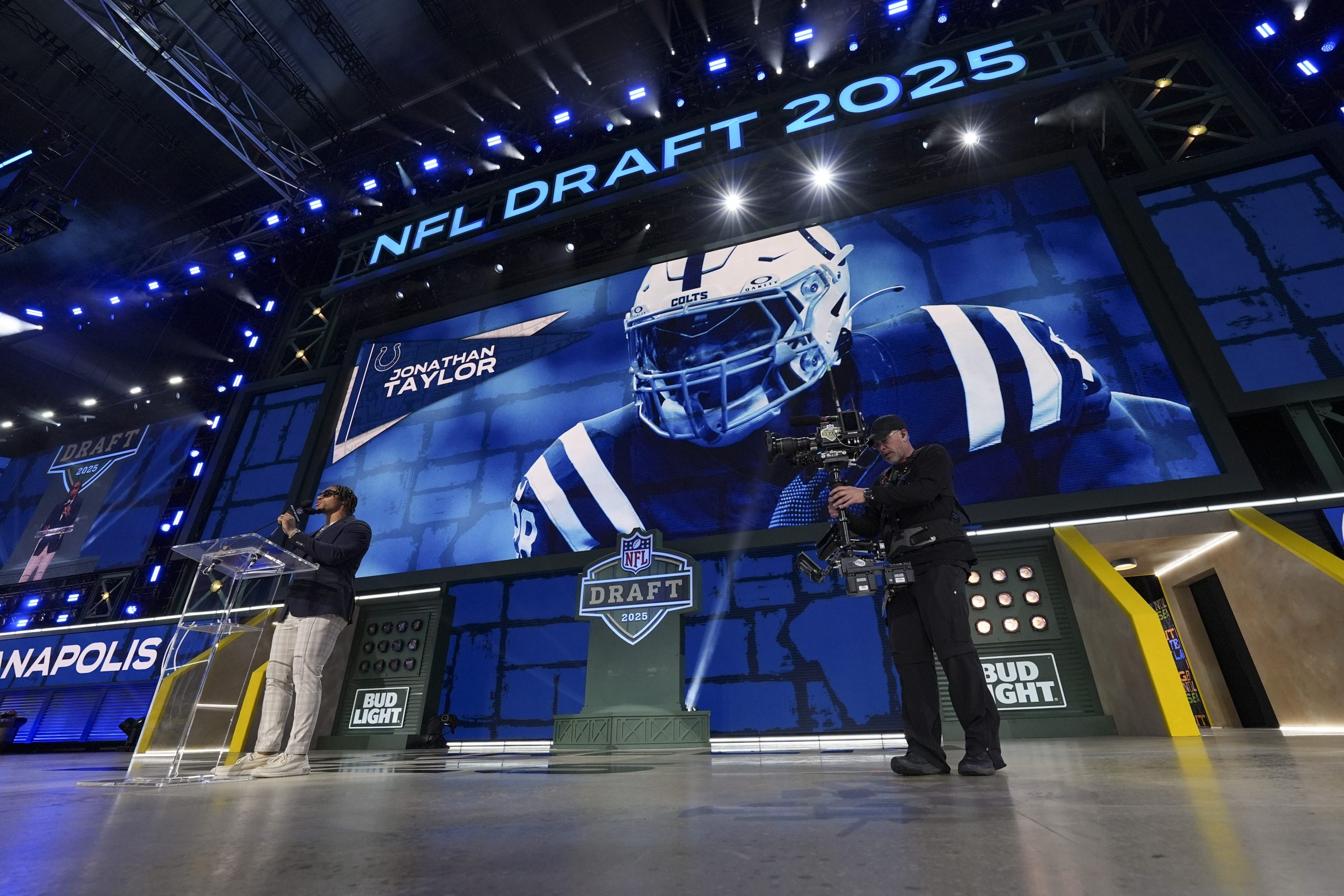
But how do the players feel about this potential long-view approach? Jonathan Taylor, the Colts’ Pro Bowl running back, who was seen announcing a pick at a previous draft (a fun little tradition, isn’t it?), has always advocated for a winning culture.
“Winning is the only currency that truly matters in this league,” Taylor once mused in an interview, reflecting on team priorities. “And sometimes that means trusting the front office’s vision, even when it looks unconventional from the outside. If it brings us closer to a championship, then I’m all for it.”
This sentiment spotlights the precarious tightrope GMs must walk: building for tomorrow while deploying a competitive team today. It’s a tightrope walk, often criticized from both sides.
Related: NFL Draft 2026: Rams Gamble on Simpson, Giants Build Foundation Amid Risky First Round
What This Means
This potential move signals a profound dedication from the Colts to enduring brilliance rather than ephemeral success. By trading for a future first-rounder, Ballard would effectively be betting on his current scouting department’s ability to identify talent two years out, and on the team’s ongoing trajectory — a testament, really, to his faith in his own process.
Politically, within the league (and let’s be honest, everything in the NFL is political), it also sends a message. It says the Colts believe their present foundation is strong enough to stomach the asset expenditure, and that they’re confident in their coaching staff’s ability to develop players without immediate high-end draft capital.
Economically, future draft picks are highly coveted prizes. They furnish flexibility, providing currency for trades, or an ironclad shot at a top prospect in a future class. It’s an investment, pure — and simple, in the most valuable asset an NFL franchise has: elite talent on rookie contracts.
From an inter-league optics perspective, other teams will be watching closely. Such bold long-term planning could catalyze similar actions, or conversely, be perceived as an overreach. Either way, it recalibrates the market for future draft capital.
Ultimately, this isn’t just about a football team. It’s about a multi-billion dollar enterprise employing sophisticated economic models and strategic foresight to ensure its perpetual dynamism. A future first-round pick isn’t just a selection; it’s a statement of intent.
An unnamed league executive, speaking on background (because, you know, these things just *happen*), cut to the chase: “You can never have too many first-round picks. Ever. The good teams know that. The great teams act on it.”