


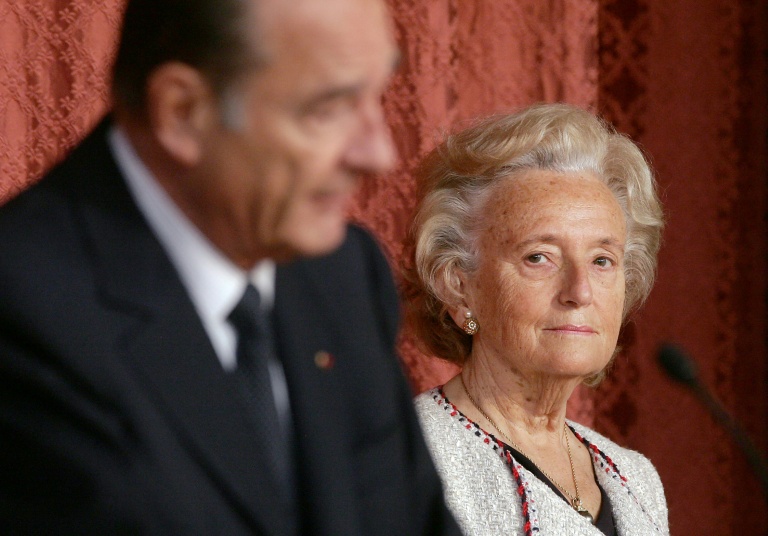
Bernadette Chirac’s Quiet Influence: The Unsung Architects of French Power Fade into History
POLICY WIRE — Paris, France — France has always had its queens, empresses, and more recently, its first ladies. But some figures, like Bernadette Chirac—widow of former President Jacques Chirac, who...

POLICY WIRE — Paris, France — France has always had its queens, empresses, and more recently, its first ladies. But some figures, like Bernadette Chirac—widow of former President Jacques Chirac, who herself passed away at 93—played a quieter, yet arguably far shrewder, game. You don’t get to shape a dynasty from the wings without mastering a certain kind of political jujitsu. Her death, confirmed by daughter Claude, isn’t just the end of a long life; it’s the fading of an era, a final curtsey for the generation that rebuilt French conservative power after de Gaulle, then adapted it for a global stage.
She wasn’t just a political spouse. Madame Chirac was an institutional memory, a link to the RPR’s early machinations, a formidable electoral asset in her own right, particularly in Corrèze. Folks often overlooked that—and frankly, she likely preferred it that way. Her elegance was disarming, masking a steel-trap mind. She navigated the rough-and-tumble of French village politics, then scaled the treacherous peaks of the Elysée Palace, all while managing her husband’s often tumultuous career. Think about it: a woman who once said, with characteristic bluntness, that her husband hadn’t informed her he was running for president until the last minute, still managed to become an indelible part of that political machinery.
And yes, she wasn’t one for the glaring spotlight. But when it did catch her, her pronouncements were almost always loaded, reflecting the traditional, conservative heartland values her husband famously championed. President Emmanuel Macron, offering his condolences, remarked, “Madame Chirac embodied a France of duty and enduring public service. Her quiet strength, often underestimated, shaped a presidency — and touched countless lives. We won’t forget that.” It’s a testament to her pervasive, if unadvertised, impact.
Her role, it must be said, went beyond mere domestic endorsements. As First Lady, she chaired the Fondation Hôpitaux de Paris-Hôpitaux de France and launched the beloved Pièces Jaunes (Yellow Coins) campaign, a charitable initiative for children’s hospitals. This work cemented her image as a caring, public-spirited figure, allowing her to connect with ordinary citizens across socioeconomic divides. During Jacques Chirac’s tenure, a period marked by France’s firm stance against the Iraq War and efforts to forge a multipolar world, these softer diplomatic initiatives became an important complement. The former president, during one of his rare visits to Pakistan in the early 2000s, often highlighted not just geopolitical interests but also cultural and humanitarian ties—a legacy where his wife’s consistent emphasis on charitable outreach certainly played a supporting, humanizing role. The French approach, especially in the Muslim world, often involves leveraging both hard diplomacy and these types of public, human-focused engagements.
But her direct political clout shouldn’t be underestimated. For instance, in the 2002 presidential election—where her husband faced an unexpected run-off against Jean-Marie Le Pen—her tireless campaigning, especially in rural areas, was widely credited as a critical factor in mobilizing centrist and right-wing voters. Indeed, her work was a masterclass in leveraging personal connection in an increasingly media-driven landscape. An old aide once told me, not for attribution then but perhaps now, “People always saw her as the elegant, conservative grande dame. But behind the facade? A political mind that could rival anyone on the Quai d’Orsay. She played the long game, didn’t she? She was the long game.”
📄 POLICY WIRE WHITEPAPER PUBLISHED: PAKISTAN'S NATIONAL SECURITY POLICY PRIORITIES
👉 READ BY CLICKING HEREHer legacy, too, can be seen in the broader arc of French political families. You don’t find many spouses of French leaders managing to maintain a public mandate and significant local office—she served as a departmental councillor for Corrèze until 2015, long after her husband left the Elysée. That’s a unique level of enduring political engagement. Because frankly, French politics tends to be a brutal, all-consuming affair, leaving little room for parallel power centres, let alone from a presidential spouse. And yet, she managed. For context, only around 15% of French spouses of former presidents since the Fifth Republic have held independent elected office *during or after* their partner’s presidency. That number drops dramatically for sustained engagement.
What This Means
Bernadette Chirac’s passing isn’t just a somber moment; it marks a symbolic transition for French conservatism. Her kind of influence—subtle, matriarchal, deeply rooted in the soil of rural France while navigating the glitz of Paris—is becoming increasingly rare in an era of hyper-mediated, often brutal, political combat. It reminds us that French power isn’t solely concentrated in elected office; it often flows through networks of family, legacy, and often, understated resilience. Her departure underscores the fading of a generation of Gaullist and neo-Gaullist figures, leaving a void for the modern right, which is still struggling to define its identity beyond the divisive populism seen across Europe. This isn’t merely the end of a life; it’s a quiet turning point, pushing France further away from the familiar and into the uncertain winds of contemporary European political identity, leaving behind those who shaped the nation’s post-war trajectory, with an authority that wasn’t always obvious to the casual observer.