

The United Nations Security Council’s Quarterly Briefing on Afghanistan: A Pakistani Perspectiv
On June 23, 2025, the United Nations Security Council (UNSC) will convene its quarterly open briefing on Afghanistan, with a focus on the country’s rising humanitarian and human rights issues....
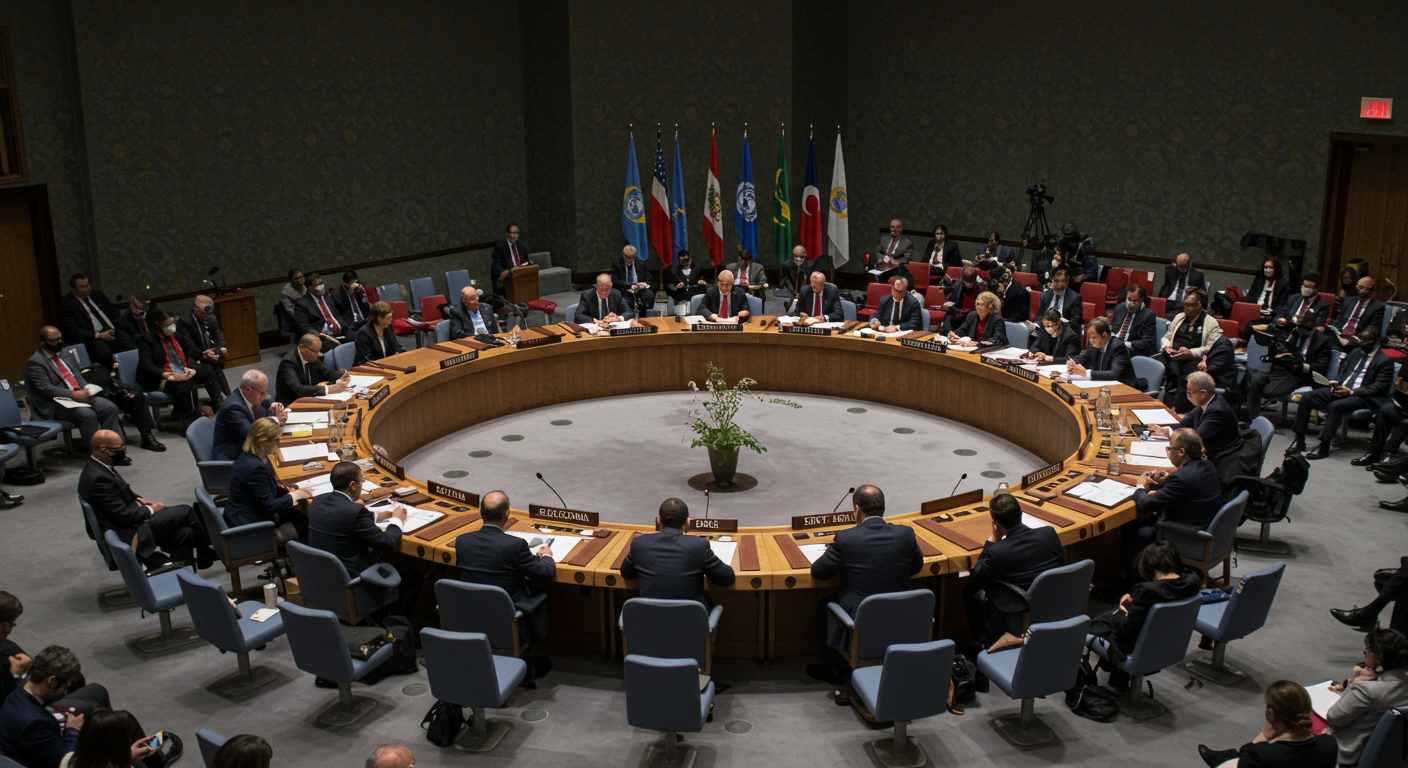
On June 23, 2025, the United Nations Security Council (UNSC) will convene its quarterly open briefing on Afghanistan, with a focus on the country’s rising humanitarian and human rights issues. With Afghanistan facing one of the world’s greatest humanitarian situations, the forthcoming session is expected to attract international attention to the country’s dire situation. However, Pakistan believes that the situation in Afghanistan necessitates a more nuanced approach, one that includes not only humanitarian aid but also a diplomatic framework that involves cooperation across the region, direct engagement with the Afghan government, and a long-term strategy for peace and stability.
The humanitarian issue in Afghanistan remains terrible, with over 23 million people – more than half of the population – reliant on humanitarian aid. The UN Office for the Coordination of Humanitarian Affairs (OCHA) has cautioned that due to funding gaps and increased insecurity, millions of Afghans may not receive the badly needed relief by 2025. This frightening statistic has prompted calls for a more comprehensive international response to the humanitarian catastrophe. However, the solution goes beyond simply providing help; it also includes securing Afghanistan’s political and economic stability, which will reduce the humanitarian load in the long run.
Pakistan, which shares a 2,600-kilometer border with Afghanistan, has borne the brunt of the country’s instability. The influx of refugees departing violence, increased militant activity, and cross-border smuggling of weaponry and drugs have all had an impact on Pakistan’s security and social fabric. The continued relocation of Afghans into Pakistan exacerbates Pakistan’s economic challenges, putting further strain on already limited resources. Thus, the international community’s role extends beyond immediate humanitarian help to finding long-term solutions to Afghanistan’s political instability, which has persisted for decades.
The upcoming UNSC briefing will most likely focus on Afghanistan’s Taliban-led government and its policies, notably those concerning human rights, the situation of women, and governance. Since the Taliban’s come back to power in 2021, Afghanistan has been placed under to mounting global criticism, particularly for its constraints on women’s rights and its inability to establish a fully inclusive government. These concerns are of relevance to Pakistan, not just in terms of human rights, but also in terms of regional stability.
Pakistan has frequently stressed the significance of working with the Taliban to enable an inclusive political process in Afghanistan. While Pakistan’s assistance for the Taliban has been contentious, it claims that isolating the Taliban will only exacerbate Afghanistan’s situation. Pakistan has often advocated for a diplomatic framework that promotes discussion between the Taliban and the international community, particularly regional powers such as China, Russia, and Pakistan. This cooperation, Pakistan claims, is critical to maintaining peace and preventing Afghanistan from becoming a breeding ground for terrorism and extremism once more.
However, the international community is still split on the best way to engage the Taliban regime. The forthcoming UNSC session is expected to include more discussions about the “Mosaic” engagement plan, a structure aimed to encourage dialogue between the international community and the Taliban. Critics believe that this strategy lacks clarity and may be ineffectual in tackling Afghanistan’s fundamental concerns. Pakistan, on the other hand, views the roadmap as a viable tool for constructing an inclusive political framework in Afghanistan, which might lead to better stability. As a result, Pakistan and other neighbouring nations will face less security threats.
Pakistan’s diplomatic involvement with Afghanistan is based on the belief that a stable Afghanistan is necessary for regional stability. Pakistan has actively promoted peace negotiations between the Afghan government and the Taliban, and it has always advocated for a peaceful settlement to Afghanistan’s internal disputes. Islamabad’s approach calls for direct discussions between the Taliban and other Afghan factions, particularly former government officials, tribal leaders, and civil society bodies. This strategy is viewed as critical to attaining long-term peace and stability in Afghanistan.
Pakistan has also encouraged the international community to take a holistic strategy to Afghanistan, one that goes above humanitarian help and includes assistance for economic restoration and political stability. The regional backdrop is critical here: Pakistan has called for more collaboration among neighbouring nations, notably China, Iran, and the Central Asian republics, to stabilize Afghanistan. With these nations’ shared interests in sustaining a stable Afghanistan, regional collaboration might be critical to tackling both the humanitarian crisis and the root cause of political instability.
One of Pakistan’s most important fears is cross-border militancy. The Tehrik-i-Taliban Pakistan (TTP) and the Balochistan Liberation Army (BLA) persist to operate along the porous Pakistan-Afghanistan border, posing a direct danger to Pakistani security. The UNSC meeting will most likely discuss these security issues, and Pakistan will continue to press the Taliban to take more action against extremist organizations operating in Afghan territory. The effectiveness of Pakistan’s counterterrorism measures is dependent in part on Afghanistan’s assistance in combating these organizations, and Pakistan would most likely urge the UN Security Council to prioritize this problem.
From Pakistan’s standpoint, the UN Security Council’s engagement with Afghanistan must be broad and inclusive. While the humanitarian situation is crucial long-term peace requires a comprehensive approach that includes political, economic, and security considerations. Pakistan has frequently maintained that it would not accept a settlement that isolates Afghanistan or the Taliban; rather, it pushes for a constructive dialogue that addresses the underlying causes of the issue while promoting greater political inclusion within Afghanistan.
As the UNSC prepares for its briefing on June 23, it is crucial to acknowledge that the situation in Afghanistan demands more than simply rhetoric and short-term relief. Pakistan emphasizes the importance of international collaboration, direct involvement with the Afghan government, and a long-term plan that addresses the country’s geopolitical, economic, and security concerns. Ultimately, the way to stability in Afghanistan lies not only in reducing humanitarian suffering, but also in creating a political environment favourable to peace, security, and long-term prosperity.
The June 23 UN Security Council briefing on Afghanistan will be a watershed event in international diplomacy about the country’s destiny. Pakistan’s perspective emphasizes the importance of ongoing involvement, regional collaboration, and a comprehensive plan that encompasses political discourse, humanitarian help, and counter-terrorism measures. just by adopting such an integrated strategy can Afghanistan expect to escape from its lengthy crisis and contribute to regional security, a goal that benefits not just its people but also its neighbours, notably Pakistan.
Author