

What is Cholistan Canal? Controversies Debunking
The Cholistan Canal Project is the Green Pakistan Initiative’s (GPI) main project and a huge step forward for Pakistan in terms of sustainability and resilience. Pakistan is sure about going...

The Cholistan Canal Project is the Green Pakistan Initiative’s (GPI) main project and a huge step forward for Pakistan in terms of sustainability and resilience. Pakistan is sure about going along this route, even if climate change and food shortages are becoming more and more of a problem throughout the world. This huge plan would use six new canals that would be taken from the Indus River to water more than 1.2 million acres of empty land in the Cholistan desert. The project is more than simply building roads and bridges; it’s an opportunity to change Pakistan’s farming industry, make sure the country has enough food in the future, and boost the economy of places that aren’t doing well.
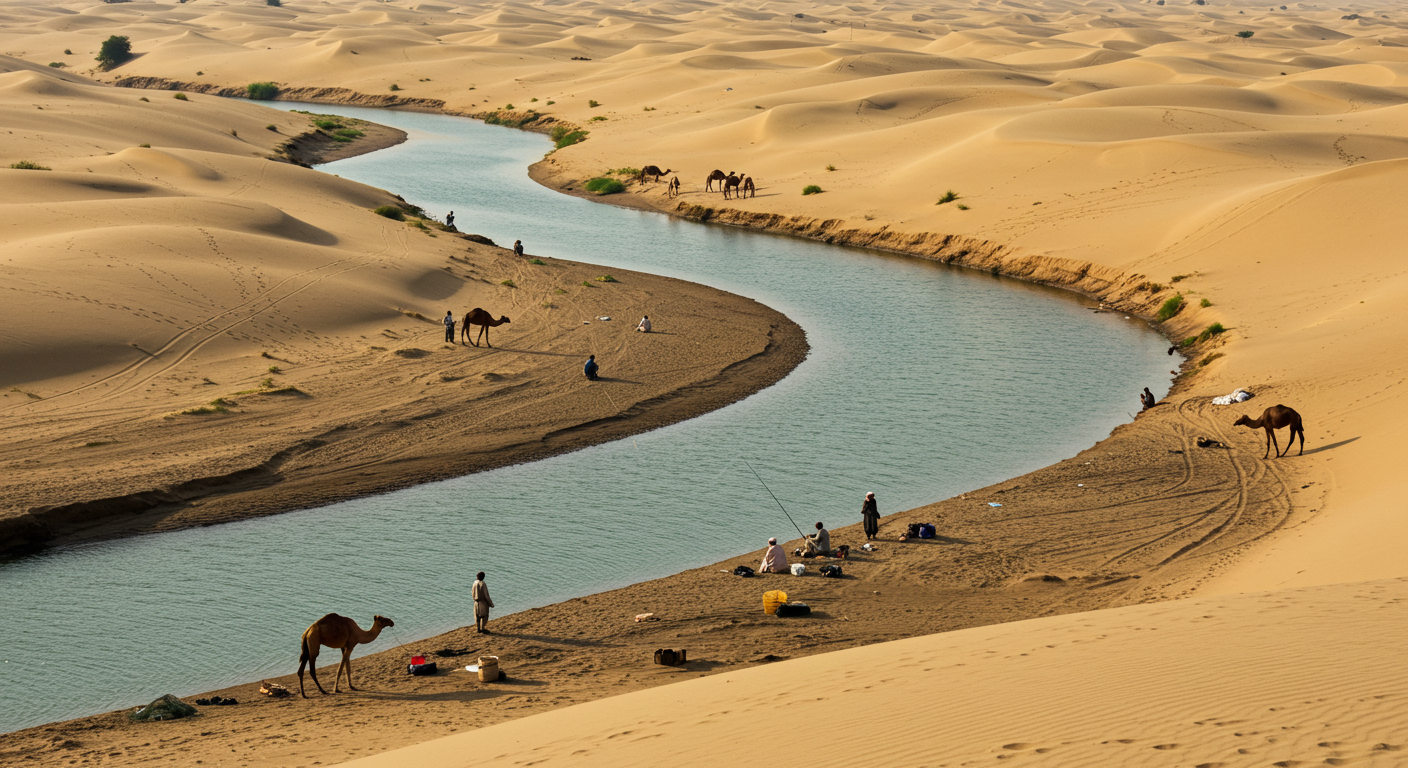
The Cholistan desert, which is about 26,000 square kilometers, has been unproductive for a long time, even though it is adjacent to fertile areas. The projected canal network could irrigate an area about the size of Luxembourg, making a lot of this desert viable. This idea might greatly improve the country’s agricultural productivity, possibly by as much as 15%. It is also predicted to create more than 100,000 jobs, both directly and indirectly, especially in the areas of agriculture, irrigation management, logistics, and agri-tech services. Pakistan would be less dependent on foreign staples if it imported high-yield crops like wheat, cotton, and fodder. This would assist the government make sure that the population had enough food.
By 2030, Pakistan’s population is expected to surpass 250 million. This rapid growth would put more and more pressure on the country to grow enough food. Pakistan already spends more than ten billion dollars a year on food imports. However, this sum might drop a lot after the Cholistan Canal Project is finished. The program is a necessary reaction to the prospect of food shortages since it will increase the amount of land that can be farmed in the country and provide irrigation support all year round. Pakistan’s Vision 2025 and the United Nations’ Sustainable Development Goals (Zero Hunger) are extremely similar to each other. It also offers rural regions the tools they need to create, come up with new ideas, and help the country grow, which makes people in such places feel like they have power.
It is extremely good that the initiative is dedicated to protecting the environment and saving water. The Water Accord of 1991 says that all provinces should obtain a fair portion of the water supply. This design and operation are in perfect harmony with that. Using the extra water from the Kharif season, when the water flow is strong, in the canals will protect the legal rights of everyone concerned. In addition, the engineering concept includes a concrete liner to keep water from leaking, solar-powered pumping stations to cut down on carbon emissions, and smart irrigation systems that use data to make sure water is distributed evenly. By putting these new ideas into effect, the Green Pakistan Initiative shows that it is both technically and environmentally sound, as well as ambitious.
This project will have impacts on the economy that run well beyond farming. According to estimates, investments in irrigation infrastructure will pay off in terms of overall economic value by three to six rupees. As the water keeps flowing into the Cholistan region, it is projected to become a center of production, attracting agro-industrial zones, storage facilities, and supply lines. The project’s climate resilience measures will protect those whose jobs are at risk even more. The canal’s design can handle unexpected downpours and other extreme weather occurrences.
There is little doubt that the strategic effects of the Cholistan Canal Project are important. The plan strengthens economically and demographically vital areas, promotes national unity, and slows down urban migration by focusing on development in border areas. One big benefit is that it makes sure that no portion of the country lags behind in terms of development and shows a strong commitment to balanced growth in all regions. Investing in these sectors is important for the country’s long-term stability, and it’s not merely a personal choice based on money.
The present canal project is a good example of the Green Pakistan Initiative’s goal of becoming self-sufficient via innovation while also being ecologically friendly and looking to the future. It meets the needs of both the present and the future in a way that is good for the environment. The Cholistan Canal Project is a chance that will be passed down through centuries. It will change more than 1.2 million acres, increase food production in the country, and improve the lives of hundreds of thousands of people. The desert isn’t a dead wasteland; it’s a latent resource that can be brought back to life. It might become a symbol of Pakistan’s optimism, promise, and progress if the people want it to and the necessary resources are available.
Working together toward this ambitious objective will not only help us get better, but it will also show that we believe in what the future holds. The Green Pakistan Initiative is making Pakistan’s future better for everyone by converting sand into food and aspirations into reality.
Author