


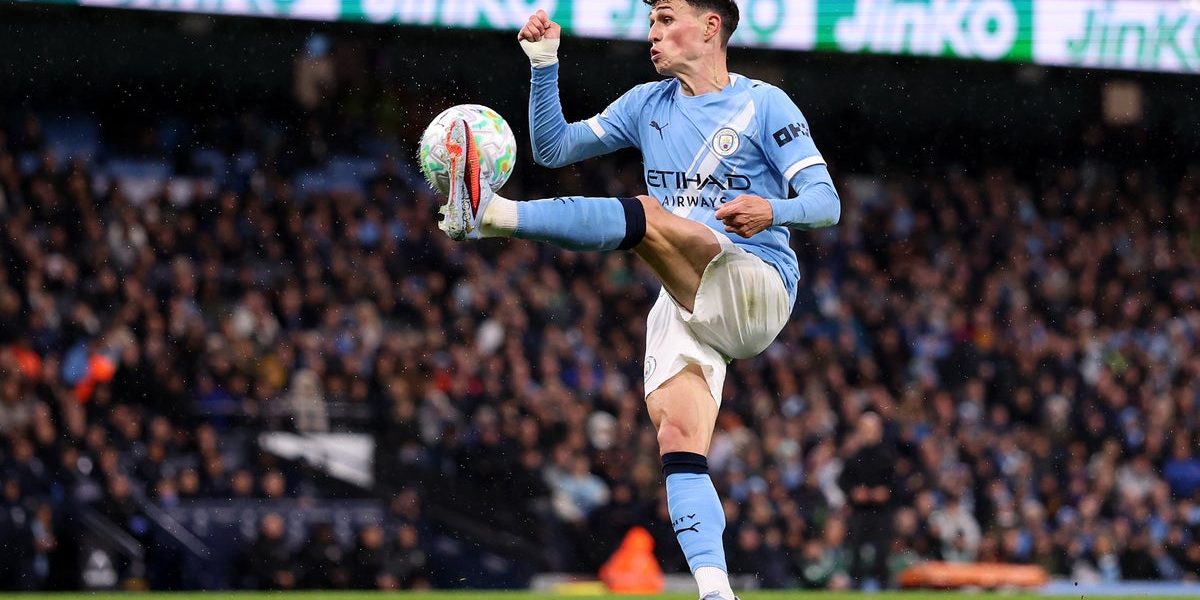
Guardiola’s High-Stakes Wager: Foden’s Flickers Ignite Global Title Race Scrutiny
POLICY WIRE — Manchester, UK — The Mancunian drizzle felt less like typical spring weather and more like a harbinger of Manchester City’s title aspirations. Manager Pep Guardiola, a maestro of...

POLICY WIRE — Manchester, UK — The Mancunian drizzle felt less like typical spring weather and more like a harbinger of Manchester City’s title aspirations. Manager Pep Guardiola, a maestro of calculated risk, had once again thrown the dice, resting an astonishing six key players, including a generational talent in Erling Haaland. Many pundits, ourselves included, wondered if he wasn’t, in fact, hoisting the white flag just days before a pivotal FA Cup semi-final. Because frankly, who shelves their top scorer – 37 goals to his name this season – when Arsenal breathes down your neck?
But that’s Guardiola, isn’t it? Always pushing, always probing the boundaries of what’s considered conventional football management. His gamble paid off, dramatically so, not just in the scoreline but in the almost cinematic redemption of a player many had quietly – and unfairly – written off: Phil Foden. A forgotten man in recent weeks, stripped of his previous ‘Footballer of the Year’ swagger, Foden was back. And he delivered.
He’d not scored in 28 games, a drought that for someone of his caliber felt like an eternity. For a squad as deep as City’s, such a spell might mean permanent residency on the bench. Yet, Guardiola, ever the contrarian, pitched him into the starting lineup against a stubborn Crystal Palace side. It was a baptism by fire. And for the first third of the game, City seemed to be choking on their own ambition, failing to register a single shot on target.
Then, Foden, with a single, elegant backheel, unlocked the Palace defense, laying the ball perfectly for Antoine Semenyo to break the deadlock. It wasn’t just an assist; it was a statement. A whisper that, perhaps, the narratives around his flagging form were premature. “We ask a lot of our players, — and Phil knows the standards we set. He responded today, as true champions do, when the pressure mounts,” Guardiola reportedly told staff later, a rare moment of introspection from the typically stoic coach.
The goals followed, Marmoush doubling the lead just before halftime, a deft finish that hinted at burgeoning confidence. (He, like Foden, might find himself warming the bench against Chelsea this weekend, proving no one’s safe from Pep’s rotation.) And yet, even as City found their rhythm, the memory of their early disjointedness lingered. Palace, managed by Oliver Glasner, came out with a game plan – stifling, compact, dangerous on the break – that made City work for every inch. “We came to disrupt, to frustrate. That City had to work so hard against our ‘weakened’ side, I take that as a moral victory, despite the scoreline,” Glasner was overheard muttering, a hint of steel beneath his diplomatic tone.
This match wasn’t just about three points; it was a reaffirmation of intent. A declaration to Mikel Arteta — and Arsenal that City, despite fatigue and rotation, wouldn’t falter easily. They now boast a goal difference of +43, a significant metric in this impossibly tight race. And they’re rewarding Foden, the once Golden Boy, for consecutive ‘disappointing’ seasons with a new four-year deal. What price loyalty, or rather, the belief in latent genius?
📄 POLICY WIRE WHITEPAPER PUBLISHED: PAKISTAN'S NATIONAL SECURITY POLICY PRIORITIES
👉 READ BY CLICKING HEREThe drama of the Premier League—its tactical intricacies, its billion-dollar valuations—resonates far beyond the confines of English stadiums. From Karachi to Cairo, the results are meticulously followed. In Pakistan, where football’s popularity is skyrocketing alongside cricket, clubs like Manchester City attract fanatical devotion. And why wouldn’t they? These aren’t just games; they’re global spectacles, mini-narratives of triumph and despair that provide an escape for millions. This cultural exchange is more than entertainment; it’s a soft power projection, influencing generations and shaping commercial landscapes. For instance, reports indicate that Premier League viewership in South Asia has surged by over 40% in the last five years, turning local channels into significant revenue streams, as major broadcasters scramble for lucrative rights packages. It’s a testament to the league’s truly global economic footprint, where even a routine Saturday fixture in London or Manchester holds sway across continents.
What This Means
The immediate implication of this result is stark: Manchester City isn’t giving up. Guardiola’s calculated brinkmanship might infuriate armchair managers, but it delivers. This ability to rest key players — and still secure victory speaks to a depth of squad few clubs, globally, can rival. It’s an economic powerhouse dressed in athletic gear, leveraging its immense financial muscle to maintain an absurdly high standard, making the title race less a sprint and more an attritional marathon against an opponent that seems immune to fatigue.
Politically, the sheer global reach of the Premier League, especially the success of its ‘super clubs,’ amplifies national soft power. When City or Arsenal battle, it’s not just about football; it’s about branding, about demonstrating a kind of economic and sporting supremacy that inadvertently buttresses the UK’s global image. For nations in the Muslim world, such as Pakistan, who engage passionately with the league, it’s a shared cultural touchstone, a collective experience that transcends local geopolitics, albeit sometimes with undercurrents of other narratives. On an economic level, City’s consistent presence at the top ensures sustained international media interest, sponsorship deals, and merchandise sales, funneling hundreds of millions into the club’s coffers, which in turn ripples through local economies. This win, therefore, wasn’t merely three points; it was a statement of intent, a display of commercial and sporting dominance, broadcast across borders.